Wired-In Electric Heat: Baseboard, Wall Heater, and Heat Pump Circuit Safety
Published on September 14, 2026
Most of what your electrical system does, it does in bursts. The microwave runs for four minutes, the toaster for two. Even the clothes dryer, one of the heaviest loads in the house, quits after an hour.
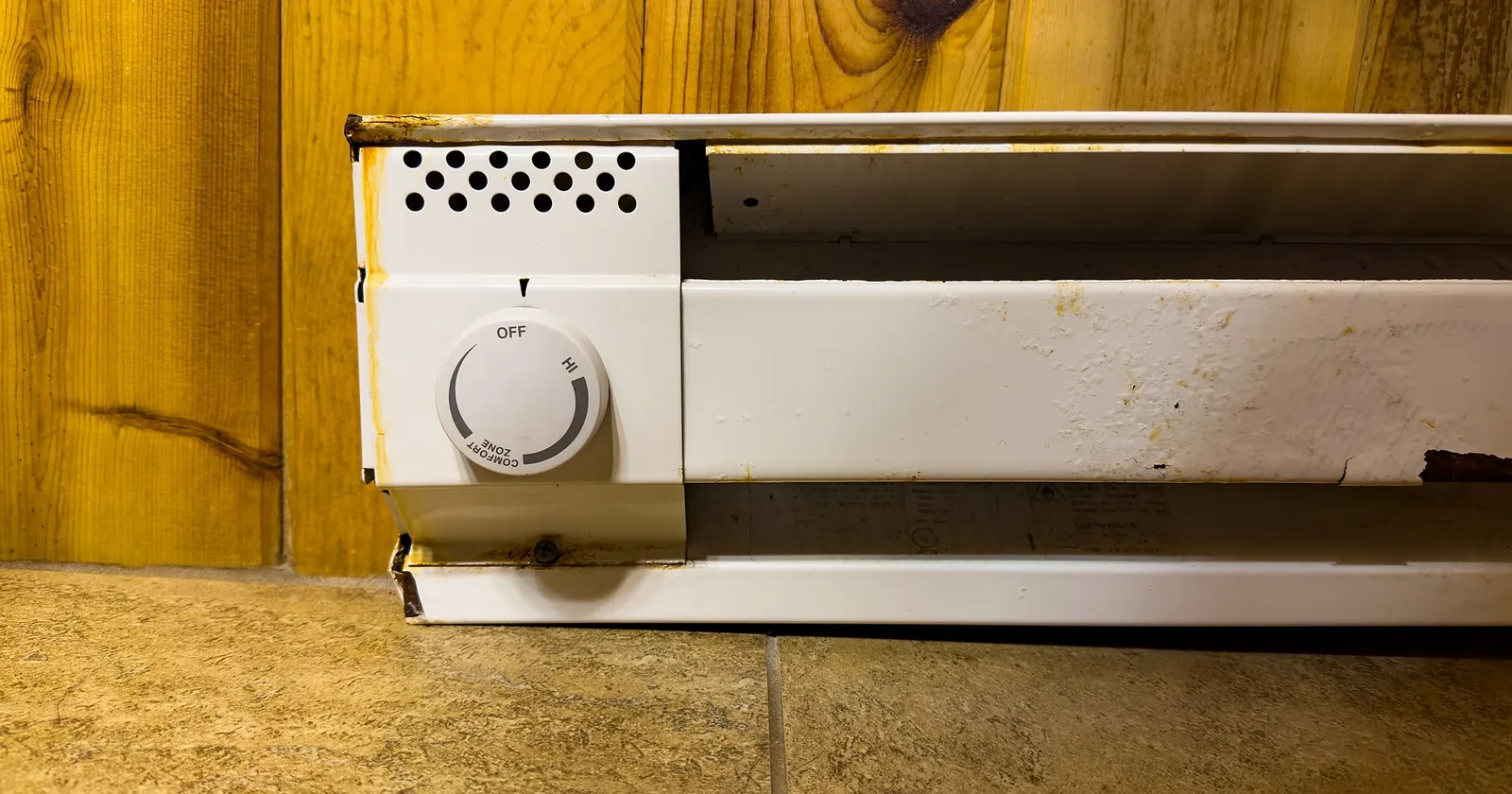
Electric heat does not work that way. A baseboard heater on a cold January night pulls its full rated current for six hours without a pause, then does it again the next night, and the night after that, for four months. Nothing else in a house asks that of a branch circuit, and that kind of load finds every marginal connection, every undersized conductor, and every terminal screw that was never properly torqued.
This is about heat that is wired in: baseboard units, fan-forced wall heaters, garage unit heaters, and heat pumps with electric backup. Plug-in space heaters and the cords people run them on are a different hazard with a different fix, and we cover those separately in our guide to extension cord fire safety.
Before anything else, the line that matters most. If you smell burning plastic near a heater, see browning or scorch marks on a wall or an end cap, or find that a heater’s cover or the wall around it is hot in a way it has never been, switch that circuit off at the panel and leave it off until an electrician has been out. If there is visible smoke, flame, or charring spreading across the wall, get everyone out and call 911 first.
Why Fixed Electric Heat Gets Its Own Rules
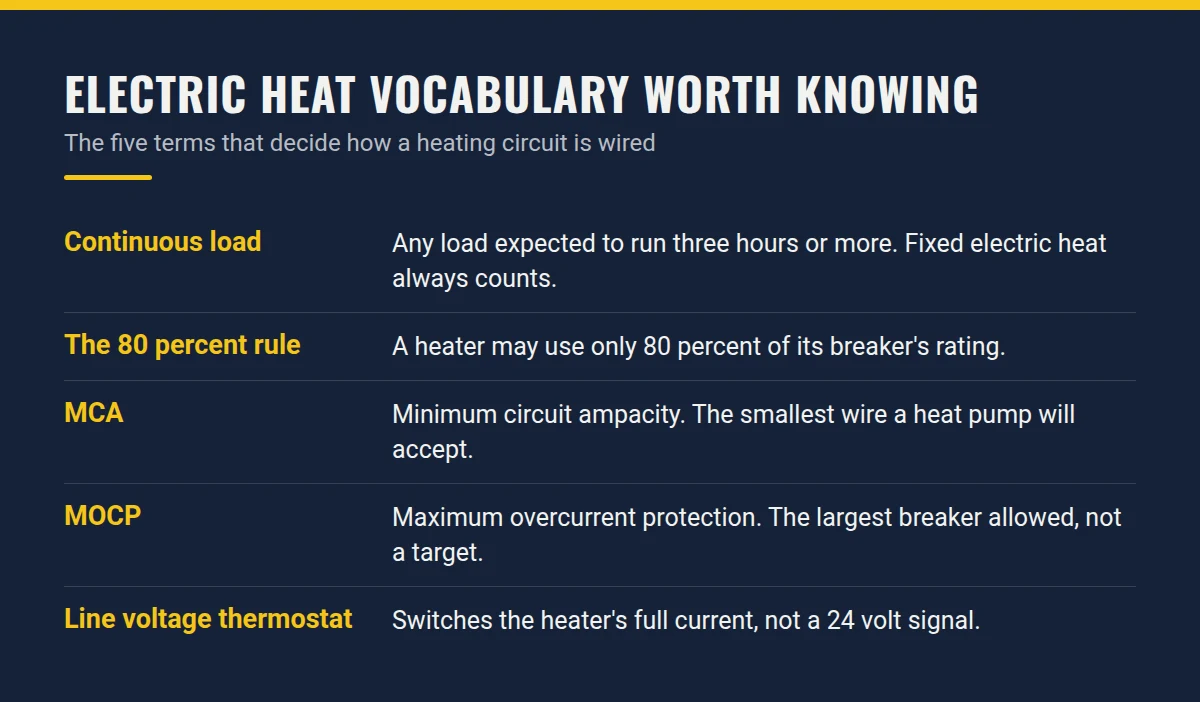
The National Electrical Code has a term for a load that runs and runs: a continuous load, defined in Article 100 as one whose maximum current is expected to continue for three hours or more. These get special treatment because breakers and terminations are rated on the assumption that they get a chance to cool down. Take that assumption away and the ratings no longer hold.
Section 424.3(B) settles the question for heating equipment by declaring it continuous outright. Fixed electric space-heating equipment, including any blower motor that comes with it, is treated as a continuous load, and the branch-circuit conductors and the overcurrent device must both be rated at not less than 125 percent of that load.
That is the origin of nearly every sizing rule below, because multiplying the load by 125 percent is the same as saying the heater may use only 80 percent of the breaker’s number. A 20 amp breaker will hold 20 amps all day in a laboratory, but you may hang only 16 amps of heat on it.
Translate those into watts, which is how heaters are actually sold, and you get the numbers that decide what fits:
| Circuit | Continuous amps | Watts of heat it will carry |
|---|---|---|
| 15 A at 120 V | 12 A | 1,440 W |
| 20 A at 120 V | 16 A | 1,920 W |
| 15 A at 240 V | 12 A | 2,880 W |
| 20 A at 240 V | 16 A | 3,840 W |
| 30 A at 240 V | 24 A | 5,760 W |
Notice what the voltage column does. The same 20 amp breaker carries twice the heat at 240 volts as at 120 on the same size wire, which is why almost all permanently installed electric heat in American homes is wired at 240. Our explainer on how 240 volt circuits actually work covers where that second leg comes from.
Baseboard Heaters: Feet, Watts, and the Circuit Underneath
Residential electric baseboard is sold by the foot and rated in watts per foot. Standard density is 250 watts per linear foot, so a 6 foot unit is 1,500 watts and an 8 foot unit is 2,000. Low density units run 187.5 watts per foot.
Do the division against the table above and the limits fall out fast. A 20 amp, 240 volt circuit carries 3,840 watts, about 15 feet of standard baseboard: one 8 foot unit plus a 6 footer, with a little room to spare. A 15 amp, 240 volt circuit on 14 gauge wire carries 2,880 watts, or roughly 11 feet.
Multiple heaters on one circuit is normal and legal as long as the total stays under the ceiling. What is not, and what electricians find constantly in additions and finished basements, is a fourth heater added to a circuit that was already full because the room was still cold. The breaker may or may not complain. The terminations will.
Two baseboard-specific rules are worth knowing because both get violated by people who have no idea they exist:
A heater should not sit below a receptacle. Listed baseboard heaters carry manufacturer instructions that generally prohibit installation beneath a receptacle outlet, and Section 210.52(A) points at those instructions in an informational note. The reason is not theoretical: a lamp cord plugged in above the heater drapes across the element, the jacket softens, and the conductors inside short or arc. If a wall needs both, Section 424.9 has the answer. Baseboard units are available with factory-installed receptacle outlets in the enclosure, and those count toward the spacing 210.52 requires. The same section forbids feeding them from the heater circuit, which has no headroom left for a vacuum cleaner.
Nothing goes against a heater. Not a sofa pushed back for the winter, not floor-length curtains, not the boxes stacked in a spare room. Baseboard units need the air gap they were listed with, in front and above. Blocking one makes the element run hotter than design, and drapes over a heater put fabric against something that reaches several hundred degrees.
Wall Heaters and the Dedicated Circuit Question
The fan-forced wall heater recessed into a bathroom or hallway is the most common piece of fixed electric heat in older American housing, and the one most likely to be wired wrong.
The usual unit is 1,500 watts. At 120 volts that is 12.5 amps of continuous load, and the 125 percent math puts it on a breaker rated at least 15.6 amps, which rounds up to a 20 amp circuit on 12 gauge wire. A great many of these heaters sit on 15 amp circuits, an overload on paper from the day they were installed, and that is why the breaker starts tripping in November and behaves itself all summer.
Bathrooms tighten it further. Section 210.11(C)(3) requires at least one 20 amp branch circuit for bathroom receptacles, and it may not feed anything outside that bathroom. A single-bathroom circuit is allowed to serve other equipment in the same room, but only under the general limit that a fastened-in-place appliance may not exceed half the circuit rating when the circuit also serves receptacles. Half of 20 amps is 10, and a 1,500 watt heater draws 12.5. A bathroom heater of any real output needs a circuit of its own.
So, plainly: give every fixed heater a dedicated circuit unless you have actually done the arithmetic and proven otherwise. It costs a little more at install and removes an entire category of winter problem.
Thermostats: The Part That Fails Quietly
Heating controls come in two very different kinds, and confusing them causes real trouble.
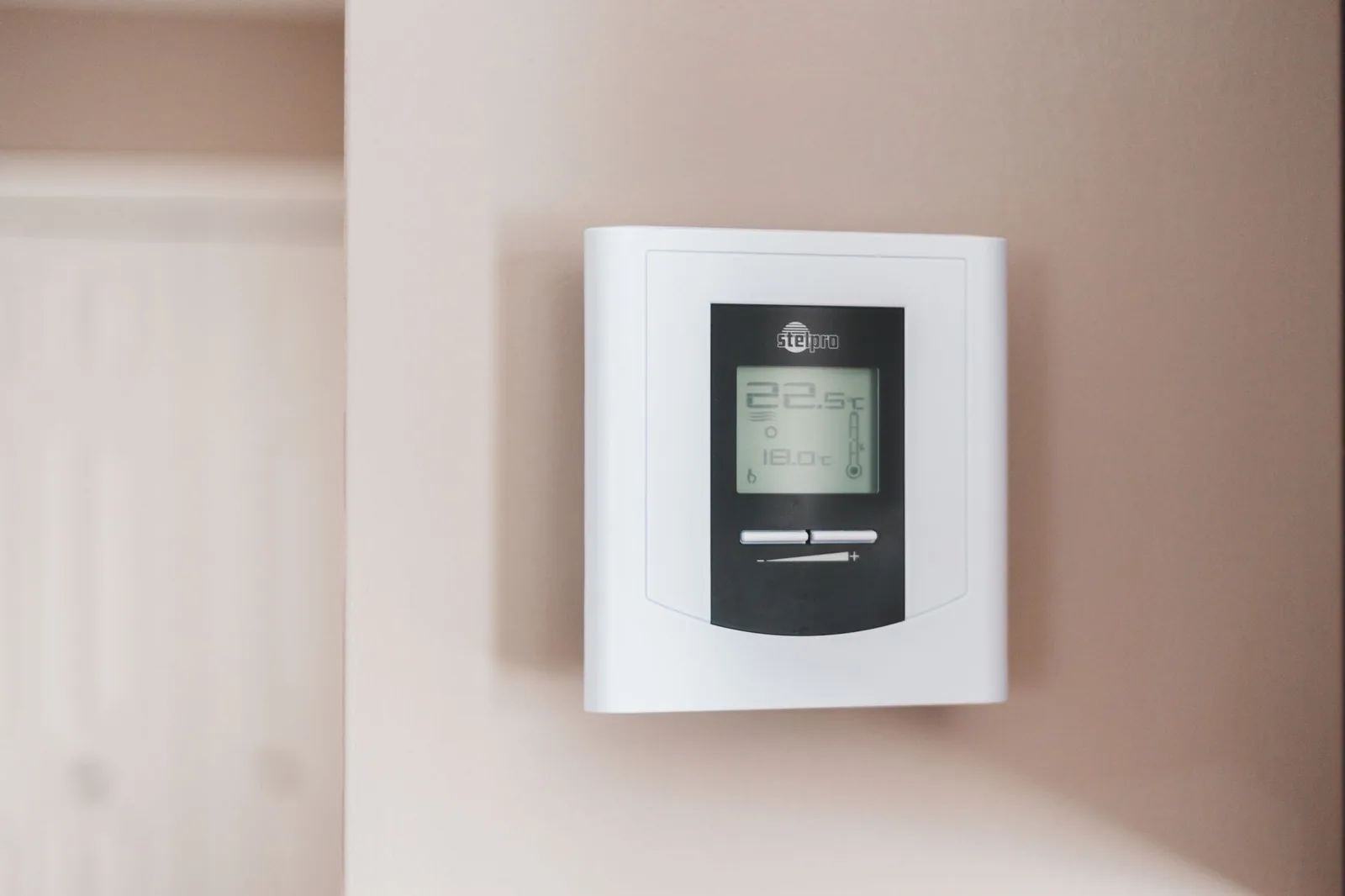
A low voltage thermostat is the familiar one on the hallway wall. It runs on 24 volts and switches nothing itself, sending a signal to a relay or control board that does the actual work. A line voltage thermostat, which controls baseboard and most wall heaters, is a different animal: it carries the heater’s full current at full voltage through its own contacts. One controlling 3,000 watts of baseboard at 240 volts is switching 12.5 amps every time the room cycles.
Contacts that switch that much current tens of thousands of times eventually fail, and the way they fail is the problem. They rarely go open, leaving you cold and aware of it. They weld shut. The heater then runs continuously no matter where the dial sits, which people misread as “the thermostat is stuck” or “this room runs hot” and live with for weeks. A heater running unattended at full output against a wall that never expected that much sustained heat is a genuine fire path.
The other issue is poles. On a 240 volt heater both conductors are hot. A single pole line voltage thermostat opens only one, so even at its lowest setting the heater stays energized to ground through the other leg. Fine for temperature control, dangerous for anyone who opens the unit believing it is off. Section 424.20(A) lets a thermostat double as the required disconnecting means only if it has a marked OFF position and opens all ungrounded conductors, which a single pole device cannot. Section 424.19 requires a disconnecting means regardless, either lockable at the breaker or within sight of the unit.
Signs one needs replacing: a buzz or crackle from the dial, a body that is warm when the heater is off, browning or a melted spot on the plastic, a heater that will not shut off, or a room that badly overshoots its setting. These are inexpensive parts, and the labor is trivial next to what a welded contact can do over a season.
Heat Pumps: Read the Nameplate, Not the Wire Table
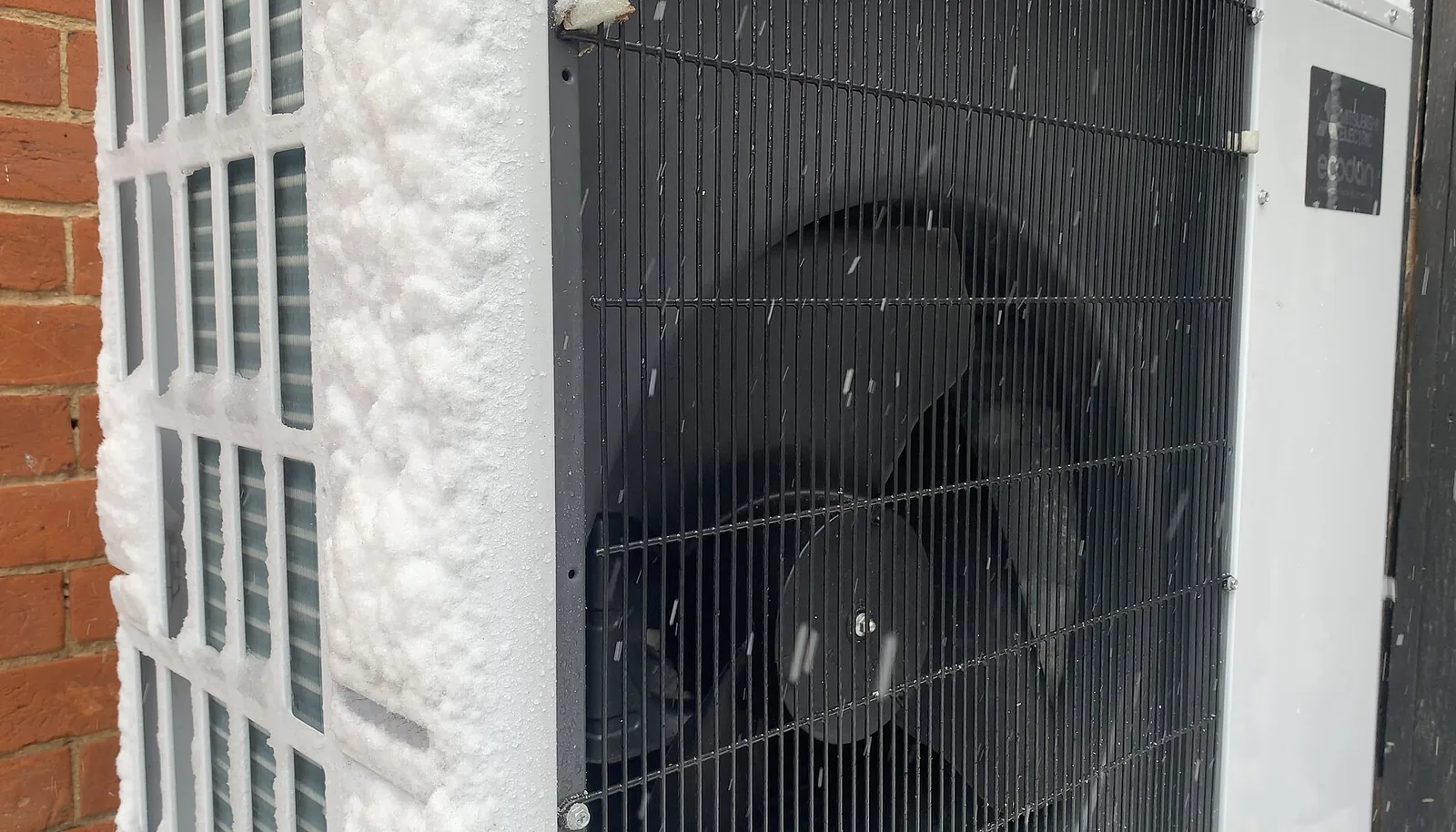
Heat pumps follow a different set of rules than anything else here, and they look wrong until you understand why.
On the data plate of every outdoor unit are two numbers. MCA, minimum circuit ampacity, is the smallest conductor the unit will accept. MOCP, maximum overcurrent protection, sometimes printed as “max fuse or HACR breaker,” is the largest breaker allowed. Section 440.4(B) requires those markings, and Section 440.22 permits the protective device to be sized well above the running current, up to 175 percent of rated load current in the general case.
So it is entirely correct to find a heat pump with an MCA of 24 amps, wired in 10 gauge copper, protected by a 40 amp breaker. In any other circuit that would be a serious violation. Here it is by design: a compressor draws an enormous inrush on every start, and a breaker sized to the running load would trip forever. The trade is that a heat pump breaker does short circuit and ground fault duty only. Overload protection lives inside the equipment.
Three consequences follow, and they are the ones that matter to a homeowner:
Never upsize the breaker past MOCP. When a heat pump starts tripping, the temptation is to fit a bigger breaker. But the breaker is not the overload device, so a bigger one solves nothing and removes the short circuit protection the manufacturer specified. Repeated tripping means a failing compressor, a failing contactor, a locked rotor, or a fault in the whip, and all four need someone with a meter.
The disconnect near the unit is required. Section 440.14 calls for a disconnecting means within sight of and readily accessible from the equipment. That grey box beside the condenser is not optional trim. It exists so a technician can kill the unit while standing next to it, and so you can do the same if it starts smoking.
Backup heat is the real load. Almost every heat pump in a cold climate has electric resistance strips in the indoor air handler, sized anywhere from 5 kilowatts to 20. Ten kilowatts of strip heat is over 41 amps at 240 volts, on top of the compressor. Those strips come on when the outdoor temperature drops below the changeover point, when the unit runs a defrost cycle, and instantly and entirely whenever someone selects “emergency heat.” Section 424.22(B) is why an air handler often has more than one breaker or fuse block inside it: resistance elements have to be subdivided into loads of not more than 48 amps, each protected at not more than 60.
That is where heat pumps meet the rest of the panel. A house comfortable on 100 amp service for thirty years can be genuinely short of capacity the first winter after one goes in, because emergency heat adds forty or more amps of sustained draw the old furnace never asked for. A load calculation is part of the job, and our guide to reading your panel and service capacity explains what that involves.
Garage and Shop Heaters
Hardwired garage unit heaters are usually 240 volt, typically 4,000 to 7,500 watts. A 5,000 watt heater draws 20.8 amps, needs 26 amps of circuit after the 125 percent factor, and therefore lands on a 30 amp circuit in 10 gauge wire. These are not circuits you improvise.
Receptacles in garages require GFCI protection under Section 210.8(A)(2), and while a hardwired heater is not a receptacle, the space around it is full of what that protection exists for: concrete floors, damp boots, a car that drips. A permanently connected heater over 300 volt-amperes needs a disconnecting means, which Section 422.31(B) allows to be the branch-circuit breaker itself if it is within sight or lockable open.
Two failures come up again and again. The first is clearance: unit heaters carry listed minimum clearances to combustibles on the label, and a garage is where people stack cardboard, hang tarps, and park a vehicle close enough to matter. Those clearances assume nothing was added after the installer left. The second is supply. A fixed heater must be wired to a branch circuit, never fed by an extension cord or a plug strip, no matter how heavy the cord looks. If the heater ended up on a cord because the garage had no suitable circuit, the answer is a circuit.
The Overheating Termination Nobody Sees
This is the failure that sends an emergency electrician out in February, and it matters because a breaker offers no protection against it whatsoever.
A loose, corroded, or oxidized connection is resistance. Resistance carrying 12 or 20 amps makes heat right at that point. The heat oxidizes the metal further, which raises the resistance, which makes more heat, and it compounds over weeks. The whole time the breaker sees normal current, because the current is normal. Breakers respond to too much current, not to a square centimeter of overheated brass inside a heater’s wiring compartment.
Heating equipment stacks the odds. The wiring compartment of a baseboard heater sits inside a device deliberately producing heat, so the terminals start out hot; the load is continuous, so there is no cooling cycle; and the terminations are often decades old.
Two situations deserve specific mention:
Old 60 degree conductors. Heater terminal compartments commonly require conductors with 75 or 90 degree Celsius insulation, and the label says so. Cable manufactured before the mid 1980s frequently does not qualify. Insulation that spends fifteen winters above its rating goes hard, then brittle, then crumbles off the copper when someone opens the box. If your house predates that era, our piece on whether old wiring is really grandfathered explains when existing work stops being exempt.
Aluminum branch circuit wiring. Houses wired between roughly 1965 and 1973 often have solid aluminum branch conductors, which expand and contract more than copper with every heating cycle and gradually creep out from under a terminal screw. A continuous heating load is the worst duty for them, and the repair is listed connectors, not retightening.
What to look for: browning or yellowing of the plastic end caps on a baseboard unit, a scorch mark on the wall behind or above a heater, a persistent hot plastic smell, a crackling or sizzling sound, a cover plate or junction area that is hot rather than warm, or lights that dim on the circuit when the heater cycles on. Any one of those is a stop and call, not a watch and see.
One exception: the dust smell when heat first comes on in the fall is normal and clears within an hour of running. A smell that persists into the second day, or that is sharp and plastic rather than dusty, is not the same thing.
Nuisance Trips in Heating Season
Electricians see a reliable spike in tripping complaints in the first genuinely cold week of the year, and the trips are usually telling the truth. A few patterns are worth reading:
It trips when the heat and something else run together. A straightforward overload, usually meaning the heater was added to a circuit already carrying a room’s lighting and receptacles. The fix is a dedicated circuit, not a larger breaker.
It trips after running fine for twenty or thirty minutes. Thermal breakers trip on accumulated heat, so a delayed trip is the classic signature of a circuit loaded just past its continuous rating. That is the breaker doing exactly what it is designed to do.
An arc-fault breaker trips only when the heat is on. Section 210.12 requires AFCI protection in bedrooms, living rooms, hallways, and most other habitable spaces, which covers a lot of baseboard. An AFCI tripping reliably on a heating circuit is very often detecting a real arcing fault at a loose terminal inside the heater, the failure described in the previous section. Treat it as a finding, not a false alarm. Our comparison of AFCI and GFCI devices covers what each one watches for.
A breaker that trips at lower and lower loads each year. Breakers are wear items and one cycled hard for many seasons can drift. This is real, but it is the diagnosis people jump to first when it should be last. Rule out the load and the connections before blaming the breaker.
The heat pump trips on a cold morning. Defrost cycles fire the resistance strips while the compressor is running, which briefly stacks the two largest loads in the system. A unit that trips only during defrost is pointing at strip heat wiring or a control problem.
For the wider set of causes and the safe way to attempt a reset, our diagnostic guide to why a breaker keeps tripping walks through the whole decision tree.
Before the First Cold Night
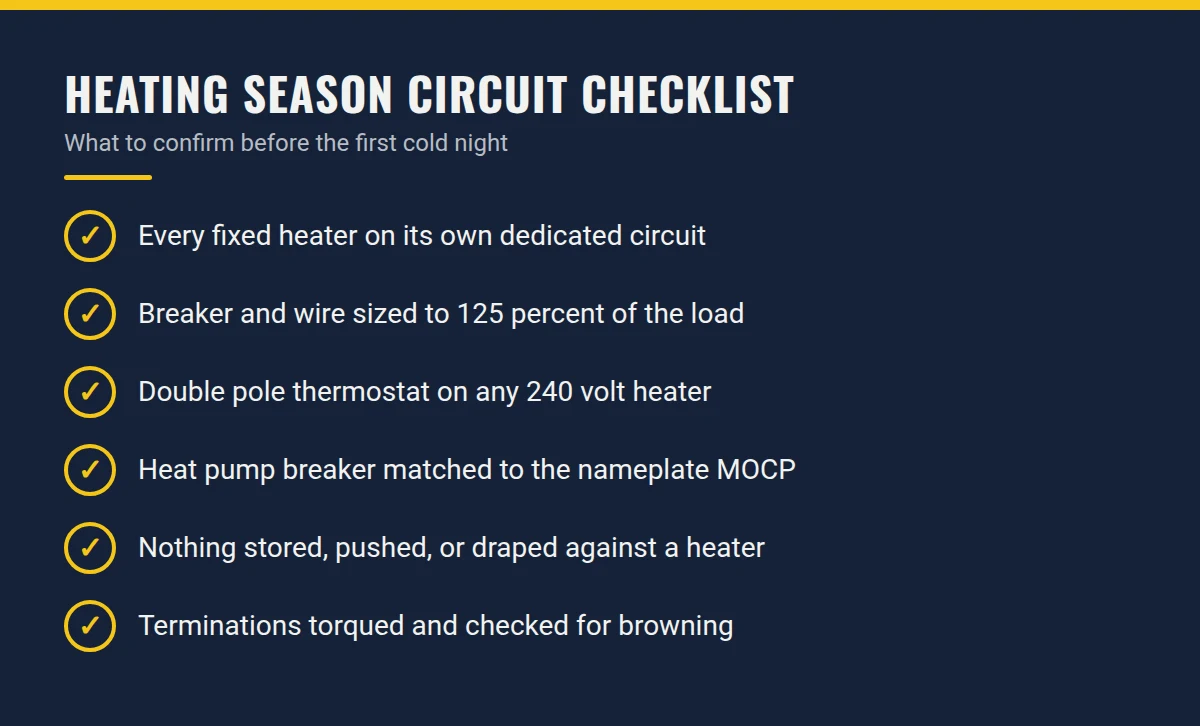
A short walk through the house in early autumn catches most of this while it is still cheap. Pull the furniture back off every baseboard unit and check the gap above and in front. Look at the end caps and the wall behind each heater for discoloration. Run each one for twenty minutes, then put a hand near, not on, the thermostat and the heater’s wiring end. Confirm every thermostat actually shuts its heater off when turned down, and check that nothing is plugged in above a baseboard unit with a cord hanging over it.
Then the part that needs someone licensed. Terminations at heaters and in the panel should be torqued to the values marked on the devices, which Section 110.14(D) requires and which is the most commonly skipped step in the trade. An electrician can confirm each heater’s circuit is sized for its load rather than inherited from whatever was in the wall, verify that 240 volt heaters have double pole control, and read a heat pump’s nameplate against the breaker feeding it. A pre-season service call is worth it on its own, since a technician catches failing wiring, worn components, and the airflow problems that make a system draw more than it should.
Whoever you call, verify the license and insurance before they open your panel. Our questions worth asking before hiring an emergency electrician covers the vetting in five minutes.
The Bottom Line
Fixed electric heat is not a big load so much as a relentless one, and relentless is what breaks connections. The code’s answer is the 125 percent rule: size the wire and the breaker so the heater never uses more than 80 percent of the circuit’s rating, and give it a circuit of its own. The heat pump is the exception, with a breaker deliberately oversized for inrush and the overload protection built into the equipment, which is why its nameplate is the authority and not a wire table.
What should worry you is never the noise or the drama. It is the quiet stuff: a warm thermostat, a browning end cap, a heater that will not shut off, an arc-fault breaker that only trips in winter. Those are one story told from different angles, a connection somewhere getting hotter every time the heat comes on, and none of them will trip a breaker before they become a fire. Codes and adopted editions vary by municipality, so confirm the specifics with your local building department and a licensed electrician before adding or altering a heating circuit.
Further reading (sources)
- UpCodes on why fixed electric heat counts as a continuous load
- UpCodes for when a thermostat may serve as the required disconnect
- EC&M covering what a repeatedly tripping breaker is actually reporting
- NFPA from the home fire numbers behind heating equipment
- RACV on what a pre-season heater service actually checks
- NFPA with free online access to the National Electrical Code
Feature photo by Tony Webster, CC BY 2.0, via Wikimedia Commons.