Your Home's Electrical Panel and Service Capacity: A Complete Homeowner's Guide
Published on August 29, 2026
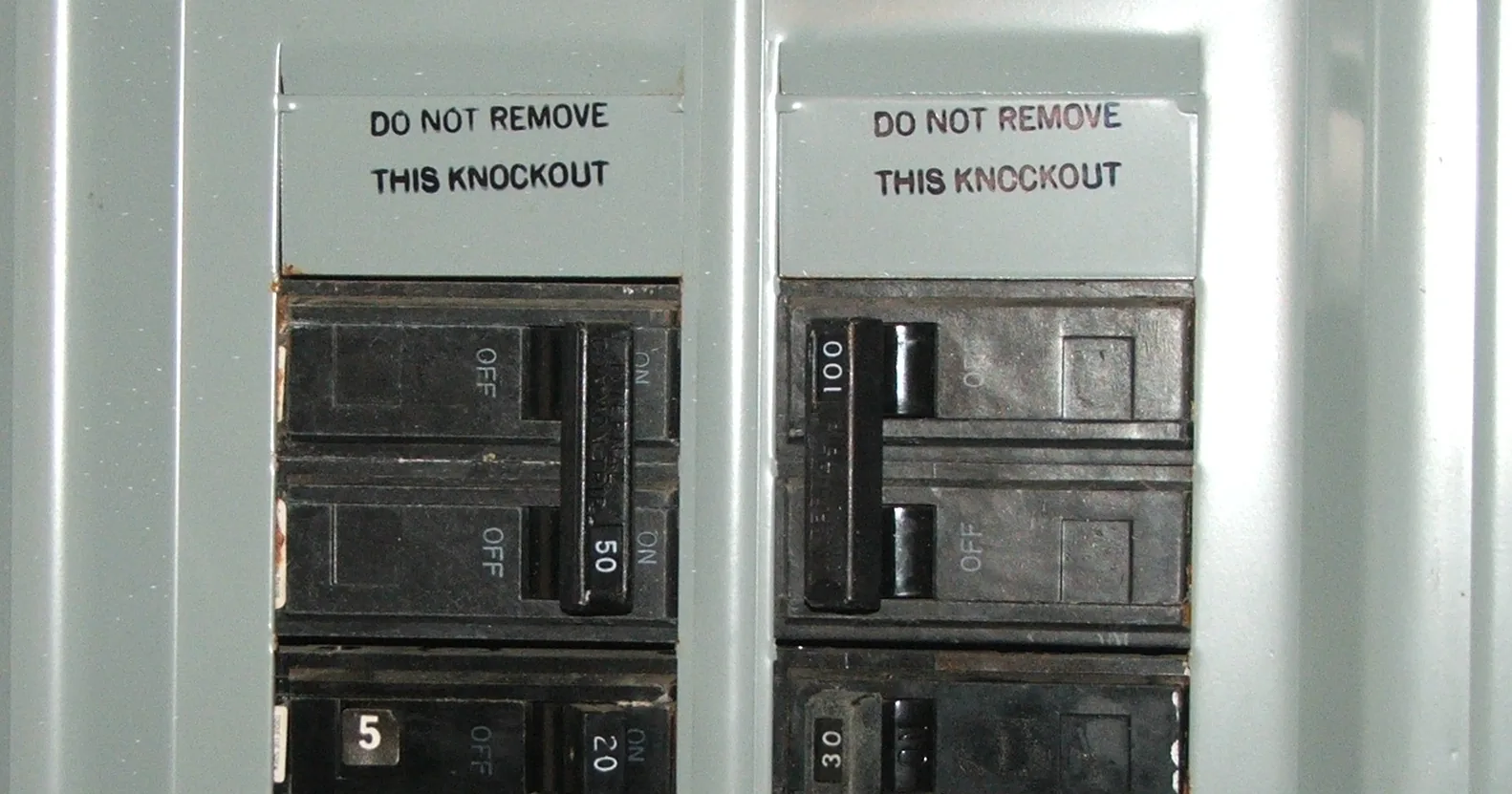
Almost every homeowner can point to the panel. Far fewer can tell you what the number stamped on the big breaker at the top means, and that number quietly governs the entire house. It decides whether you can add a car charger, whether the heat pump quote you just received is realistic, and whether the main is going to keep letting go every August when the air conditioner and the dryer overlap.
Every electrical emergency in your home either starts at that panel or ends there, so it is worth an hour of your attention on a calm afternoon rather than a frantic five minutes with a flashlight. This guide covers what the panel actually is, how to read yours without endangering yourself, when you have genuinely outgrown your service, and what an upgrade costs and involves.
One rule overrides everything below. If the panel is buzzing, feels warm, smells like hot plastic, or shows scorching or rust streaks, do not open the door and do not start flipping breakers. Get everyone out and call an emergency electrician, or 911 if you see smoke. And under no circumstances remove the dead front, the inner metal cover held on by screws. The service conductors behind it stay energized at full utility current even with the main breaker off, and nothing in your house protects them.
What the Number on the Main Breaker Actually Means
Power reaches your house through a utility drop overhead or a lateral buried underground. It passes through the meter, then through the service entrance conductors, then into your main disconnect, and only then does it reach the bus bars that feed your individual circuits.
Two hot legs and a neutral arrive from the transformer. Each leg reads 120 volts to neutral, and the two legs together read 240 volts, which is what runs the dryer, the range, and the air conditioner. Our guide to telling a house problem from a utility problem walks through what happens when one of those legs goes missing, which is worth knowing before it does.
The main breaker rating is the ceiling on how much all of that can carry at once. Multiply amps by 240 volts and you get the real budget: a 100 amp service can deliver roughly 24,000 volt-amperes, and a 200 amp service about 48,000. That is not a suggestion. Push past it and the main opens, taking the whole house down at once.
Here is the part that trips people up. The panel enclosure has a rating and the main breaker has a rating, and they are frequently different numbers. A load center rated for 200 amps can be sitting there with a 100 amp main installed, because the service entrance conductors and the meter socket feeding it were only ever sized for 100. Swapping in a bigger main breaker does not give you a bigger service; it just removes the one device that was protecting undersized wire. Your real capacity is the smallest link in the chain, and every link has to be upsized together.
How to Read Your Own Panel Without Opening Anything
Open the outer door, the one with the handle. That much is homeowner territory. Everything you need is visible from there.
Find the largest breaker, usually alone at the top, sometimes at the bottom, and read the number on its handle. That is your service size. Then look for the manufacturer’s label inside the door, which lists the panel’s own maximum rating and how many circuits it will accept. The circuit directory, if a previous owner or electrician filled it in, tells you what feeds what.
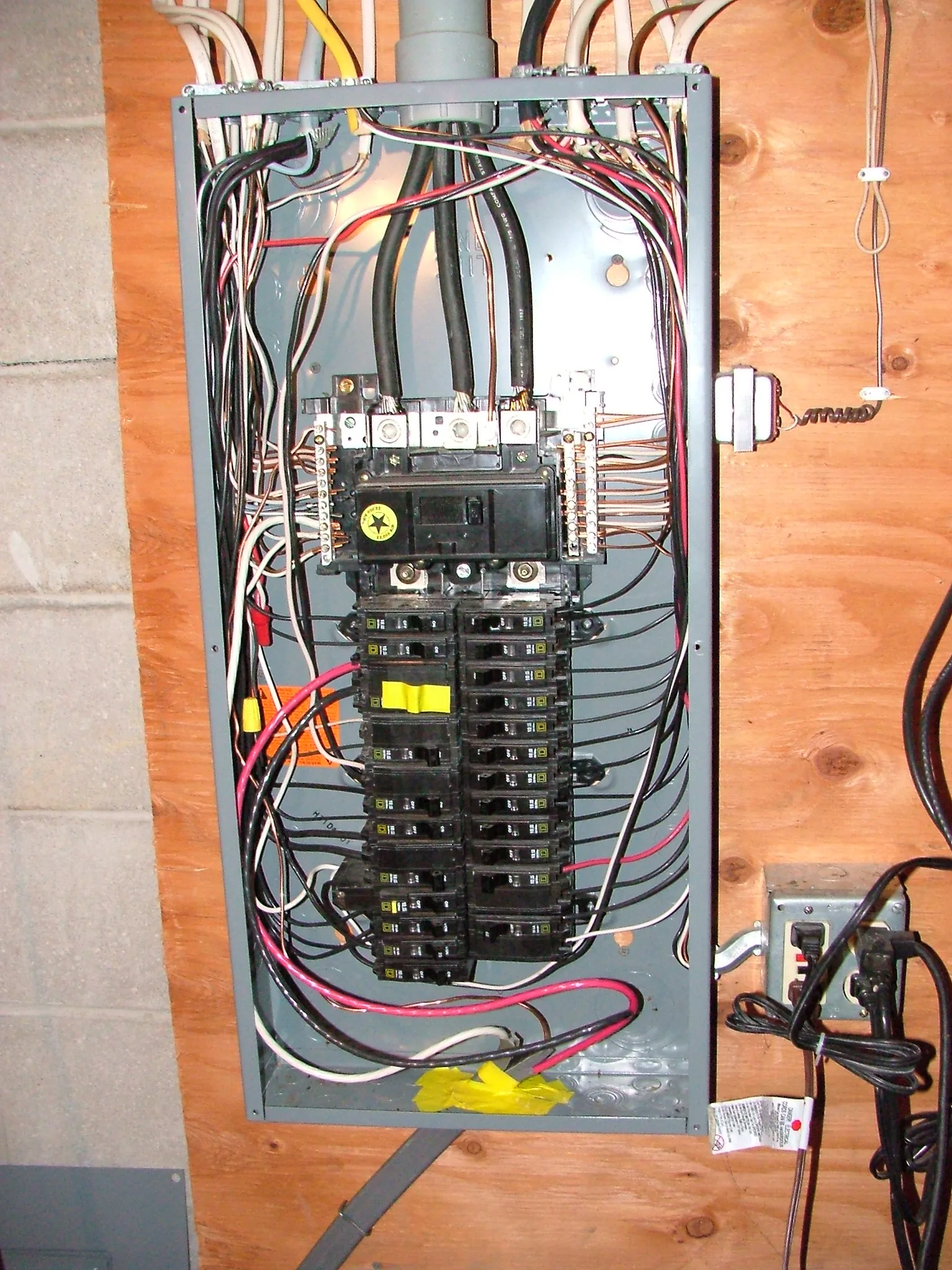
A few things you might find, and what each one means:
No single main breaker at all. Some panels built in the 1960s and 1970s use a split bus, where up to six separate throws have to be operated to kill the whole house. They are not automatically dangerous, but they are obsolete, replacement parts are scarce, and they complicate every future addition.
Fuses instead of breakers, or a very small box. That usually indicates 60 amp service, which is genuinely undersized for a modern household and often becomes an issue with insurers and mortgage lenders.
Skinny half-height breakers doubled into one slot. These tandem breakers are legal only where the panel is listed to accept them and only in specific positions. Finding several of them, plus a directory with more circuits than the panel has slots, is a strong hint the box is out of room.
Rust, water staining, or breakers you cannot buy anymore. Note it and mention it when you get a quote.
60, 100, 200, or 400 Amps: What Each One Actually Runs
60 amp service belongs to another era. If you still have it, replacement is no longer optional.
100 amp was the standard for decades and still feeds a great many homes. It is genuinely adequate for a house with gas heat, a gas water heater, and a gas range, with no electric vehicle in the picture. It starts to strain the moment you electrify anything significant.
150 amp shows up as an intermediate step in some regions and is a reasonable landing spot when the load calculation supports it and the utility side is cooperative.
200 amp is the default for new construction and the target for most upgrades. Roughly 48,000 volt-amperes leaves real headroom for a car charger, a heat pump, and a workshop circuit without living at the edge.
400 amp is for large all-electric homes, and it is usually built as a 320 amp continuously rated meter feeding two 200 amp panels rather than one enormous box.
Bigger is not automatically better. A larger service costs more, sometimes obliges the utility to change equipment on its side, and does nothing at all for a house whose actual problem is one overloaded kitchen circuit.
The Real Signs You Have Outgrown Your Service
There is one symptom that genuinely points at service capacity, and it is the main breaker tripping, not a branch breaker. When the whole house goes dark and the big breaker at the top is the one sitting halfway between on and off, you are hitting the ceiling. A single branch breaker tripping is a different problem entirely, and our diagnostic guide to nuisance trips sorts out overloads from short circuits and ground faults.
The other signs are situational rather than symptomatic. You are probably shopping for a bigger service if you are adding a Level 2 car charger, which typically wants a 40 to 60 amp circuit of its own. Converting to a heat pump, adding central air, swapping a gas range for induction, putting in a heat pump water heater, or building an addition or an accessory dwelling unit all land in the same territory. So does a full panel with no open slots, or a subpanel already carrying everything it can.
Two symptoms sit in an ambiguous middle. Lights that dim noticeably when the air conditioner or well pump starts can indicate a service near its limit, but they can equally point at a loose connection or a utility-side problem, and those are more urgent. Breakers that feel warm are never a capacity conversation; they are a stop-and-call-someone conversation.
What does not indicate a capacity problem: one circuit that trips when you run the space heater and the microwave together, a nuisance-tripping ground fault outlet, or a single flickering fixture.
Get a Load Calculation, Not a Guess
The honest answer to “do I need 200 amps” comes from arithmetic, not from a contractor’s impression, and there are two legitimate ways to get it.
The first is a calculation under Article 220 of the National Electrical Code, which tallies square footage, appliances, heating and cooling, and applies demand factors. Worth knowing: the 2026 edition restructured this. Dwelling unit calculations moved from Section 220.41 to Section 120.41, and the general lighting load dropped from 3 volt-amperes per square foot to 2, with a new Section 120.13 added specifically so the required number of branch circuits does not fall along with it. In practice that means the same house can calculate out with more headroom under the 2026 code than it did under the 2023 code, so it is fair to ask which edition your electrician is working from.
The second method is often more persuasive for an existing home. Section 220.87 lets an electrician use your actual metered demand: take the highest demand recorded over the previous twelve months, multiply by 125 percent, add the new load, and see whether the total fits inside the service rating. Most utilities will supply interval data on request. This method regularly shows that a 100 amp service has more room than anyone assumed, because real households never run everything at once.
That matters because a service upgrade is not the only answer. Load management hardware, including car chargers that throttle themselves when the rest of the house gets busy, can create room without touching the meter. Ask for the calculation in writing before you accept that upsizing is necessary.
When the Panel, Not the Service, Is the Problem
Sometimes the amperage is fine and the box itself is the liability.
Federal Pacific Electric panels with Stab-Lok breakers and Zinsco panels are the two names that matter most here. Both have documented histories of breakers that fail to trip under fault conditions, and the recommendation from inspectors is generally to replace them regardless of whether anything has gone wrong yet. Also worth flagging: any panel with water intrusion, corrosion on the bus, evidence of overheating at a breaker stab, or a design that will not accept modern arc fault and ground fault breakers. If your panel cannot take the protective devices the code now expects, that alone is an argument for replacement, and our comparison of what AFCI and GFCI protection each do explains what you would be gaining.
A panel replacement at the same amperage is a smaller and cheaper job than a full service upgrade, because the meter socket, the conductors, and the utility connection all stay put. Make sure you know which one you are being quoted for.
What a Service Upgrade Actually Involves
A true service upgrade is a larger project than most people picture, because nearly everything between the utility and your bus bars gets replaced: the meter socket, the service entrance conductors, the mast and weatherhead on an overhead service or the lateral on an underground one, the main disconnect, the load center itself, and the grounding electrode system, which frequently has to be brought up to current standards along the way.
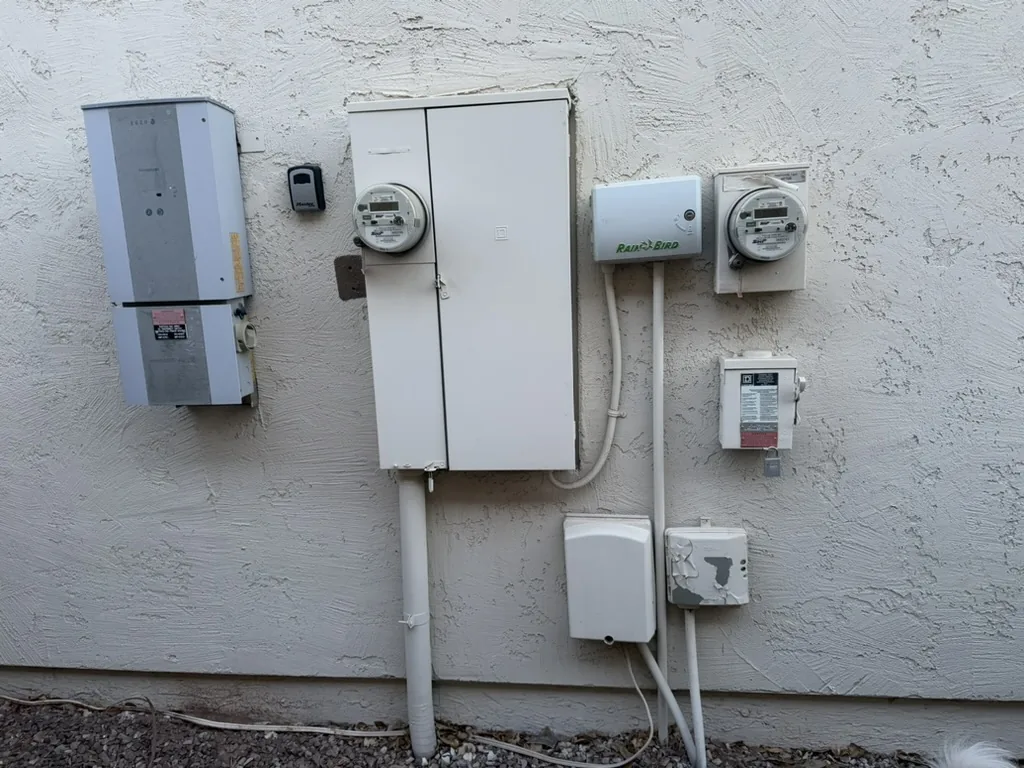
The sequence involves three parties and cannot be rushed. Your electrician evaluates the existing service and specifies the new one. The utility confirms it can support the larger service and approves the meter location, sometimes requiring its own equipment change on a timeline you do not control. A permit is pulled from the local building department. On installation day the utility disconnects power, the electrician does the work, and then an inspector has to sign it off before the utility will reconnect. Power is typically out for the better part of a day, and longer if the inspection does not land the same afternoon.
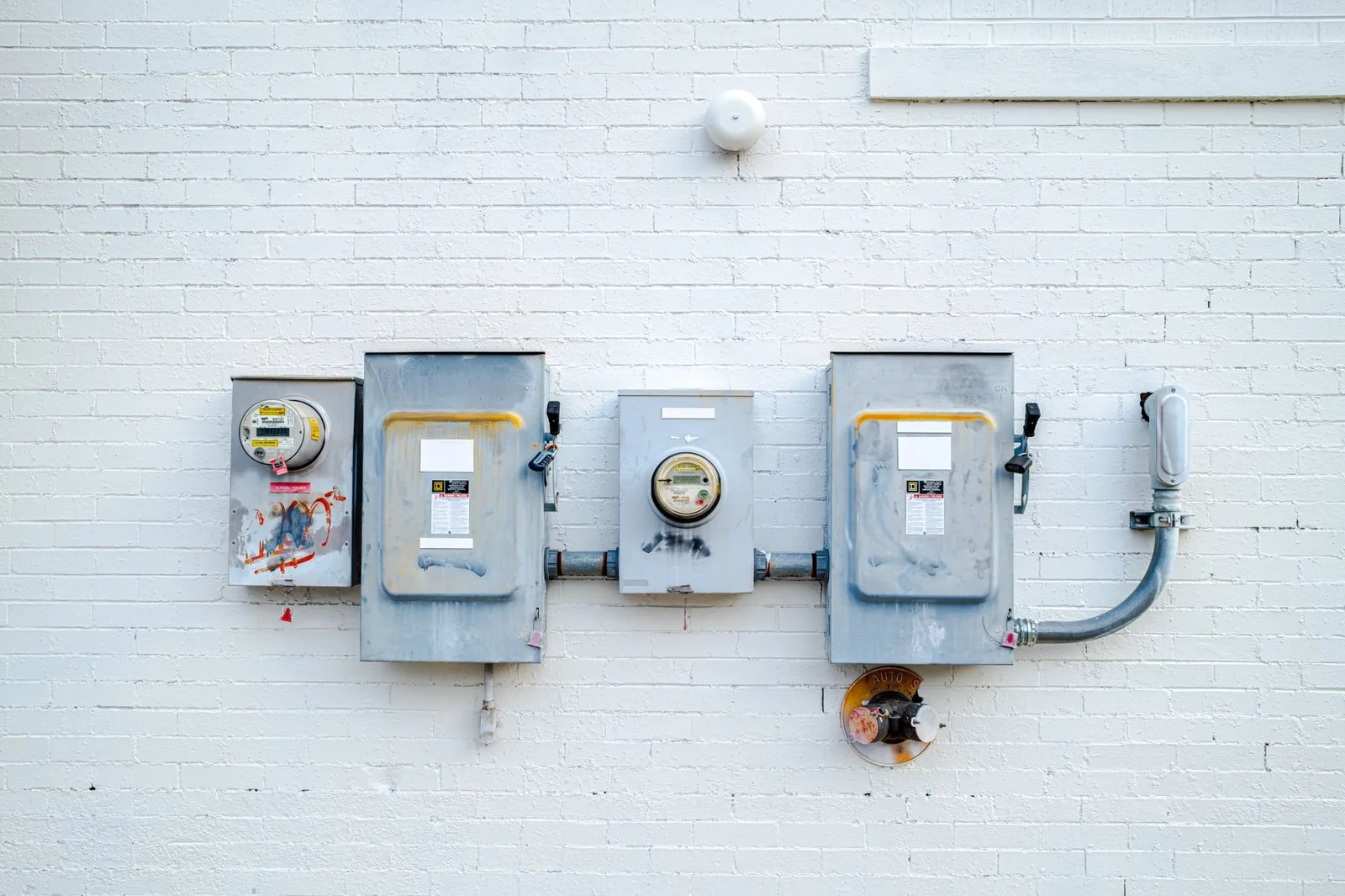
Skipping the permit is a bad trade. Unpermitted service work surfaces during a home sale, can complicate an insurance claim after a fire, and leaves you with no independent confirmation that any of it was done correctly.
What It Costs, and How to Read the Estimate
Figures vary widely by region, but the ranges are consistent enough to be useful.
Replacing a panel at the same amperage generally runs somewhere around $1,300 to $3,000 installed for a 200 amp load center. A full service upgrade, meaning new meter socket and mast alongside the panel, more commonly lands between $3,000 and $6,000, and can climb past $7,000 where the mast, the meter base, and a long conductor run all have to be replaced. Stepping up to a 400 amp service is a different tier again, often $4,000 to $6,000 and up. Permits typically add $50 to $300, and labor nationally averages roughly $90 to $110 per hour, with big-city rates well above that. Older homes hold surprises: knob-and-tube or deteriorated branch wiring discovered mid-job adds real money.
One practical note on timing. A service upgrade is planned work, so it should never be billed at emergency rates. If your panel has failed outright you may need an emergency call to make things safe, but the upgrade itself gets scheduled. Our breakdown of what emergency electricians actually charge is worth reading before you agree to anything at 2 a.m.
Get two or three written quotes, and compare scope rather than the bottom line. A cheap bid that omits the grounding electrode system or the permit is not actually cheaper.
The Reconditioned Equipment Trap
This is where the lowest bid sometimes hides its margin, and it is the single most useful thing a homeowner can learn to ask about.
Reconditioned means restored to working order and resold, and the code is specific about what may not be treated that way. Panelboards have been on the prohibited list since the 2020 edition, alongside ground fault and arc fault protective devices, receptacles, and molded-case circuit breakers. The 2026 edition added meter sockets at Section 312.3(B), for a plainly stated reason: there are no standards describing what acceptable reconditioning of a meter socket would even look like.
There is also a marking rule worth knowing. Under Section 110.21(A)(2), reconditioned equipment has to carry the name of the organization that reconditioned it and the date, and the original listing mark must be removed. So a nameplate with the certification mark stripped off, or an unfamiliar refurbisher’s sticker, is a signal rather than a curiosity.
The protection is simple. Ask that the estimate specify new, listed equipment by manufacturer and model, and make sure that covers the panel and the meter socket, not just the breakers. Used equipment in working order is technically a separate category from reconditioned equipment, but neither one belongs in the part of your house that everything else depends on.
Hiring for the Job
Verify the license and the insurance yourself rather than taking a business card’s word for it. Confirm that the contractor pulls the permit, because an electrician who asks you to pull a homeowner permit for service work is shifting liability onto you. Ask who coordinates with the utility, and get the scope in writing: service amperage, panel manufacturer and model, whether grounding and bonding are included, and whether inspection is part of the price. Our questions to ask before you hire covers how to vet whoever answers the phone.
The Bottom Line
The number on your main breaker is the budget your whole house spends from, and reading it takes about ten seconds behind a door you are allowed to open. A main that trips is the one symptom that genuinely says you have outgrown your service. Everything else, from a full panel to a car charger quote, is a planning question that a load calculation answers better than an opinion does, and Section 220.87’s metered demand method often finds room nobody expected. If an upgrade is warranted, expect utility coordination, a permit, an inspection, and a day without power, and insist on new, listed equipment throughout.
Codes, permit requirements, and utility service rules vary by municipality, so confirm the specifics with your local building department, your utility, and a licensed electrician in your area before committing to anything.
Further reading (sources)
- EC&M on why the 2026 code will not let anyone recondition a meter socket
- EC&M for what changed in dwelling unit load calculations under the 2026 NEC
- UL Solutions with the equipment the code bars from being reconditioned and how it must be marked
- This Old House covering what homeowners pay to replace a panel at each service size
- Burbank Water and Power from the permit and inspection sequence behind a residential service upgrade
Feature photo by Where at English Wikipedia, Public domain, via Wikimedia Commons.