Power Outage Triage: Is the Problem Your House, Your Panel, or the Utility?
Published on August 25, 2026
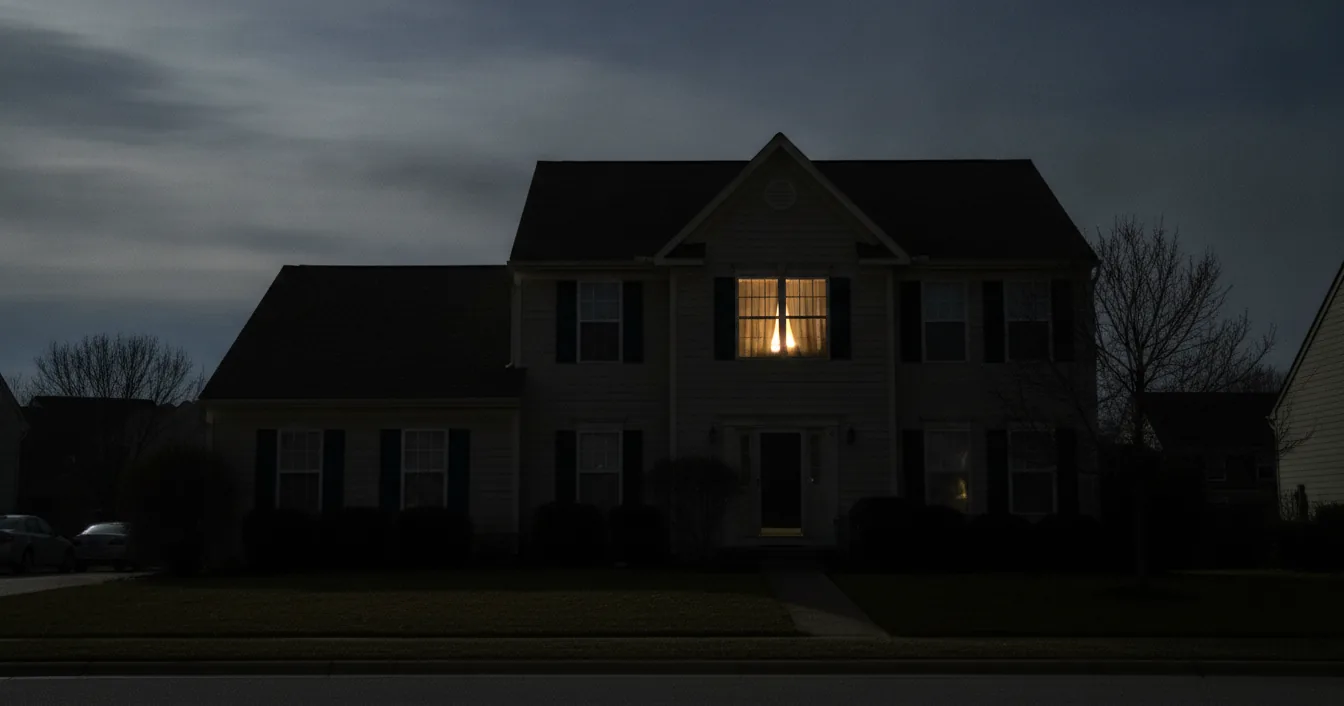
The lights go out and the house goes quiet in that particular way it only does when the refrigerator stops running. Now comes the decision that costs people money and, occasionally, their house: do you call the power company and wait, or do you call an emergency electrician at midnight rates?
Get it wrong in one direction and you sit in the dark for six hours waiting on a utility crew that was never coming, because the fault was on your side of the meter. Get it wrong in the other and you pay an emergency call-out fee for an electrician to walk up to your panel and point at the transformer down the street. The difference is usually visible from your own hallway in about ninety seconds, if you know what to look at and in what order.
Before any of that, one rule overrides this entire guide. If you can see a downed wire anywhere near your property, treat it as live no matter how still it looks, keep everyone at least 35 feet back including away from anything metal it might be touching, and call 911 and the utility. And if the outage arrived alongside a burning smell, a buzzing panel, popping sounds, or smoke, get everyone out of the house first and make the phone call from outside. Those situations are past the point where triage helps.
The First Question: How Much of the House Went Dark?
Every useful diagnosis starts with the same question, and it is not a technical one. Walk the house and count what is still working. There are four possible answers, and each points somewhere different.
If one room or a few outlets are dead, you have a branch circuit problem. If roughly half the house is dead while the rest works, you have a service level problem, and it is the most misread symptom in residential electrical work. If the entire house is dead, the question becomes whether it stops at your property line. And if the whole street is dark, you already have your answer.
Grab a flashlight, not a candle, and do the walk before you touch anything. Test a lamp in more than one room, check whether the microwave clock is lit, and see whether the air conditioner or electric dryer will run. That lap decides everything that follows.
One Room or a Few Outlets: The Problem Is Yours
When a single circuit drops out and the rest of the house is fine, the utility is not involved in any way. Something on your side opened, and in most homes it is a tripped breaker or a tripped GFCI.
Check the panel first. A tripped breaker often does not look obviously off; it rests in a middle position that can pass for on at a glance. Then check the GFCI outlets, remembering that one GFCI receptacle in a bathroom or garage frequently protects several other outlets downstream of it, including ones in completely different rooms. A dead outlet on a patio is very often a bathroom GFCI doing its job.
Resetting once is reasonable. Resetting the same breaker repeatedly is not, because a breaker that keeps letting go is reporting a fault. Our diagnostic walkthrough of why a breaker keeps tripping covers how to tell an overload from a short circuit or a ground fault, and which of those means stop touching it and pick up the phone.
Half the House Is Dark: The Symptom Most Homeowners Misread
This is the one worth understanding properly, because it looks like a coincidence and it almost never is.
A standard American home is fed by three conductors from the utility transformer: two hot legs and a neutral. Each hot leg measures 120 volts to the neutral, which runs your lights and outlets. Measured between the two legs you get 240 volts, which runs the dryer, the range, the water heater, and the air conditioner. Your panel splits the branch circuits between those two legs so the load sits roughly even.
When one leg is lost, the effect is exactly what people describe as “half my house has no power.” Roughly half the 120 volt circuits go dead while the other half work normally, and every 240 volt appliance either refuses to start or behaves strangely, a dryer that tumbles without heating being the classic example. Nothing about that pattern is random. It is the panel’s two halves showing you which leg went missing.
The cause sits somewhere on a short list: a blown fuse on the utility’s transformer, a failed connection at the weatherhead or in the meter base, a loose lug in the panel, or one half of the main breaker failing internally. Some of those belong to the power company and some belong to you, which is why the next few checks matter so much.
The Open Neutral: The Version That Is a Real Emergency
There is a close relative of the lost leg that presents differently and deserves more urgency. If the neutral conductor back to the transformer opens, both hot legs are still there, but the 120 volt midpoint stops being held where it belongs. The two halves of your house end up wired in series across 240 volts, and they divide that voltage according to how much load each side happens to be carrying.
The result is unmistakable once you know it. Lights on one side of the house brighten while lights on the other side dim, and the effect shifts every time a large appliance cycles on or off. Homeowners describe lights that pulse in time with the washing machine. An electrician measuring at the panel might find one leg sitting at 135 volts while the other has collapsed to 108. Anything plugged into the over-voltage side is being cooked, which is why an open neutral often announces itself by killing several electronics at once.
Two things make this worse than a simple outage. A breaker will not save you, because nothing here is an overcurrent condition a breaker is built to see. And the return current that can no longer get home through the neutral goes looking for another path, using grounding conductors, water piping, or the bonded shield on your cable television line. People have found melted insulation on the cable feed running back toward the pole.
If you see lights brightening and dimming in opposition across the house, shut the main breaker off if you can reach it safely, then call both the utility and an electrician. Do not wait to see whether it settles down.
The Whole House Is Dark: Look Outside Before You Look at the Panel
If nothing in the house works, spend the first thirty seconds at a window rather than in the basement. Are the neighbors lit? Are the streetlights on? Does the utility’s outage map on your phone already show your address inside a reported outage? A dark street is a complete diagnosis, and the only remaining task is to report the outage so your address is on the list.
If your house is the only dark one on the block, go look at the panel, and look at it with the cover closed. What you are checking is whether the main breaker, the large one usually at the top, has tripped. A main that has tripped on its own is meaningful. It can indicate a genuine overload, but on an older service it can also mean the main breaker itself is failing, and either way you should reset it once and only once. If it will not hold, stop.
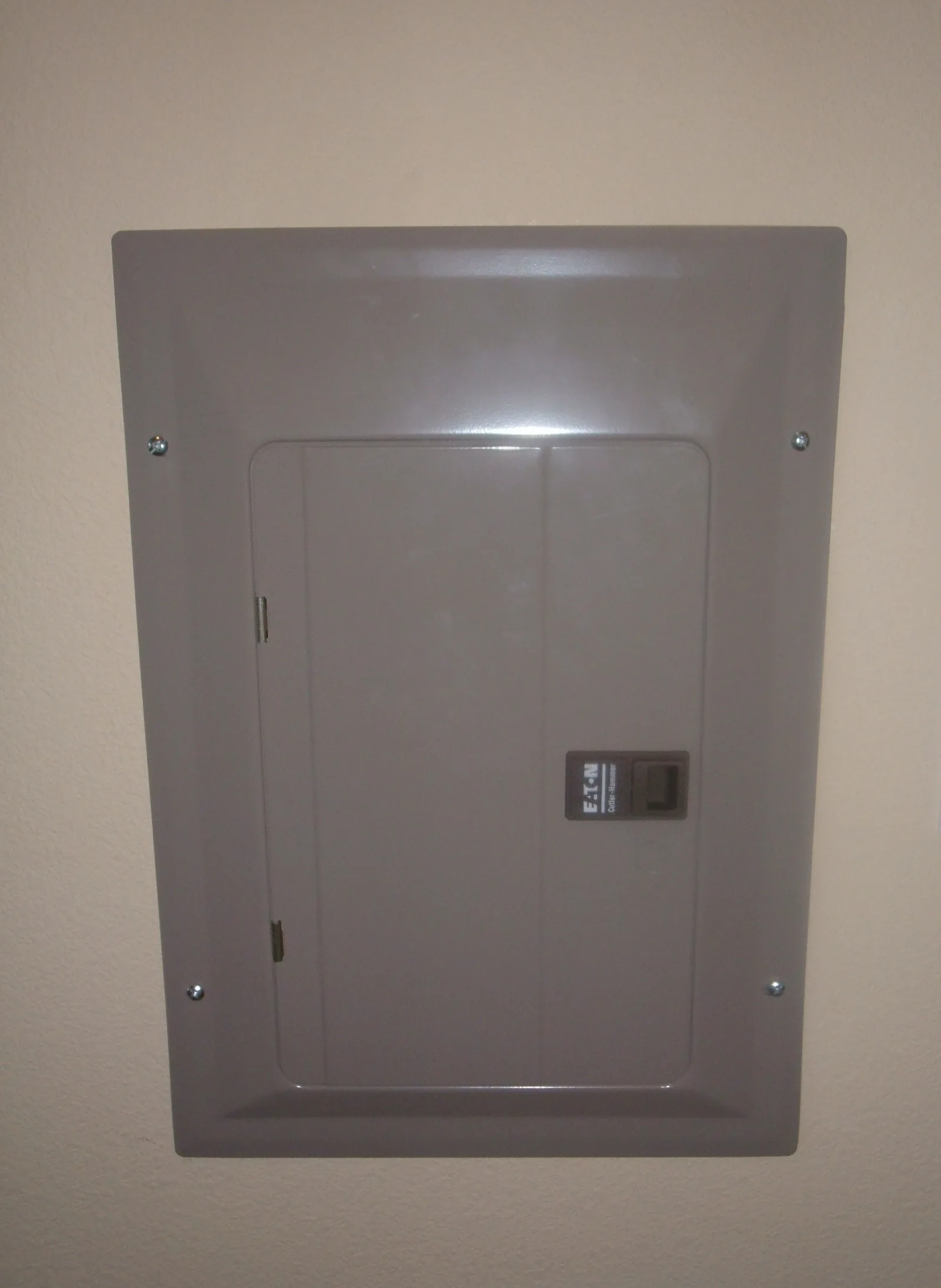
What stays firmly off limits is the cover itself. Removing the dead front puts your hands within inches of the service entrance conductors, and those stay energized at full utility current even with the main breaker off. Nothing in your house protects them. Operating a breaker from the front of a closed panel is homeowner territory. Taking six screws out of the cover is not.
Reading the Meter and the Service Drop From the Ground
Your last two clues are outdoors, and both are look only.
Start at the meter. Most utilities have moved to smart meters with a small digital display that cycles through readings. If your meter is dark and blank while the one on the house next door is scrolling normally, that points at the service feeding you rather than at anything inside. Look at the meter enclosure too: scorch marks, rust streaks, a burnt smell, a cracked or fogged cover, or a socket that has pulled away from the siding are all findings worth reporting.
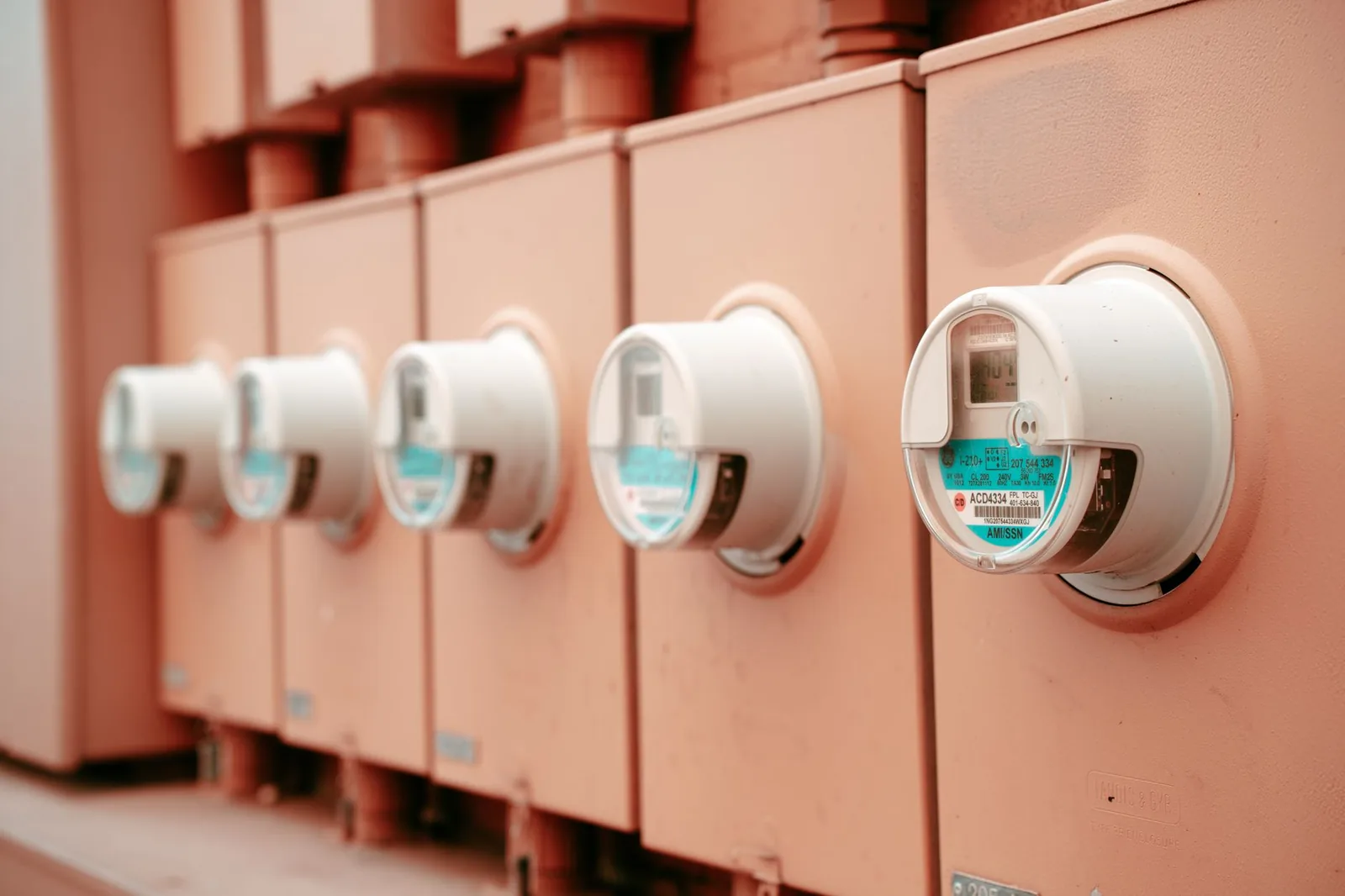
Never pull the meter yourself. It is utility property, it is almost always sealed, and the terminals behind it are unprotected line side connections capable of a blast injury. Breaking that seal also lands you in theft of service territory in most jurisdictions.
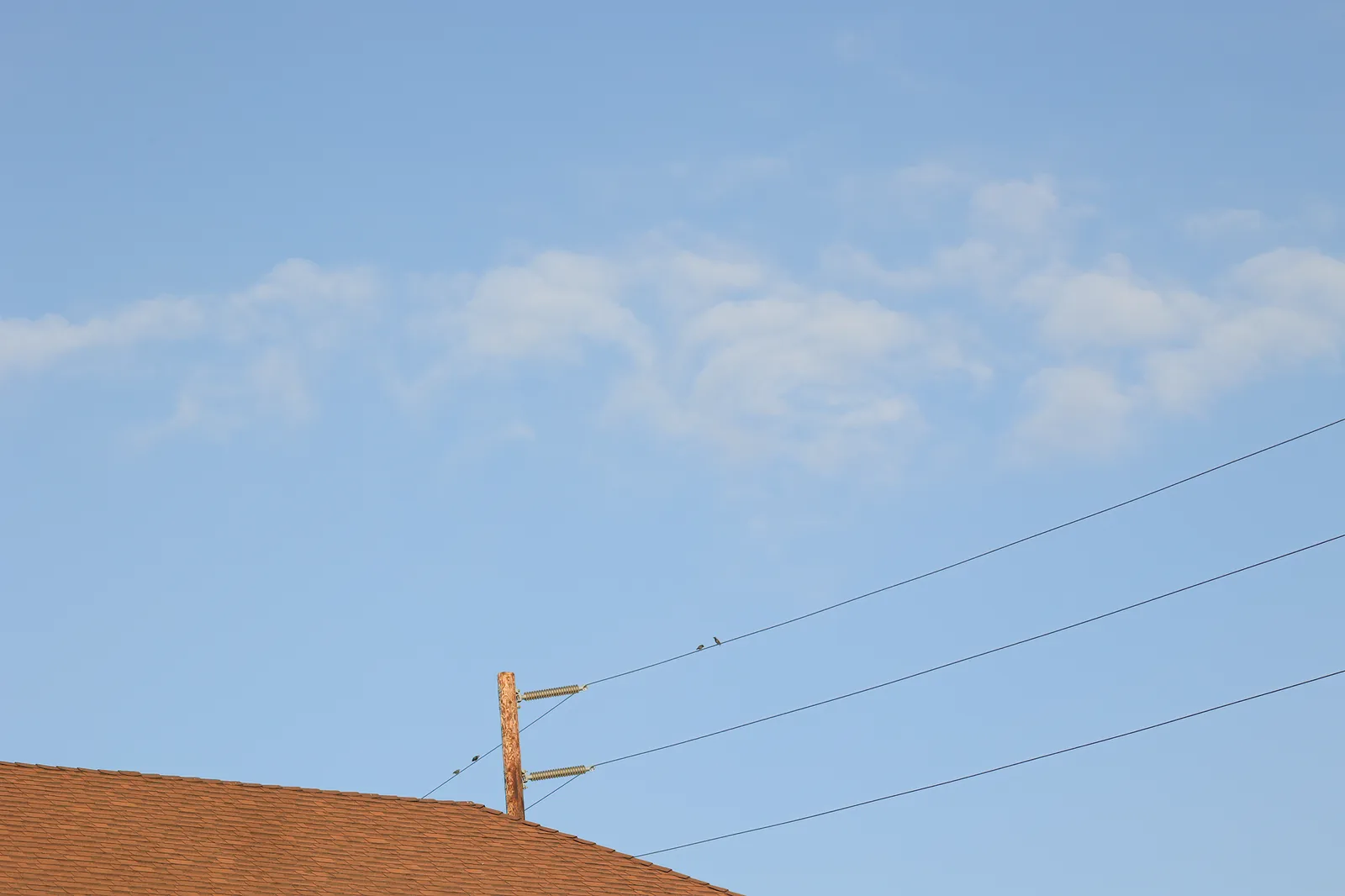
Then look up at where the wires meet the house. On an overhead service you should see three conductors running from the pole to a connection point, then into a curved fitting at the top of a pipe. From the yard, check the geometry: is the pipe still vertical, or has it been pulled over? Is a conductor hanging low, resting on a gutter, or lying in a tree limb? Is the fitting still capped, or has the connection at the top come apart? After a storm this is where damage concentrates, and it is the single most useful thing you can report to a dispatcher.
Where Your Equipment Ends and the Utility’s Begins
Here is the line that decides who you call, and it surprises most homeowners.
The utility owns the service drop, meaning the wires from the pole or the pad mounted transformer up to the connection at your house, and it owns the meter itself. That is the short list. Entergy states it plainly for its customers: their side is the service wire carrying energy to your home, plus the meter that measures what you use.
Everything else is yours. The weatherhead on top of the pipe, the mast or riser that pipe forms, the meter base that the utility’s meter plugs into, the service entrance conductors running to your panel, the main disconnect, the panel, and every circuit past it are all customer owned equipment. NIPSCO draws the same boundary for its territory, listing the weatherhead and the meter box as customer property while it keeps the drop and the meter.
That boundary has a consequence people discover at the worst possible moment. If your meter base is cracked or your mast has been torn loose, the utility will not simply reconnect you. JEA’s storm guidance spells out the sequence: a licensed electrician makes the repair, pulls a permit from the county or city building department, and the department inspects the work, and only after the department notifies the utility does power come back. That takes days, not hours, and calling the outage line does not accelerate it. It is one of the strongest arguments for preparing your electrical system before an outage rather than during one.
Who to Call, and What to Tell Them
Call the utility first when the street is dark, when the outage map already shows your address, when you can see a downed or sagging conductor, when the meter is dark and the neighbors’ meters are not, or when you need power cut at the meter so an electrician can work safely.
Call an emergency electrician when only your house is out and the street is fine, when half the house is dead and the utility has no reported outage, when lights are brightening and dimming in opposition, when the main breaker will not stay set, or when the meter base, mast, or weatherhead on your building is visibly damaged. Anything with heat, buzzing, scorching, or a burning smell goes to an electrician immediately regardless of the rest.
When the answer is genuinely unclear, call the utility first anyway. Their trouble crew checks the drop and the transformer at no cost to you, and if the fault turns out to be past the meter they will tell you so, which turns an ambiguous situation into a specific work order for your electrician. Before that electrician arrives, confirm the license and the insurance, and know roughly what the visit should run. Our guide to average emergency electrician costs sets those expectations, and the questions worth asking before you hire will help you vet whoever answers the phone.
What Not to Do While You Wait
A few things reliably turn an outage into an incident.
Do not plug a generator into a wall outlet or a dryer receptacle to feed the house. That backfeeds your panel, energizes the utility’s drop in reverse, and can kill a lineworker who has every reason to believe the circuit is dead. A transfer switch or an interlock kit installed by an electrician is the only correct answer. Keep the generator at least 20 feet outside with the exhaust pointed away, because as we covered in our guide to generator carbon monoxide poisoning, the generator kills more people after a storm than the outage does.
Do not flip breakers at random to see what happens, and do not use candles when a flashlight will do. Before power is restored, unplug or switch off sensitive electronics and large motor loads. Restoration frequently arrives with a surge, and a house that comes back with the air conditioner, the water heater, and the range all calling at once can trip the main and send you right back to the panel.
The Bottom Line
Outage triage is a decision tree with four branches, and you can walk it before you call anyone. One circuit out is a breaker or a GFCI and belongs to you. Half the house out is a lost leg or an open neutral at the service, and the version with lights brightening on one side while dimming on the other is an emergency worth shutting the main for. The whole house out means look outside first, because a dark street answers the question for you. A dark house on a lit street means the fault sits somewhere between the transformer and your panel, on a boundary where the utility owns the drop and the meter while you own the weatherhead, the mast, the meter base, and everything downstream.
Work out which side of the meter you are standing on and you will make the right call the first time. Codes, permit requirements, and utility service rules vary by municipality, so confirm the specifics with your local utility and a licensed electrician in your area.
Further reading (sources)
- Entergy on which parts of the service the utility repairs and which parts you own
- NIPSCO for the customer side of a damaged service line and the reconnection sequence
- JEA with why a damaged weatherhead needs an electrician, a permit, and an inspection before power returns
- InspectAPedia covering the flickering and voltage swings that give away a failing neutral
- EC&M from an electrician’s approach to turning a vague power complaint into a specific fault