Childproofing Your Home's Electrical System: Outlets, Cords, and the Injuries Pediatric ERs See Most
Published on June 8, 2026

Most parents childproof an outlet the same way: a trip to the hardware store, a bag of plastic plug caps, and twenty minutes pressing them into every socket within a toddler’s reach. It feels thorough. It is also aimed at the wrong target. When pediatric burn centers tally up how young children actually get hurt by electricity, the empty wall outlet is not the main villain. The cord is.
That single fact reshapes how you should childproof a home, and the rest of this guide follows from it. We will start with what the injury data shows, fix the cords first, then upgrade the outlets with the one product that genuinely works, and finish with the outdoor high-voltage hazards that send older kids to the hospital. Before any gadget, though, hold on to the simplest rule: if you ever see sparks, smell burning, or find a scorched or warm outlet, stop using that circuit and treat it as urgent, because a fault that can shock a curious child needs a professional, not a plastic cap.
What Pediatric Burn Centers Actually See
Children get hurt by household electricity in two distinct patterns, split sharply by age. The first and most common involves the under-five crowd at home. An eight-year review of one tertiary burn center found that low-voltage injuries clustered in children younger than five, happened indoors, and traced back to two causes over and over: substandard or damaged electrical cords and poor-quality devices, and small objects pushed into outlet slots. The second pattern belongs to older children and teenagers, who are far more likely to suffer high-voltage injuries outdoors, often from contact with power lines running close to roofs and balconies.
Here is the detail that should redirect your shopping list. In a classic case series of 144 pediatric electrical injuries, appliance and extension cords caused roughly two-thirds of the injuries in children twelve and under, while wall outlets accounted for only about 15 percent. Household cords, the researchers concluded, are the leading electrocution hazard for young children, and there are still no federal safety mandates governing them. Outlets do matter, and we will fix them, but if you only had time to address one thing today, it would be the tangle of cords behind your furniture.
Fix the Cords First
The signature toddler electrical injury is an oral burn. A child mouths or bites through an energized cord, most often the female end of an extension cord or a frayed lamp wire, and the current arcs across the wet tissue at the corner of the mouth. These burns are deceptive. They can look modest at first, then bleed heavily up to a week or two later, when the dead tissue separates and exposes the artery in the lip. Any child who has bitten a cord or has a burn at the mouth needs to be seen by a clinician, not watched at home. Our companion guide on what to do in the hour after an electric shock walks through that decision in detail.
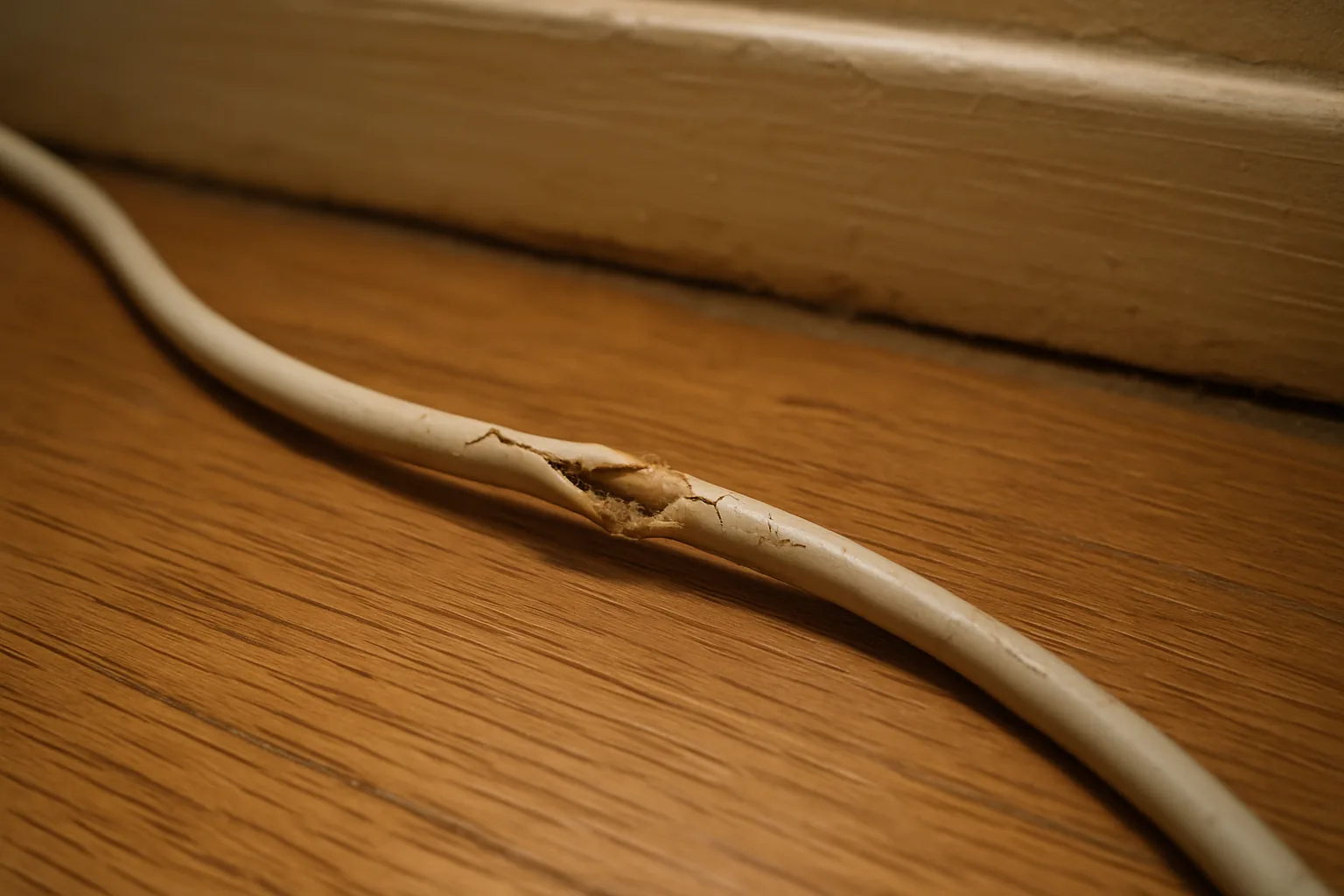
Prevention here is low-tech and high-impact:
- Retire any cord that is frayed, cracked, chewed, or warm to the touch. Damaged cords were a named cause in the burn-center data, and there is no safe way to tape one back into service.
- Shorten the slack. Cord shorteners, wind-up reels, and cable boxes hide the loop of extra cord that invites a tug or a chew. A cord pulled taut and tucked behind furniture is far less interesting to a crawler than one pooling on the floor.
- Keep extension cords out of nurseries and play areas, and never run a cord under a rug, where heat builds and damage hides.
- Unplug and store small appliances (the curling iron, the blender, the phone charger) when they are not in use. An unplugged cord carries no current for a child to find.
Tamper-Resistant Receptacles, Not Plastic Caps
The familiar push-in plastic outlet cap is the weakest link in most childproofing kits. The case against it is blunt: in a Temple University study, every child aged two to four managed to pull a common plastic cap out of an outlet within ten seconds, which turns a defeated safeguard into a choking hazard of its own. Meanwhile the outlet stays a real danger. The Electrical Safety Foundation International estimates that about 2,400 children are treated each year for shocks and burns after poking objects into receptacles, roughly seven a day, with six to twelve deaths. The fix the electrical industry settled on is built into the outlet itself.
A tamper-resistant receptacle looks like an ordinary outlet but hides spring-loaded shutters behind the slots. The shutters retract only when equal pressure is applied to both slots at the same time, the way the two blades of a plug push in together. A single object (a hairpin, a key, a curious finger) presses on one shutter, which stays shut. The National Electrical Code has required these receptacles in new and renovated dwelling units since its 2008 edition, so newer homes already have them, identifiable by the letters TR stamped on the faceplate between the slots.
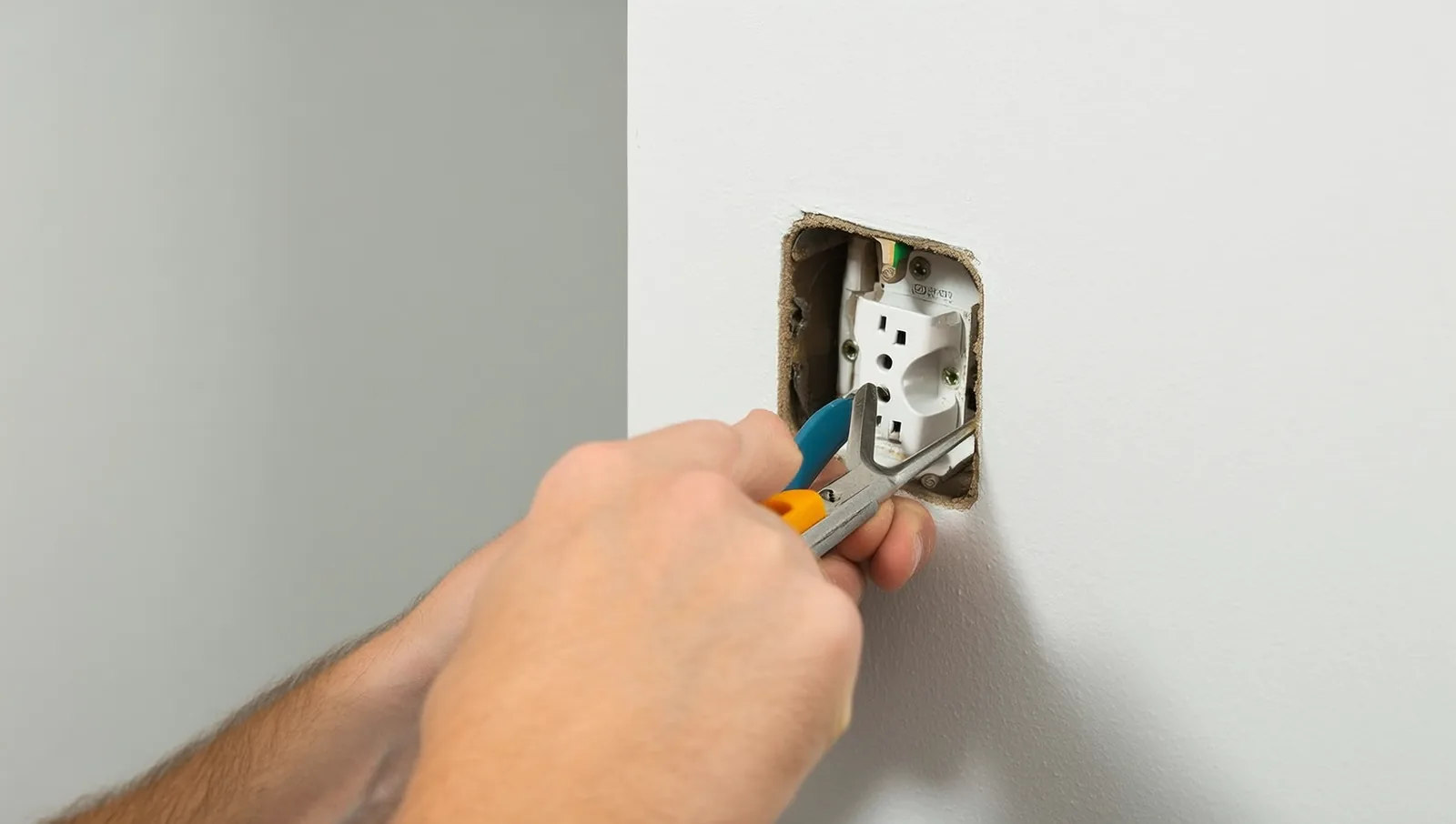
If your home predates that requirement, swapping standard outlets for tamper-resistant ones is the most durable outlet upgrade you can make. Replacing a receptacle means working inside an energized box, which is licensed-electrician territory rather than a weekend project, especially if the cover comes off to reveal aluminum wiring, no ground, or scorch marks. For outlets you want to protect in the meantime, a sliding self-closing wall plate that covers the slots whenever a plug is pulled out is a better stopgap than loose caps.
The In-Use Outlet, Power Strips, and Water
An outlet with something plugged into it is a different problem, because the protection now has to cover the plug and the cord, not just empty slots. A few targeted devices help:
- Outlet box covers, sometimes sold as appliance locks, enclose the plug so a child cannot unplug a running appliance or grab the half-exposed prongs.
- Power-strip covers turn that bright, button-covered strip on the floor (a magnet for small hands) into a closed box.
- Move countertop appliances back from the edge and coil their cords away. Burn centers see children pull down toasters, kettles, and fryers by a dangling cord, which combines an electrical hazard with a scald.
Water multiplies every electrical risk, so kitchens, bathrooms, and laundry areas deserve extra attention. Outlets near sinks and tubs should be protected by ground-fault circuit interrupters, the receptacles with TEST and RESET buttons that cut power in a fraction of a second when current strays toward a grounded path. The same physics that makes water dangerous indoors makes it lethal outdoors near pools and docks, which we cover in our guide to electric shock drowning.
The Outdoor Hazards That Hurt Older Kids
As children grow into climbers and risk-takers, the danger shifts outdoors and upward in voltage. The burn-center research found that high-voltage injuries fell mostly on children older than twelve and happened outside, frequently from contact with power lines passing close to roofs and balconies. These are a different order of severity. High-voltage contact in that data produced deep, full-thickness burns, elevated muscle-injury markers, and an amputation rate of 12 percent among the severe cases.
The practical childproofing here is about geography and rules, not gadgets. Teach children to stay away from pad-mounted transformers (the green metal boxes in many yards), to never climb a tree that brushes a power line, and to keep kites, drones, and long poles well clear of overhead wires. Treat any downed line as live and call 911 and the utility immediately, keeping everyone at least the length of a school bus away. If wires run alarmingly close to a deck, window, or roofline where children play, that is a call to your utility company, which owns the service drop, and never a problem to solve with your own ladder.
Build the Room So a Mistake Cannot Hurt
The thread running through all of this is that reliable childproofing engineers the danger out, rather than depending on a toddler to remember a rule or a parent to never look away. A systematic review of home-injury prevention found that safety devices and home inspections measurably reduced several household hazards, while also showing how stubbornly electrical and burn risks resist education alone. Hardware that works whether or not anyone is watching (the tamper-resistant receptacle, the GFCI, the retired frayed cord) is worth more than a wall of reminders.
Some of that hardware you can install yourself, like a sliding outlet cover or a power-strip box. The parts that involve opening a wall box, adding GFCI protection, retrofitting tamper-resistant receptacles throughout the house, or investigating an outlet that sparks or runs warm belong to a licensed electrician. Electrical codes and permit requirements vary by municipality, so a local pro will know which upgrades your jurisdiction requires and pull the permits that keep the work inspected and insurable. Before hiring, run through the questions every homeowner should ask an emergency electrician, confirm the license and insurance with your state board, and use our guide to average emergency electrician costs to set expectations. If you are unsure whether a warm outlet or a faint burning smell is urgent, our breakdown of when an electrical problem is a true emergency will help you judge it.
The Bottom Line
Childproofing a home’s electrical system is less about plugging every empty outlet and more about the cords kids actually chew and pull, the receptacles that should be tamper-resistant rather than capped, and the outdoor voltage that climbs with a child’s age. Start with the cords, upgrade the outlets to ones that protect themselves, put water-area circuits on GFCIs, and teach the outdoor rules early. Hand the in-wall work, and anything that sparks, scorches, or smells hot, to a licensed local electrician. Do that, and the two injuries pediatric burn centers see most, the mouth burn from a cord and the finger in a socket, become hazards your child never gets the chance to find.
Further reading (sources)
- Journal of Burn Care & Research on how low and high voltage injuries differ in children
- Archives of Pediatrics & Adolescent Medicine for why household cords are the leading shock hazard for young kids
- Electrical Safety Foundation International with the case for tamper-resistant receptacles over plastic caps
- HealthyChildren.org from the American Academy of Pediatrics on how electric shock injuries happen to children
- Child: Care, Health and Development covering what home safety devices and inspections actually prevent