AFCI vs GFCI: Why Modern Homes Need Both Kinds of Protection
Published on June 18, 2026
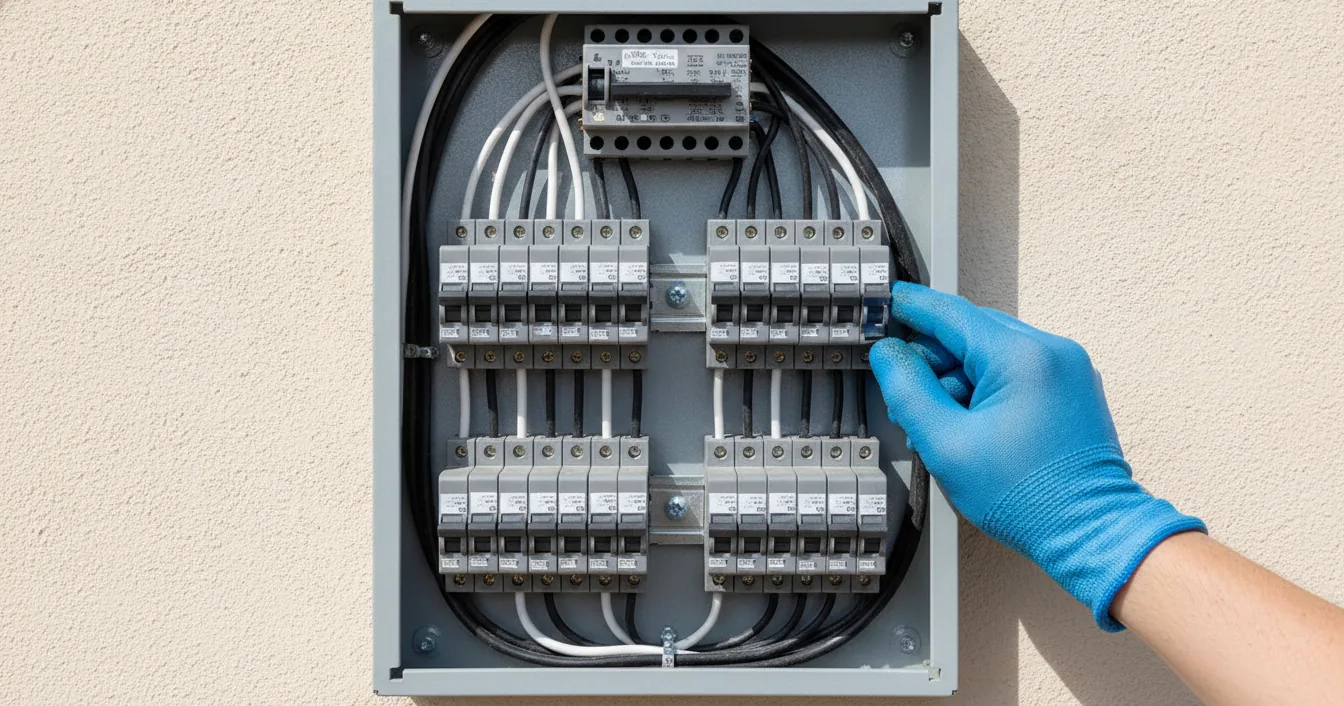
Two of the most important safety devices in your home look nearly identical, sit inches apart in the same panel, and do completely different jobs. One is built to keep you from being electrocuted. The other is built to keep your house from catching fire. Homeowners tend to use the acronyms AFCI and GFCI interchangeably, ask the electrician for “the one with the test button,” and assume a breaker is a breaker. That confusion is worth clearing up, because assuming you have protection you do not actually have leaves a real gap between your family and a hazard the other device was never designed to catch.
May is National Electrical Safety Month, and this year the National Electrical Manufacturers Association marked it by releasing a blunt reminder of why arc protection matters: a video called “Seeing is Believing” that shows real arc faults igniting inside walls, attics, and crimped cords. The backdrop is sobering. Roughly 46,000 home fires a year in the United States trace back to some kind of electrical failure or malfunction, and they kill and injure hundreds of people annually. One safety rule comes before any of the explanation below: if a breaker or outlet ever feels warm, smells like hot plastic, buzzes, or shows a scorch mark, stop using that circuit and treat it as urgent. If you see smoke or flame, get everyone out and call 911 rather than reaching for water.
What a GFCI Protects: You
A ground-fault circuit interrupter watches people. More precisely, it watches the balance between the current flowing out on the hot wire and the current returning on the neutral. In a healthy circuit those two match almost exactly. When a difference appears, it means current is escaping the circuit and finding another path to ground, and the most dangerous “other path” is a human body standing on a wet floor or gripping a faulty appliance. A GFCI senses an imbalance as small as about 5 milliamperes and cuts power in well under a tenth of a second, fast enough to stop a shock before it stops your heart.
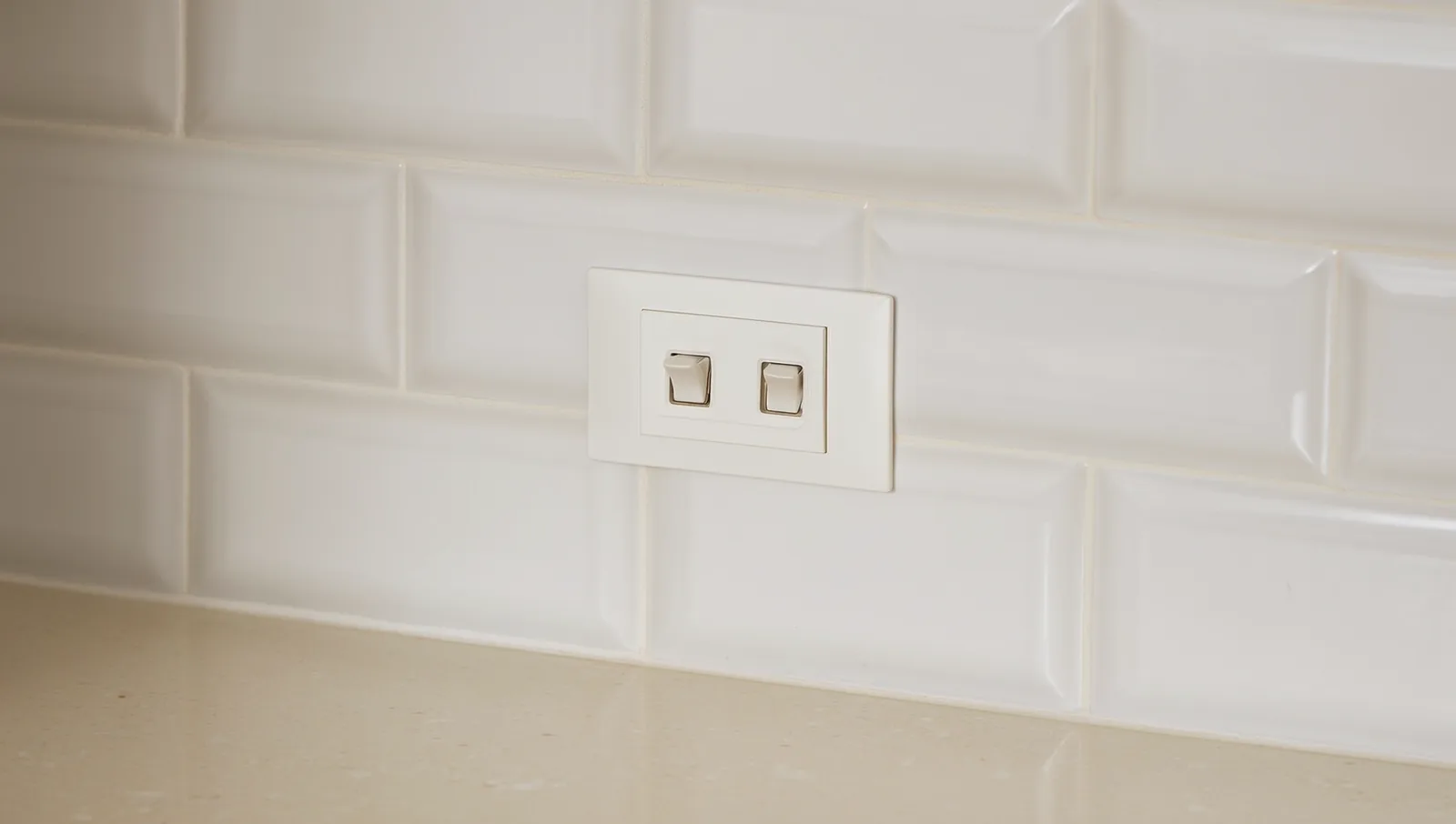
That is why GFCIs live wherever electricity and water can meet. You know them as the outlets with the TEST and RESET buttons in bathrooms and kitchens, though the identical protection also comes built into a breaker back in the panel. Since these devices spread through American homes in the 1970s, electrocutions in the protected areas have fallen dramatically. What a GFCI does not do is care about fire risk inside intact wiring. Its entire job is keeping leaked current from running through a person, which is also why the same physics turns lethal outdoors near pools and docks, the scenario we cover in our guide to electric shock drowning.
What an AFCI Protects: The House Itself
An arc-fault circuit interrupter watches the wiring. Arcing happens when electricity jumps a tiny gap instead of flowing through a solid connection, and that jump produces an intensely hot spark that can reach thousands of degrees in a space the size of a pinhead. There are two flavors. A series arc forms when a single conductor is partly broken, say a wire nicked by a drywall screw or a terminal left loose behind an outlet. A parallel arc jumps between two conductors, hot to neutral or hot to ground, through insulation that has been crushed or worn through.
These faults hide where you cannot see them: behind finished walls, up in attic runs, inside a lamp cord crimped under a couch leg, or at an overloaded power strip. The danger is not shock, it is ignition. An AFCI recognizes the chaotic, high-frequency electrical signature an arc makes, tells it apart from the harmless arcing of a light switch or a vacuum motor, and trips before the heat finds something to burn. That is the technology behind NEMA’s awareness campaign, and the reason arc protection keeps expanding through the code. Many of the same culprits show up in our breakdown of extension cord fire safety, where a pinched or daisy-chained cord is exactly the kind of damaged connection an AFCI is built to catch.
Why You Cannot Substitute One for the Other
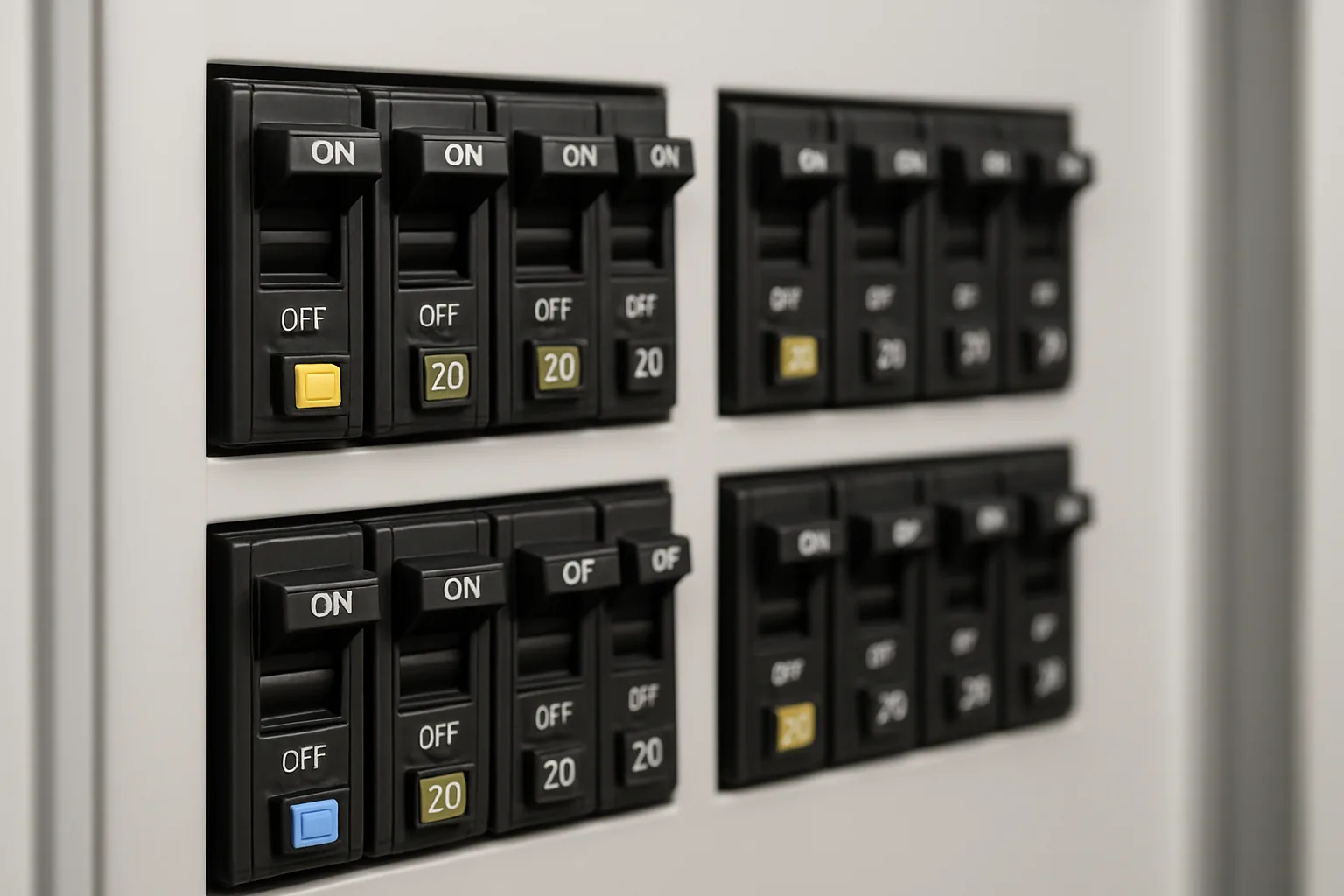
Here is the crux of the whole topic. A GFCI is blind to a series arc, because a deteriorating connection that arcs and overheats but never leaks current to ground keeps the hot and neutral perfectly balanced. The GFCI sees nothing wrong, right up until the framing behind it catches. An AFCI, in turn, is not built to protect a person from a clean ground fault at a current too low to arc, the wet-hairdryer-in-the-sink case a GFCI handles in milliseconds. The two devices listen for different signatures of different dangers. A circuit can pass one test and fail the other completely. That is the entire reason a modern home needs both, and why the code now calls for them side by side in many of the same rooms.
Where the Code Requires Each
The National Electrical Code is updated every three years, and your town adopts a particular edition (sometimes with local amendments) on its own schedule, so treat the following as the modern baseline rather than gospel for your exact address. Your municipality’s permit office or a local electrician can tell you which edition you are held to.
GFCI protection is required for receptacles in the wet and grounded parts of a house: bathrooms, the kitchen outlets serving countertops, laundry rooms, garages, unfinished basements, crawl spaces, outdoors, and near sinks, tubs, pools, and spas. Each recent edition of the code has stretched the list a little further, pulling in places like all basement receptacles and the circuit behind a dishwasher.
AFCI protection covers the living spaces where wiring runs hidden through framing. The modern code calls for it on nearly every 120-volt, 15- and 20-amp branch circuit feeding bedrooms, living rooms, family rooms, dining rooms, kitchens, sunrooms, closets, hallways, and laundry areas. That requirement started narrow, with bedroom circuits around 1999, and has widened with almost every edition since. Water-area protection that guards children near outlets is one piece of a whole-home approach we lay out in our guide to childproofing your home’s electrical system.
You will notice the two lists overlap. A kitchen or a laundry room can fall under both requirements at the same time, which is exactly where a third kind of device earns its keep.
Dual-Function Breakers and Retrofitting an Older Panel
When a circuit needs both protections, you do not stack two devices. A dual-function circuit interrupter (sometimes labeled DFCI, or simply AFCI/GFCI) packs both sets of sensors into a single breaker or a single receptacle. One device satisfies both lines of the code on a kitchen or laundry circuit, which is why dual-function breakers have become the default choice for new work in those rooms.
If your home predates these requirements, the good news is that you do not have to rewire to add modern protection. There are two practical routes. The first is swapping in AFCI, GFCI, or dual-function breakers at the panel, provided your panel’s brand and model accepts a compatible breaker. The match matters, because breakers are not universal across manufacturers. The second route is installing an AFCI or GFCI receptacle at the first outlet on a circuit, which then protects everything downstream of it. That receptacle approach is the usual answer when a panel is too old to take modern breakers, including many fuse panels.
One caveat deserves its own sentence, because it is the most expensive surprise in this whole subject. A few discontinued panel lines, the Federal Pacific Stab-Lok and Zinsco brands chief among them, have a documented history of breakers that fail to trip, and there is no safe modern AFCI or GFCI breaker made for them. If you find one of those, the conversation is about replacing the panel, not adding a breaker to it. Either way, opening a service panel is licensed-electrician work, your jurisdiction almost certainly requires a permit, and confirming the contractor’s license and insurance before they touch the panel is not optional. Our overview of average emergency electrician costs will set your expectations on price, and the questions every homeowner should ask before hiring an electrician will help you vet whoever does the work.
It is also worth knowing what a tripping AFCI is telling you. Early models earned a reputation for nuisance tripping, but today’s combination AFCIs are far better at ignoring harmless noise, so a modern one that trips repeatedly is usually catching something real, a loose connection or a damaged cable, rather than crying wolf. Resetting it over and over instead of finding the cause throws away the protection you paid for. A breaker that will not stay set is a reason to call an electrician, never a reason to drop in a plain breaker in its place.
Test Your Protection This Electrical Safety Month
Both devices carry a built-in TEST button for a reason: their internal electronics can fail quietly, and a dead GFCI or AFCI looks exactly like a working one until the day you actually need it. Manufacturers recommend pressing TEST once a month. The device should trip and cut power, after which you press RESET to restore it. If pushing TEST does nothing, the device has failed and needs to be replaced. Newer self-testing models check themselves automatically on a schedule, but the manual test still confirms the trip mechanism with your own eyes.
National Electrical Safety Month is as good a prompt as any to walk the house once. Count the breakers in your panel labeled AFCI, GFCI, or dual-function, find the TEST and RESET outlets in your bathrooms and kitchen, and make a note of any room the modern code would now cover that has neither. That short inventory tells you exactly what to raise with an electrician.
The Bottom Line
GFCIs protect people from shock, AFCIs protect homes from fire, and the two watch for entirely different faults. That is why a fully protected modern home carries both, often combined into dual-function devices where the code requires each in the same room. If your house predates these rules, you do not need a rewire so much as a licensed electrician to fit the right breakers or protective receptacles and confirm your panel can safely accept them. Codes and permit requirements vary by municipality, so a local pro is the one who knows what your jurisdiction enforces. And if a breaker keeps tripping, or an outlet ever runs warm, smells hot, or buzzes, treat it as the warning a fire gives you before it arrives, and our breakdown of when an electrical problem is a true emergency will help you judge how fast to act. The half hour you spend reading your own panel this month is one of the cheapest pieces of home safety you will ever buy.
Further reading (sources)
- EC&M on NEMA’s arc-fault awareness video for National Electrical Safety Month
- Electrical Safety Foundation International for how arc-fault interrupters stop a fire before it starts
- ESFI with where ground-fault protection belongs and the lives it has saved
- Eaton covering the rooms the NEC now requires AFCI and GFCI protection
- NFPA from the electrical safety basics behind home fires