Generator Carbon Monoxide Poisoning: The Outage Hazard That Kills More People Than Power Loss
Published on June 3, 2026
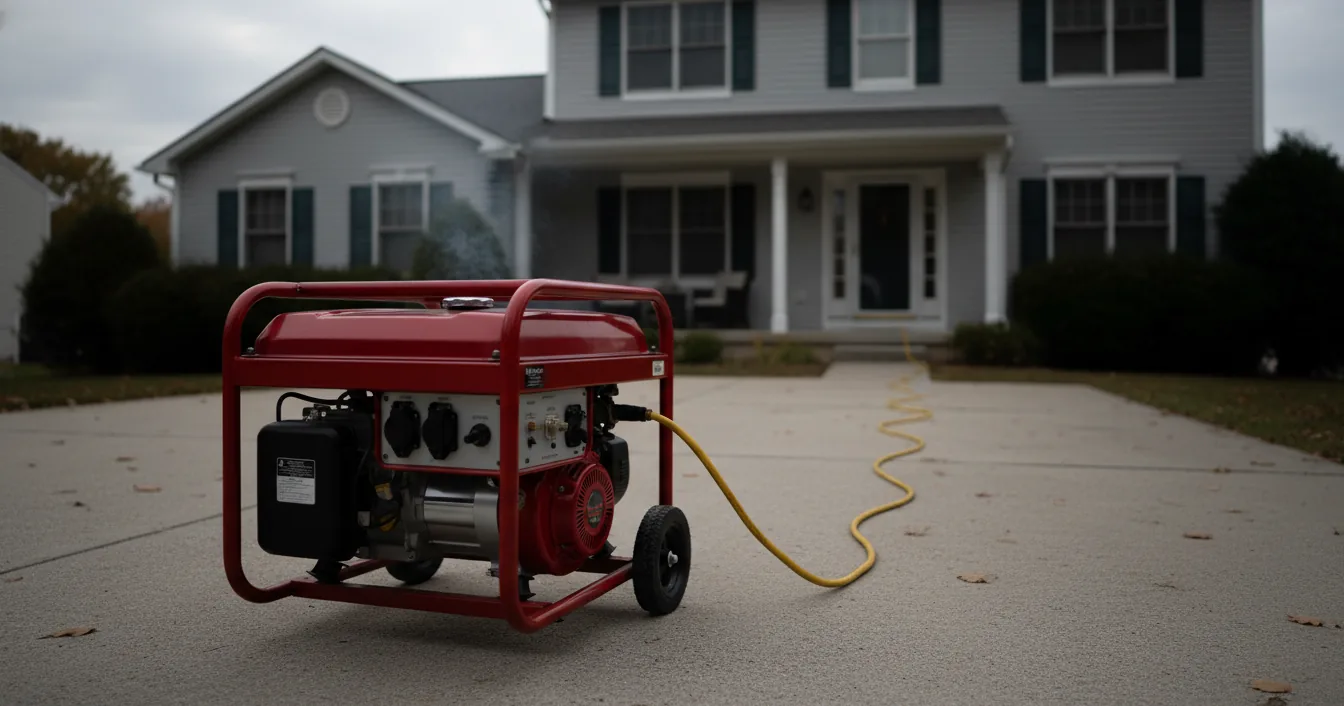
When a storm takes the power out, the outage itself rarely hurts anyone. What hurts people is the machine they bring in to survive it. Every storm season, emergency rooms fill not with patients injured by the blackout but with families poisoned by the portable generator humming in the garage or just outside a bedroom window. Carbon monoxide, the invisible gas that engine produces, is the reason a power outage turns deadly, and it kills far more people than the loss of electricity ever does.
The numbers are stark. The U.S. Consumer Product Safety Commission estimates that portable generators are linked to about 100 deaths a year from carbon monoxide poisoning, and to roughly 765 deaths since 2009, which is around 40 percent of all carbon monoxide deaths tied to consumer products. The Centers for Disease Control and Prevention puts total unintentional CO deaths near 500 a year, with the spikes clustered around the storms that knock out power. This guide explains why generators are so dangerous, where they have to be placed, how a cheap alarm buys you the warning your body will not, and why a permanently installed standby unit is the safer answer for homes that lose power often.
Why a Generator Is Deadlier Than the Blackout
Carbon monoxide is colorless, odorless, and tasteless. You cannot see it, smell it, or taste it, which is exactly why it kills. A single portable generator can produce as much carbon monoxide as hundreds of idling cars, and that exhaust does not politely disperse. In an enclosed or partly enclosed space it climbs to lethal levels within minutes.
The pattern repeats with every major outage. A CDC investigation after a December 2002 ice storm in Mecklenburg County, North Carolina, is one of the clearest illustrations on record. The storm knocked out power to 78.9 percent of county households. Over the next nine days, 124 cases of symptomatic carbon monoxide poisoning were reported, and 96.2 percent of the severe poisonings happened in homes with no working CO alarm. The danger is not the dark house. It is the engine running to light it back up.
The 20-Foot Rule: Where a Generator Has to Live
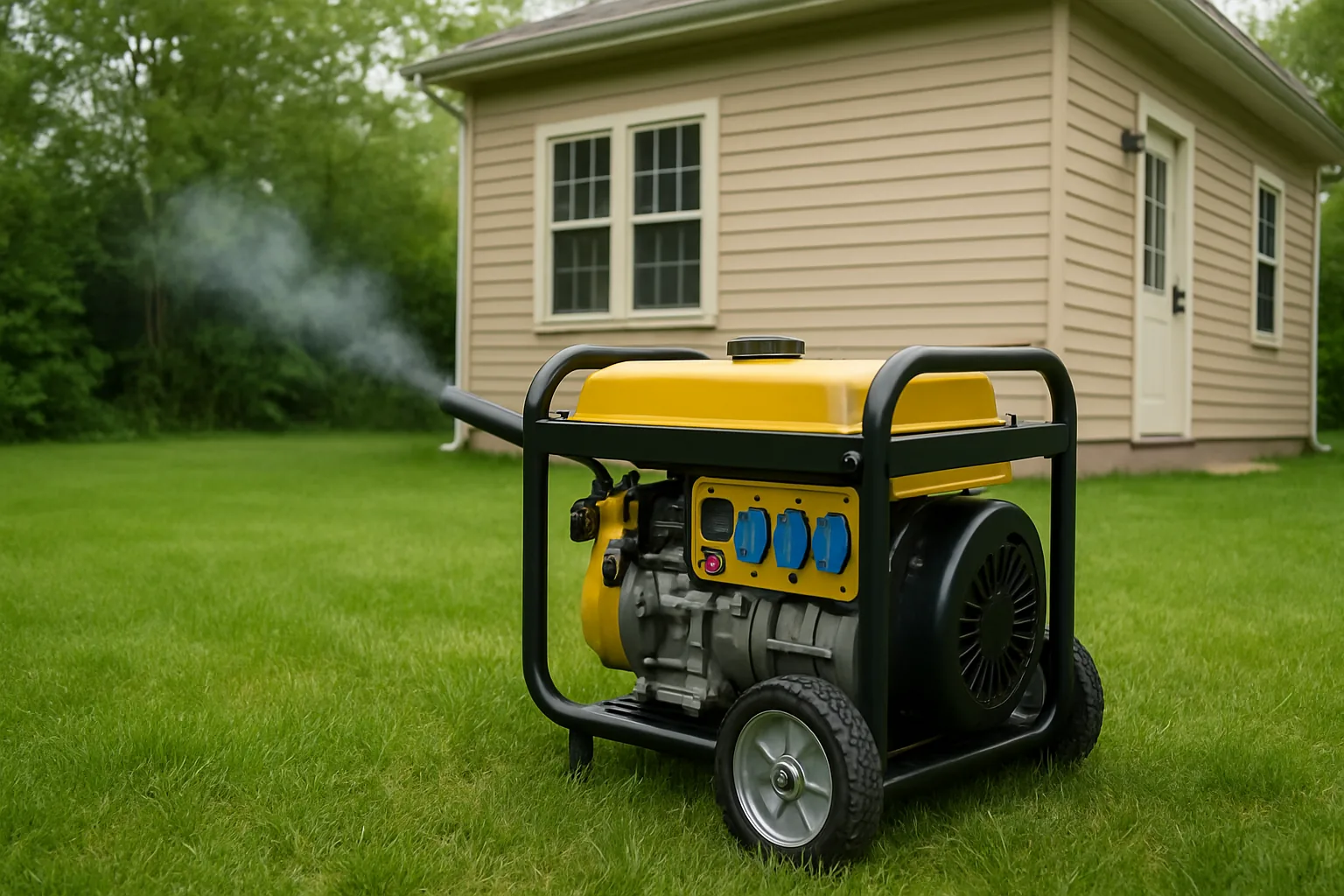
The single most important safety habit is distance. The CDC and CPSC both say a portable generator must run outdoors and at least 20 feet from the house, with the exhaust pointed away from every window, door, and vent. Twenty feet is not a suggestion. It is the buffer that gives exhaust room to disperse before it can drift back into living space.
Where people get this wrong is the garage. A generator running in an attached garage is deadly even with the door wide open. The exhaust accumulates faster than an open door can clear it, and an attached garage shares air with the rooms above and beside it, so the gas seeps into the house while everyone sleeps. The same goes for a basement, a crawlspace, a carport, a screened porch, or a breezeway. “Partly enclosed” is still enclosed as far as carbon monoxide is concerned. Even out in the open, wind can push exhaust back toward the building, so set the unit well clear of the walls and re-check it if the weather shifts.
CO Alarms Are the Only Warning You Will Get
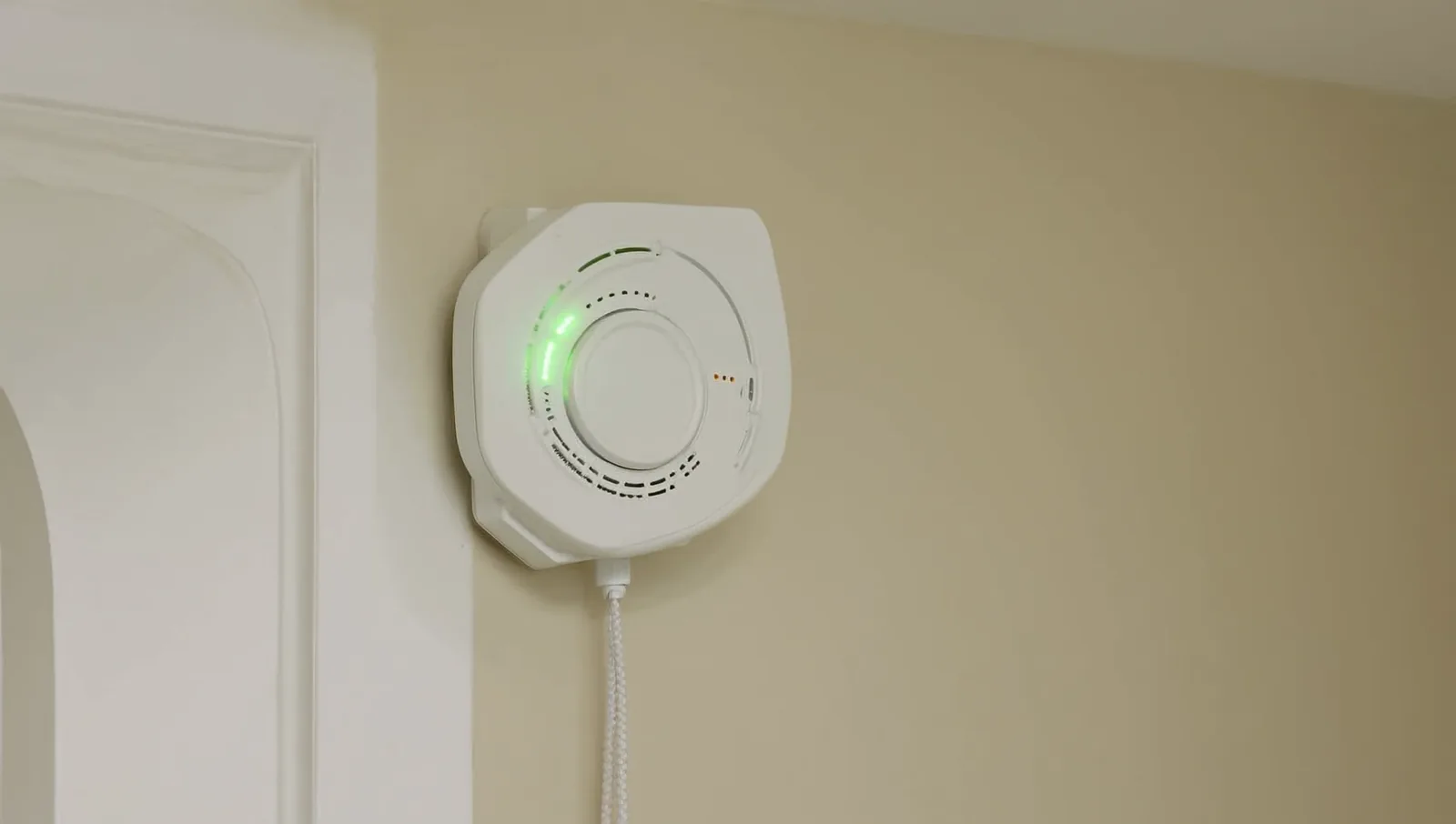
The early symptoms of carbon monoxide poisoning (headache, dizziness, nausea, confusion, weakness) read exactly like the flu, and they arrive while your judgment is already clouding. People who lie down to rest a sudden headache often do not wake up. By the time your body warns you, you may be too impaired to act on the warning. That is the trap, and it is why a working alarm is not optional.
A carbon monoxide alarm detects the gas long before you would feel a thing. The North Carolina data makes the case better than any argument: when 96.2 percent of the serious poisonings happened in homes with no functioning alarm, the county responded by amending its ordinance to require alarms with battery backup in every residence. That battery detail matters more than anything else during an outage. A CO alarm that is only hardwired into your electrical system goes dead the moment the power fails, which is precisely the moment a generator starts running. Choose battery or battery-backup alarms, put one on every level of the home and near each sleeping area, and test them and swap in fresh batteries before storm season, not during it.
CO-Off Generators: An Engine That Shuts Itself Down
Since 2018, a safer class of portable generator has been on the market, often called a CO-Off or CO-shutoff model. Two voluntary standards, ANSI/PGMA G300-2018 and UL 2201, define generators with a built-in sensor that cuts the engine automatically when carbon monoxide builds up nearby. Manufacturers sell the feature under names like CO Guard, CO Sense, and CO Shield.
The two standards differ in how aggressively they intervene. A G300 unit shuts off when CO reaches 400 parts per million within ten minutes, and instantly at 800 ppm. UL 2201 is stricter, shutting down at 150 ppm within ten minutes and instantly at 400. CPSC modeling found that generators meeting UL 2201 would prevent close to 100 percent of these deaths, and G300 units close to 87 percent. The catch is that compliance is voluntary, and CPSC has reported that adoption across the market is still minimal. Most generators on store shelves do not have the feature, so look for it specifically when you buy. Treat it as a backstop for human error, not a license to ignore the 20-foot rule.
The Safer Long-Term Answer: A Standby Generator
For a home that loses power once a year, a portable generator placed correctly is a reasonable tool. For a home in an outage-prone region that runs one several times a season, the safer answer is a permanently installed standby generator. A standby unit lives outside on a fixed pad at a code-compliant distance, with its exhaust routed away from the house by design. It runs on natural gas or a large propane tank, so nobody is refueling a hot engine in the dark, and it starts automatically through a transfer switch the moment the utility drops.
That design removes the exact variables that kill people: a generator dragged too close to the house, a unit refueled while still hot, a cord backfed into a wall outlet. The trade-off is cost and professional installation. A standby system is licensed-electrician work, requires a permit, and ties into your panel through an automatic transfer switch. If you are weighing the options, our home backup power buyer’s guide compares portable units, standby generators, and battery systems side by side, and our breakdown of average emergency electrician charges sets expectations on the install. Before you sign with anyone, run through the questions every homeowner should ask an emergency electrician and confirm their license and insurance.
If You Suspect Carbon Monoxide Poisoning
If an alarm sounds, or anyone feels dizzy, headachy, or nauseated while a generator is running, treat it as an emergency. Get everyone outdoors into fresh air immediately, then call 911 from outside. Do not go back in to open windows or hunt for the source. Account for everyone, including pets, and tell responders you suspect carbon monoxide. Anyone with symptoms needs medical evaluation even if they feel better in the fresh air, because CO binds to the blood and the effects can linger. For storm-season planning that puts all of this in context, our hurricane and severe storm electrical preparedness guide walks through safe generator use alongside the rest of your outage plan.
The Bottom Line
The outage is an inconvenience. The generator is the thing that can kill you, and it does so silently, usually while a family sleeps. Three habits prevent nearly all of it: run a portable unit outdoors and at least 20 feet from the house with the exhaust aimed away, put battery-backup CO alarms on every level and test them before the season starts, and for a home that loses power often, invest in a professionally installed standby generator that takes human error out of the equation. The power always comes back. The goal is to make sure everyone in the house is still there when it does.
Further reading (sources)
- CDC MMWR on carbon monoxide poisonings during a power outage in North Carolina
- U.S. Consumer Product Safety Commission for the toll of portable generator carbon monoxide deaths
- U.S. Consumer Product Safety Commission with how voluntary shutoff standards could cut generator deaths
- UL Solutions on how CO emission and shutoff testing works for portable generators
- Consumer Reports detailing why a generator shutoff sensor could save lives
- Tom’s Guide via running a generator safely to power heat in a winter outage