240 Volt Circuits Explained: Dryers, Ranges, Water Heaters, Hot Tubs, and EV Chargers
Published on September 10, 2026
Almost everything your house does runs on 120 volts. Lights, the television, the refrigerator, the phone charger next to the bed. Then there is the short list of things that cannot: the electric dryer, the range, the water heater, the hot tub, the air conditioner, and now the car in the garage. Those run on 240 volts, and they are wired differently, protected differently, and they fail differently.
They also account for a disproportionate share of what an emergency electrician actually gets called out for. A 240 volt circuit pushes two to four times the current of a lighting circuit through connections nobody ever looks at, behind an appliance nobody ever moves. When one of those connections starts to go, it usually does not trip anything. It just gets hot.
So before anything else: if a plug, receptacle, or cord on a large appliance is hot to the touch, discolored, or smells like hot plastic, switch off its breaker and leave it off until an electrician has been out. If you see smoke, flame, or scorching that is spreading across the wall, get everyone out of the house and call 911 before you do anything else.
Where 240 Volts Comes From: One Transformer, Two Legs
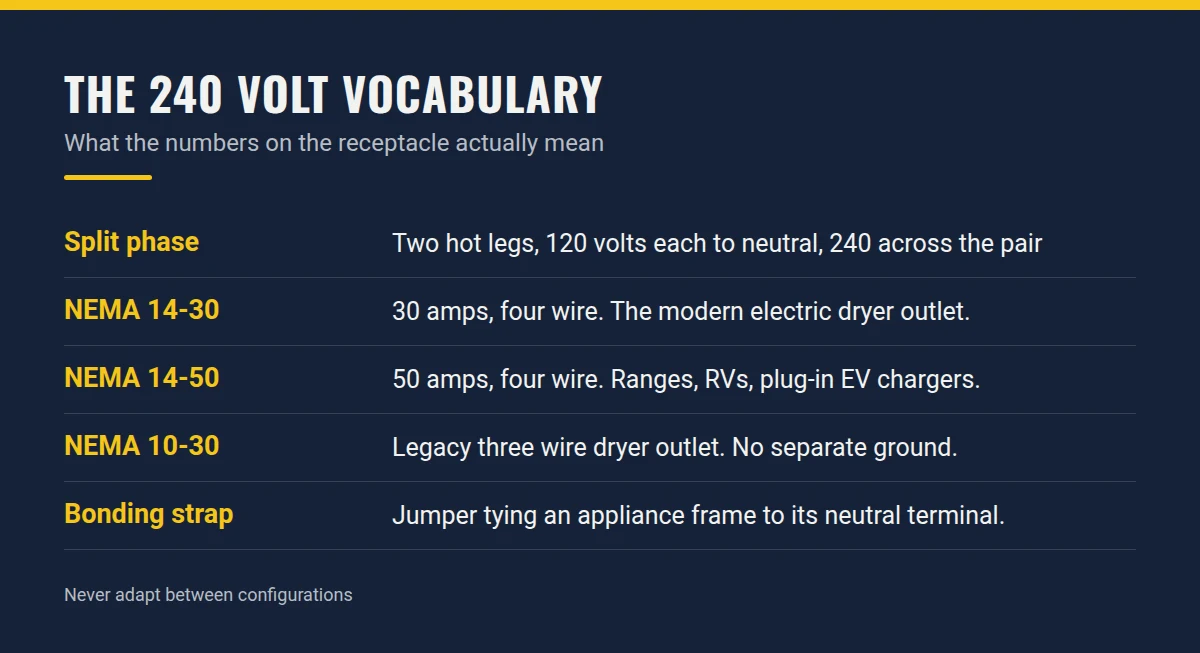
The transformer feeding your house has a secondary winding with a tap in the middle. That center tap is grounded, and it becomes the neutral. The two ends of the winding become your two hot legs.
Measure from either leg to the neutral and you get roughly 120 volts. Measure from one leg to the other and you get roughly 240. Same transformer, same winding, two different answers depending on where you put the probes. This arrangement has three names that all mean the same thing: single phase three wire, 120/240, or split phase. It is not two phases. The legs are opposite ends of one coil, so they swing in opposite directions at the same instant, and that opposition is where the extra voltage comes from. Our walkthrough of how power actually reaches your outlet traces the path from that transformer to the wall.
Inside your panel, the two legs land on two busbars that alternate down the rows of slots. A single pole breaker clamps onto one leg and feeds a 120 volt circuit. A two pole breaker spans both legs, which is why it needs two adjacent full size slots, and why the skinny tandem breakers that squeeze two circuits into one slot cannot do the job no matter how much empty space the panel appears to have.
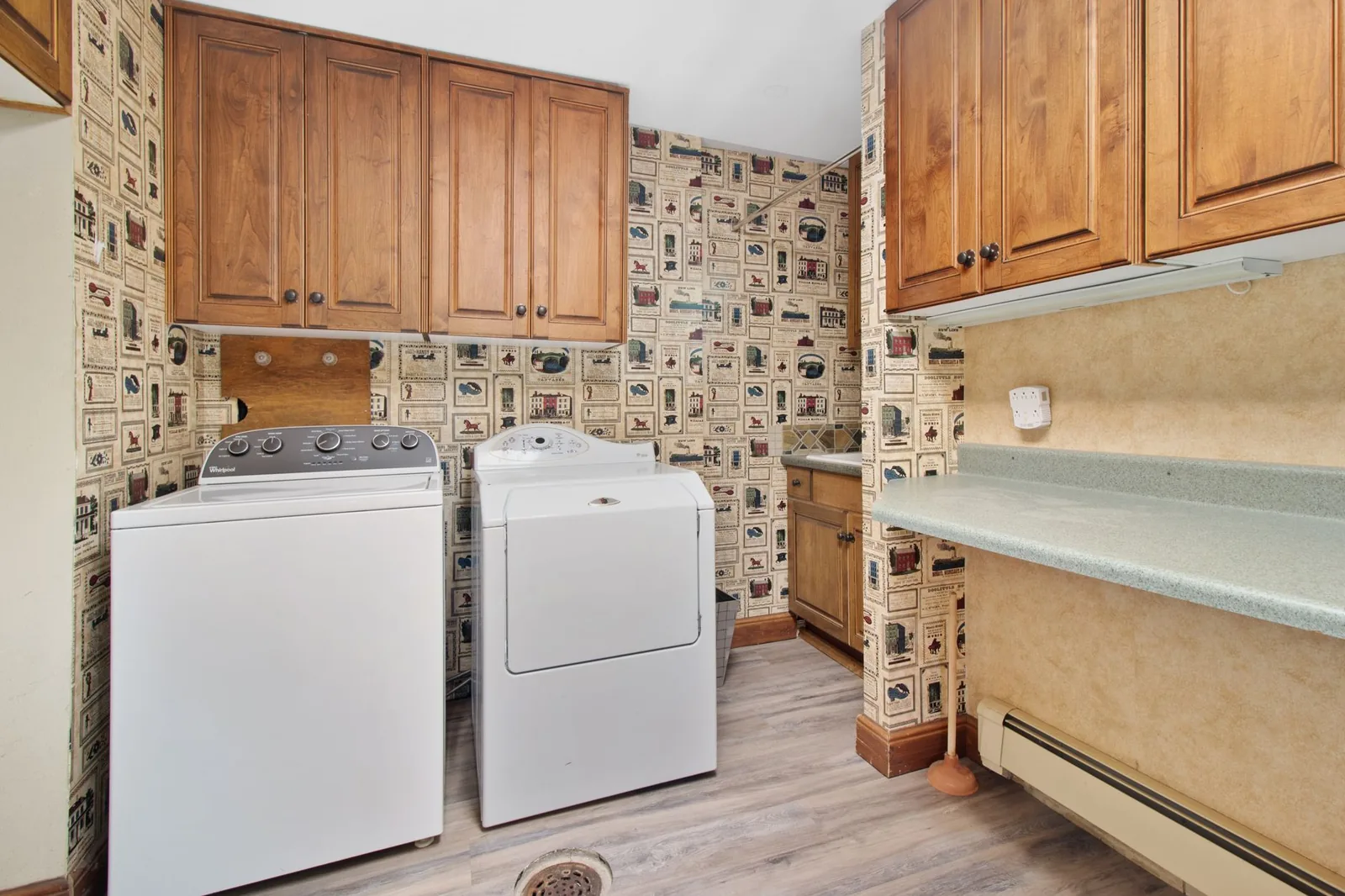
Now the distinction that explains nearly everything else in this article. Some 240 volt loads want only the two hot legs and a ground: a water heater element, electric baseboard heat, a welder, most EV chargers. Nothing inside them runs on 120. But a dryer and a range are hybrids. The heating element runs at 240 across both legs, while the drum motor, the timer, the interior light, and the control board all run at 120 from one leg to the neutral. Those appliances need two hots, a neutral, and a ground: four wires. Millions of them are still connected with three.
Which Appliances Need It, and the Plug on the Wall
NEMA configuration numbers look like a secret code and are actually simple. The first number identifies the voltage and wire configuration family. The number after the dash is the amp rating. A trailing R means receptacle, P means plug. So a 14-50R is a 50 amp receptacle of the 14 family, and it will not accept a 6-50P even though both are rated 50 amps at 240 volts.
The ones you will meet in a house:
- NEMA 14-50 (50 amps, four wire: two hots, neutral, ground) for electric ranges, RV hookups, and plug-in EV chargers.
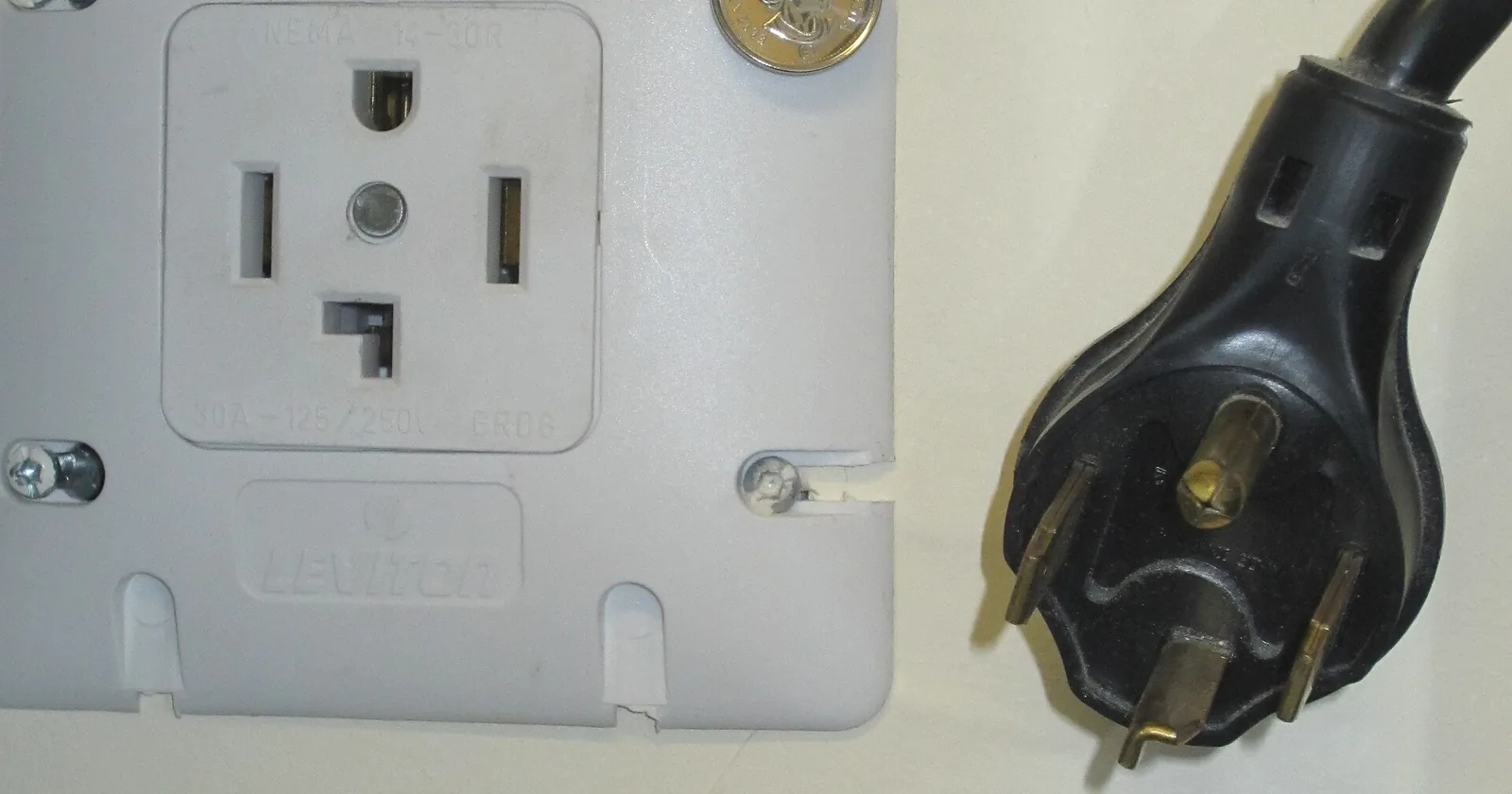
- NEMA 14-30 (30 amps, four wire) for electric clothes dryers. This is the one in the photo at the top of this page.
- NEMA 6-50 (50 amps, three wire: two hots and a ground, no neutral) for welders and some EV chargers.
- NEMA 6-30 and 6-20 (240 volts only, no neutral) for some water heaters, wall heaters, and shop equipment.
- NEMA 14-60 (60 amps) for large commercial style ranges.
- NEMA 10-30 and 10-50, the legacy three wire dryer and range outlets. Two hots and a neutral, and no separate ground at all. These have not been legal for new circuits since the mid 1990s, and they are still behind a very large number of appliances.
Plenty of 240 volt equipment has no plug at all. Water heaters, wall ovens, cooktops, furnaces, air conditioning condensers, and hardwired EV chargers are wired straight into a junction box or the appliance itself. That is usually the better arrangement, because every plug and receptacle is one more connection that can loosen. If you are adding a charger, the tradeoffs between plugging in and hardwiring are covered in detail in our guide to what safe Level 2 charging actually requires.
One rule with no exceptions: do not adapt between configurations. The adapters and pigtails sold to make a dryer outlet feed an EV charger, or a welder plug fit a range outlet, exist because people want them, not because they are safe. The configurations differ precisely so that a cord cannot land on a circuit with the wrong current rating or the wrong set of conductors.
The Three Wire Problem Hiding Behind Millions of Dryers
Before the 1996 code cycle, dryer and range circuits were routinely run with three conductors: two hots and a neutral, no separate equipment ground. The appliance frame still had to be grounded somehow, so manufacturers bonded the metal cabinet to the neutral terminal with a strap or a green jumper inside the terminal block behind the little access panel.
Think about what that means. The neutral on a dryer circuit is a working conductor. It carries the return current for every 120 volt part inside the machine. So the metal cabinet you lean against while folding laundry is deliberately bonded to a wire that has current flowing in it.
As long as that neutral is continuous back to the panel, the frame stays close to ground potential and nothing happens. But if the neutral opens anywhere along the way, at a loose terminal screw, a pitted prong, a cracked conductor in a forty year old cord, or a corroded lug, the situation inverts. The 120 volt loads inside the appliance now connect the frame to a hot leg through themselves, and the cabinet can rise most of the way to 120 volts with respect to ground. Nothing trips, because from the breaker’s point of view the current is normal. You find out when you touch the dryer and the washer at the same time.
That is not a theoretical hazard, it is the reason the rule changed. As reorganized in the 2023 edition, Section 250.140(A) requires a separate equipment grounding conductor on any new circuit for a range, oven, cooktop, or dryer. Existing three wire circuits are grandfathered under 250.140(B), but with real conditions: the grounded conductor has to be at least 10 AWG copper or 8 AWG aluminum, and it has to be insulated, or be the uninsulated conductor of a Type SE cable under specific rules about where the circuit originates. An electrician who finds a three wire range circuit run from a subpanel with an undersized neutral has found a violation, not a grandfathered install. Note also how narrow that allowance is: it covers cooking appliances and dryers, and nothing else.
The way people actually get hurt by this is the cord swap. Move a dryer from a three prong outlet to a four prong one and the neutral to frame strap has to come out, or appliance return current ends up riding on the equipment grounding conductor. Move it the other direction and the strap has to go back in, or the frame has no ground path whatsoever. Both mistakes are made constantly, usually by someone who believed they were just changing a cord, and neither one announces itself until the day it matters. A frame with no ground path produces exactly the kind of fault described in our piece on a shock from a cover plate with no working ground.
If your dryer or range plugs into a three prong 240 volt outlet, that is worth raising with an electrician. Converting to a four wire circuit means pulling new cable back to the panel, which is genuine work and genuine money. Until then, the thing that matters most is that every connection in that neutral path is clean and tight.
Burnt Prongs and Pitted Sockets
The mechanism behind a melted 240 volt plug is worth understanding, because it explains why the breaker is no help.
A loose or worn connection is resistance. Resistance carrying 30 or 50 amps makes heat right at that spot. Heat oxidizes and pits the contact surfaces, which raises the resistance, which makes more heat. It runs away with itself over months. Meanwhile the breaker sees perfectly normal current, sometimes slightly less than normal, and has no way to know that a square centimeter of brass behind your dryer is at 200 degrees. Breakers protect against too much current, not against too much resistance.
What causes it: builder grade receptacles with thin stamped contacts that lose spring tension, terminal screws that were never torqued to the marked value (Section 110.14(D) requires an actual torque tool, and it is routinely skipped), aluminum branch conductors on terminals not rated for them, plugs pulled in and out repeatedly, and cords that have been reused across three different appliances.
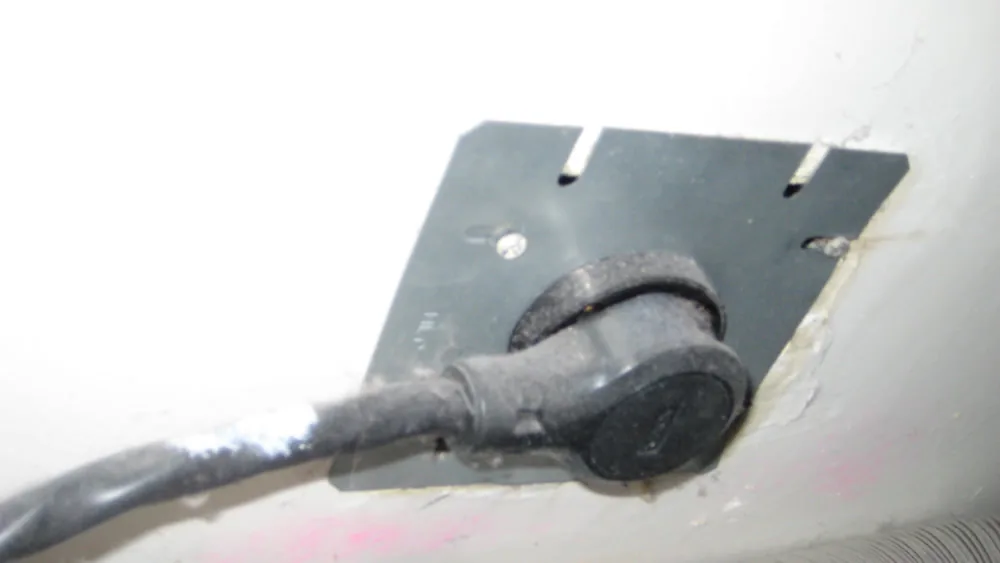
What it looks like: browning or black soot around the slots, a prong that has gone pitted or blue grey, a plug body that has softened or lost its square shape, a warm cover plate, a faint buzz, or the smell of hot plastic in the laundry room.
There is one symptom that catches people out. A dryer that tumbles normally but never gets hot is often not a broken heating element. It is frequently one hot leg lost at a burnt blade or a failed breaker pole, because the drum motor only needs 120 volts from one leg to neutral while the element needs both. The machine looks alive and does nothing useful.
When a 240 volt plug fails, replace the receptacle and the cord as a pair. Both halves of a bad connection are damaged, and swapping only the outlet leaves the other half in service to ruin the new one. Never file, sand, or bend prongs to get a tighter fit. If the circuit is also tripping, our diagnostic guide to breaker trips sorts out which cause you are looking at.
Hot Tubs: The Circuit With the Most Rules
Article 680 governs pools, spas, and hot tubs, and it is the densest set of requirements in the residential code, because it deals with people who are wet, barefoot, and touching metal.
Ground fault protection. The outlet supplying a self contained or packaged spa requires GFCI protection, unless the listed unit has its own built in. In practice the protection lives in the small grey spa panel a few feet from the tub. Our explainer on how GFCI and AFCI protection differ covers what each device is watching for.
The disconnect. A maintenance disconnecting means has to be readily accessible, within sight of the equipment it serves, and located at least 5 feet horizontally from the inside walls of the tub, measured along the shortest path someone could reach. The 5 foot minimum is the whole point: nobody should have to lean over water to kill the power. Note that the separate user operated emergency shutoff for the pumps and jets, required for spas generally, is exempted for single family dwellings, which is why your house does not have the labeled pushbutton a hotel spa does.
Bonding. Metal parts within 5 feet of the inside wall get bonded together, typically with 8 AWG solid copper or one of the listed alternatives, so that everything a bather can touch sits at the same potential.
Receptacles. A convenience receptacle has to be at least 6 feet from the inside wall of the spa, and GFCI protected.
The single most important thing for a hot tub owner: a spa GFCI that keeps tripping is almost never a nuisance trip. The usual causes are water that has found its way into a connection box, a heater element beginning to leak current to ground, or a failed pump seal. Every one of those is the protective device doing its job. If any contractor offers to stop the tripping by fitting an ordinary breaker in place of the GFCI, that is the point to end the conversation and call somebody else.
When Half of 240 Volts Goes Missing
A 240 volt circuit can be half dead, and it produces a symptom set that makes no sense at all until you know the shape of it.
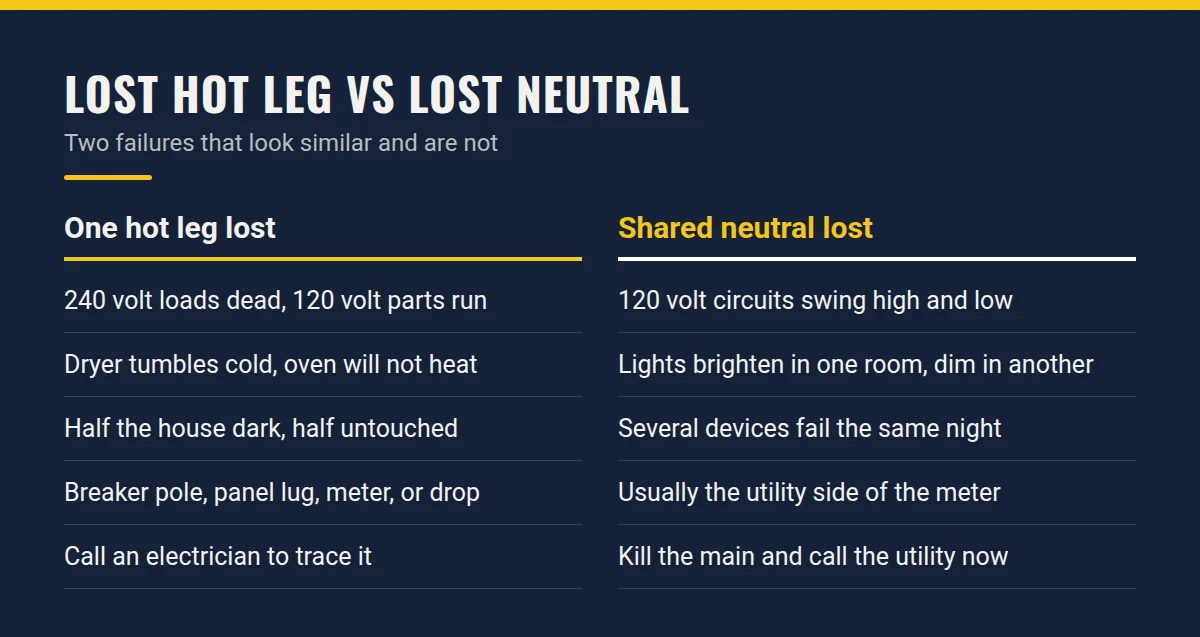
Lose one hot leg and any true 240 volt load across the two legs gets nothing, while the 120 volt half of a hybrid appliance carries on as normal. Range burners are dead or weak but the clock and the oven light are fine. The oven will not heat. The dryer tumbles cold. The air conditioner hums and never starts. Half the house is dark and the other half is completely unaffected.
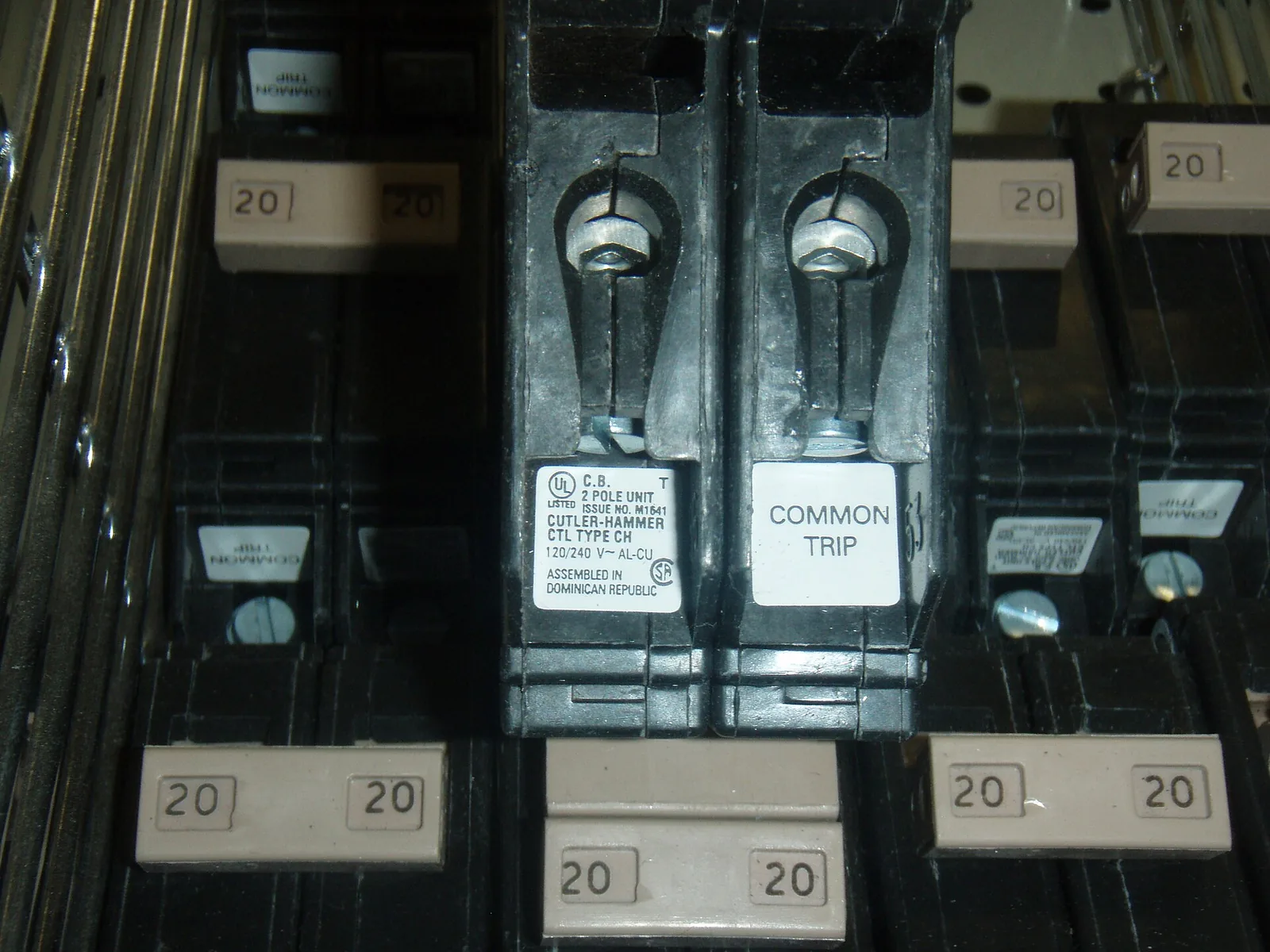
The causes run from your appliance back to the street: a failed pole inside a two pole breaker, a burnt lug in the panel, a corroded connection in the meter base, or a broken service conductor out at the drop. The two poles of a 240 volt breaker are tied for common trip, as the label in the photo above states, so both should open together. A pole that fails internally while the handle stays in the on position is exactly the sort of fault that produces the baffling version of this.
Then there is the dangerous cousin. Losing the shared neutral instead of a hot leg is far worse than losing a leg. The 120 volt circuits on the two legs end up in series across the full 240 volts and divide it according to load, so a lightly loaded circuit climbs toward 200 volts and destroys everything plugged into it while a heavily loaded one sags and dims. The signature is flickering that changes when a large appliance cycles, lights brightening in one room as they dim in another, and several unrelated devices dying the same evening. Treat that as an emergency. Shut off the main if you can do so safely, and call the utility, because on a residential service an open neutral is usually on their side of the meter. Sorting out which side a fault is on is the whole subject of our guide to triaging an outage between your house, your panel, and the utility.
What an Electrician Verifies Before You Add a Big Load
When someone comes out to add a range circuit, a hot tub feed, or a charger, this is the work that should happen before anyone drills a hole.
A load calculation, not a guess. Either the full calculation under Article 220, or the method that uses your actual metered peak demand over the previous twelve months plus the new load. Reading your own panel and understanding what your service can carry is covered end to end in our panel and service capacity guide.
Panel condition and real space. Two adjacent full width slots for the two pole breaker, adequate busbar rating, and whether the panel is one of the brands with no listed replacement breakers available at all, which includes Federal Pacific Stab-Lok, Zinsco, and Challenger.
Breaker and conductor sized together, with derating for ambient temperature, bundling, and the length of the run.
The right receptacle for the appliance’s actual cord, and the bonding strap inside the appliance set correctly for the number of conductors present.
Ground fault protection where it is now required. The 2023 code widened Section 210.8 from 125 volt receptacles to receptacles up to 250 volts on single phase circuits rated 150 volts or less to ground and 50 amps or less. That pulls the 30 amp dryer outlet and the 50 amp range receptacle into GFCI territory in the covered locations. Whether it applies to your job depends on which edition your municipality has adopted, and asking that question directly is entirely reasonable.
A disconnect where one is owed, for a hot tub and for a water heater over 300 volt-amperes, either within sight of the appliance or as a lockable breaker.
Torque. Terminations tightened to the value marked on the device, with a tool that measures it. This is the single cheapest defense against the melted connection described above, and it is the step most often skipped.
A permit and an inspection, so somebody who does not work for your contractor checks the conductor size, the grounding, and the protection before the wall closes. Our questions to ask before hiring covers verifying the license and insurance yourself.
The Bottom Line
Two hot legs, 120 volts each to neutral and 240 across the pair, is the whole idea. What matters for safety is which conductors your appliance actually needs and whether they are all there and all tight. If a dryer or range in your house plugs into a three prong outlet, the appliance frame is grounded through a working neutral, and that arrangement is one loose screw away from an energized cabinet that trips nothing. Treat warmth, discoloration, or a hot plastic smell at any large appliance plug as the early warning it is, because a failing 240 volt connection gets hot long before it gets dramatic. And treat a hot tub GFCI that keeps tripping as information rather than an inconvenience.
Codes, adopted editions, and permit requirements vary by municipality, so confirm the specifics with your local building department and a licensed electrician in your area before adding or altering a 240 volt circuit.
Further reading (sources)
- EC&M on why continuity of the neutral is a shock and fire issue rather than a paperwork one
- Electrical License Renewal for the conditions attached to an existing three wire range or dryer circuit
- EC&M with the ground fault, bonding, and receptacle spacing rules for spas and hot tubs
- UpCodes covering the maintenance disconnect required near a pool or spa
- ExpertCE from the code change that pulled 240 volt receptacles into GFCI territory
Feature photo by Wtshymanski, CC BY-SA 3.0, via Wikimedia Commons.