Extension Cord Safety: When You're One Bad Plug Away From a House Fire
Published on June 11, 2026
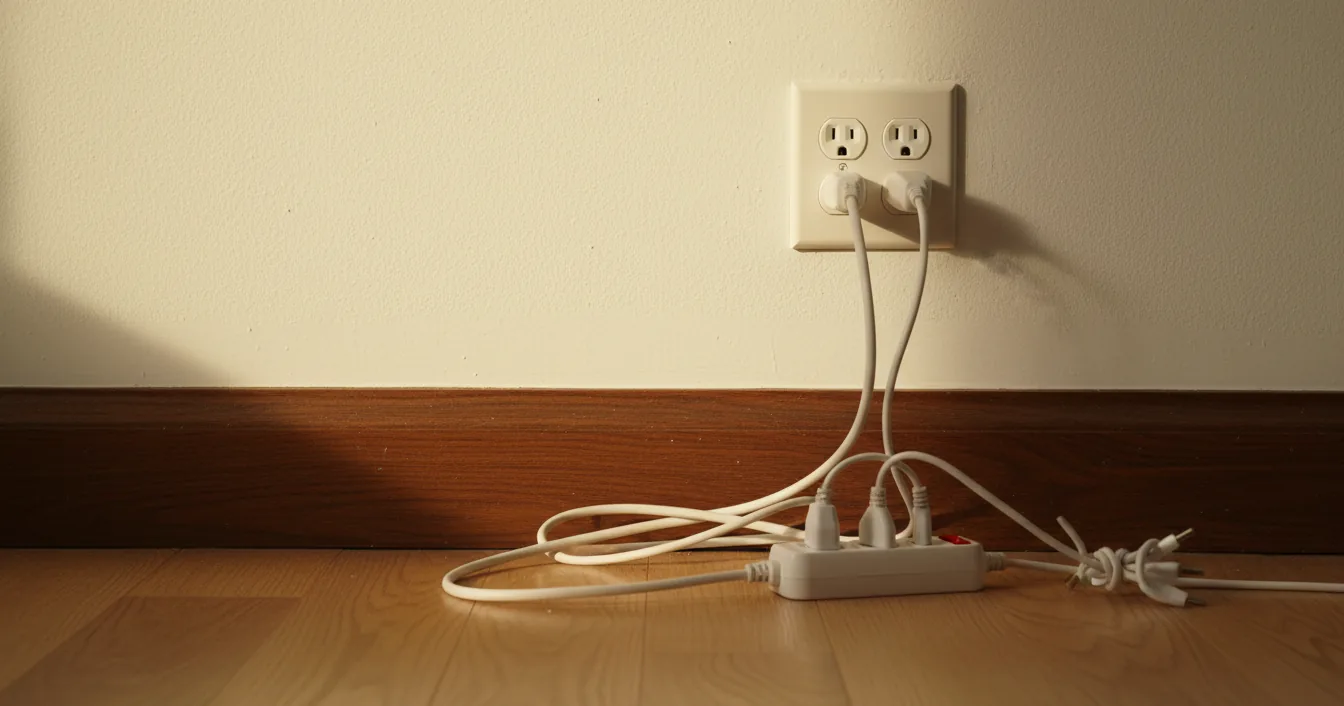
The extension cord is the most underestimated object in your house. It costs a few dollars, lives in a junk drawer or coiled on a garage hook, and most people never give it a second thought until the day it feels warm in their hand. That casual familiarity is the whole problem. The Electrical Safety Foundation International estimates that extension cords are involved in roughly 3,300 home fires every year, fires that kill about 50 people and injure another 270. Almost none of those start because the cord was defective. They start because the right cord was used the wrong way, or because the wrong cord was used at all.
Before any of the buying advice below, hold on to the one rule that matters most. If a cord, plug, or outlet is hot to the touch, smells like burning plastic, or has scorched the wall around it, stop, unplug it if you can reach the plug safely, and treat it as urgent. Heat is the warning a fire gives you before it arrives. If you already see smoke or flame, get everyone out and call 911 rather than reaching for water, because water on an energized fire can shock you.
Match the Gauge to the Load (Lower Number, Thicker Wire)
Every extension cord has a gauge, written as a number like 16, 14, or 12 followed by the count of conductors, such as 12/3. The counterintuitive part is that a smaller number means a thicker wire. Thicker copper carries more current while staying cooler, and heat is what melts insulation and starts fires. So a 12-gauge cord is heavier duty than a 16-gauge one, not the other way around.
The load determines which gauge you need. Find the appliance’s draw by dividing its wattage by 120 volts: a 1,500-watt space heater pulls about 12.5 amps, which is most of what a standard 15-amp household circuit can deliver. A skinny 16-gauge cord rated for 13 amps is fine for a lamp or a phone charger, but feed it a space heater and it runs hot along its entire length. As a rough guide, use 16-gauge only for light indoor jobs, 14-gauge for moderate loads, and 12-gauge for power tools, compressors, and anything heating-related.
Length matters just as much as load. The longer the cord, the more the voltage drops over the run, so a long cord needs a thicker wire than a short one to carry the same tool safely. This is why the safety experts behind cord testing converge on a 50-foot, 12-gauge cord as the do-everything choice for a home and garage: it can handle up to 15 amps, as much as most residential breakers allow, even at that length. One specific habit to break: never plug a space heater into an extension cord or power strip. Fire authorities are unanimous that high-heat appliances go straight into the wall.
Indoor or Outdoor? Read the Letters on the Jacket
Printed along the side of every quality cord is a short string of letters that tells you exactly what it is rated for. The single most important one is W. A cord type marked SJTW, SJEOW, or SJEOOW carries that W, which means the jacket is built to resist moisture, sunlight, and temperature swings: in a word, outdoor-rated. A cord without the W is an indoor cord, and its jacket will dry out, crack, and let water in if you leave it on the patio or run it out to the yard.
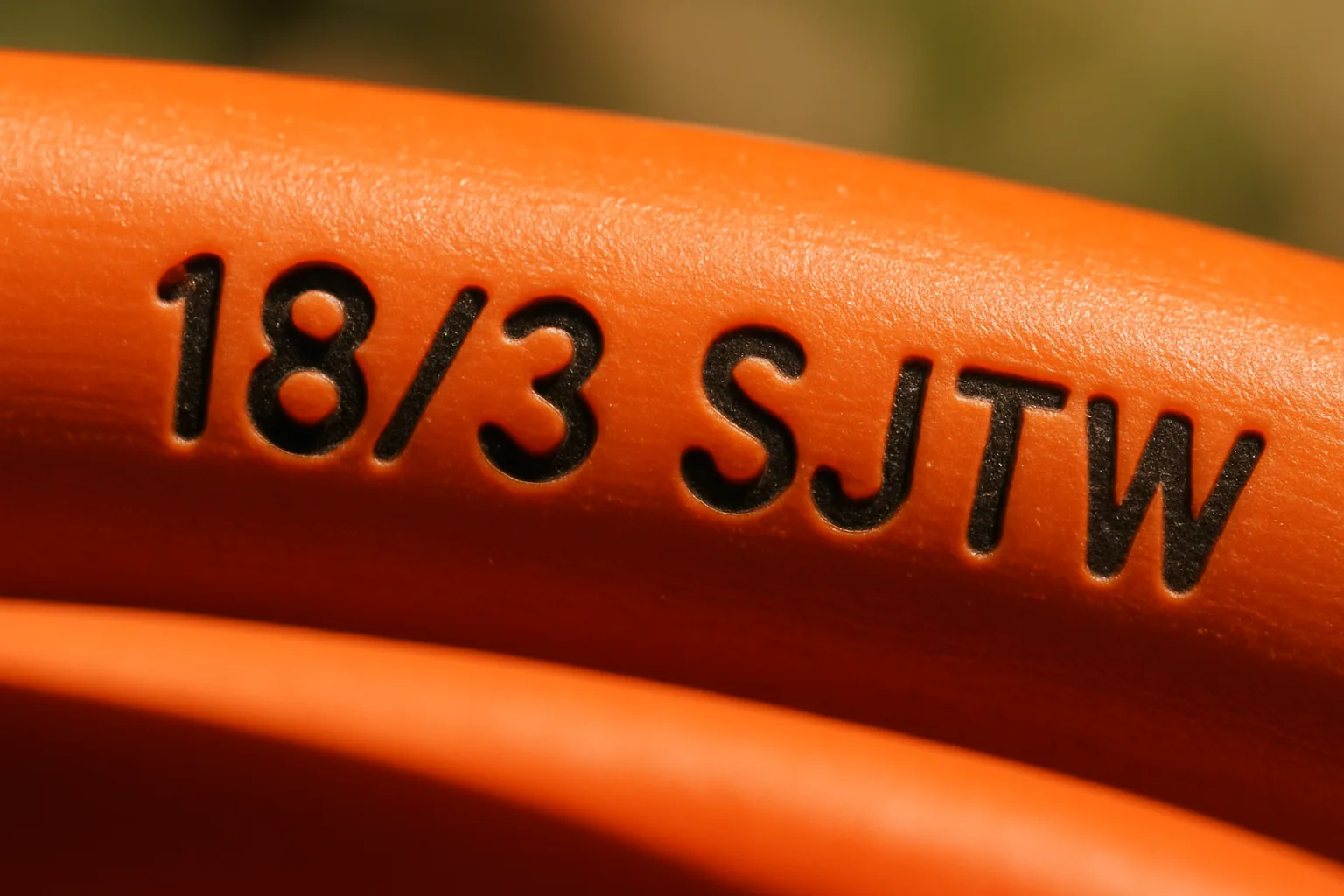
Two more marks are worth a glance before you buy. Look for a UL Listed or ETL Listed stamp, which means an independent lab (Underwriters Laboratories or Intertek) tested the cord against real safety standards rather than the manufacturer simply vouching for it. And for cold climates, a cord with an elastomer jacket (the E in those codes) stays flexible and lies flat in freezing weather instead of stiffening into a coil that you are tempted to leave half-spooled. That flatness is a safety feature too, because a cord that lies flat is far less of a tripping hazard than one that holds loops. Indoor cords are not built for any of this. They exist to reach a lamp on the far side of the room, not to power a saw in the rain.
The Three Habits That Start Fires
Most cord fires trace back to one of three shortcuts, and all three are avoidable.
The first is daisy-chaining: plugging one extension cord into another, or one power strip into a second strip, to reach a little farther or add a few more outlets. The National Electrical Code and OSHA both treat this as a violation, because power strips are listed to plug directly into a permanent wall receptacle and nothing else. Each link in the chain adds resistance and heat, and the combined load can quietly exceed what the first cord can carry.
The second is running cords where they cannot shed heat or survive traffic. The NEC is explicit that flexible cords may not substitute for permanent wiring, run through walls, ceilings, or floors, or pass through doorways and windows where a closing door can pinch them. Running a cord under a rug is the classic version of this mistake: the rug traps the cord’s heat and hides the abrasion damage that foot traffic grinds in day after day, until the insulation fails out of sight. (This is one of the same hazards we flag in our guide to childproofing a home’s electrical system, where a cord under a rug is both a fire risk and a lure for a curious toddler.)
The third is overloading, covered above: too much amperage for the cord’s gauge, most often from heaters, microwaves, or window air conditioners on a cord never meant for them. One more detail people miss is that a tightly coiled cord under heavy load cannot dissipate heat and can overheat even when it is otherwise sized correctly. Uncoil it fully before a big job.
There is a financial reason to care beyond the fire itself. If an investigator traces a house fire to a daisy-chained strip, a cord buried in a wall, or an extension cord used as permanent wiring, that finding can give your insurer grounds to question or reduce the claim as negligence or a code violation. The cheap cord becomes the expensive mistake.
How to Inspect a Cord Before You Plug It In
A thirty-second check before each serious use catches most failing cords:
- Run it through your hands and feel for cracks, cuts, flat spots, soft mushy sections, or any exposed copper in the jacket.
- Check the plug for discoloration, melting, a scorched smell, or prongs that are loose, bent, or burned.
- Confirm the third prong is there. Never file off or snap out a ground pin to force a three-prong plug into a two-slot outlet, and never use a cord someone has spliced or wrapped in electrical tape to cover a wound.
- Feel the cord while it works. Warm is a warning, hot means stop and unplug. A correctly sized cord under a correct load stays cool.
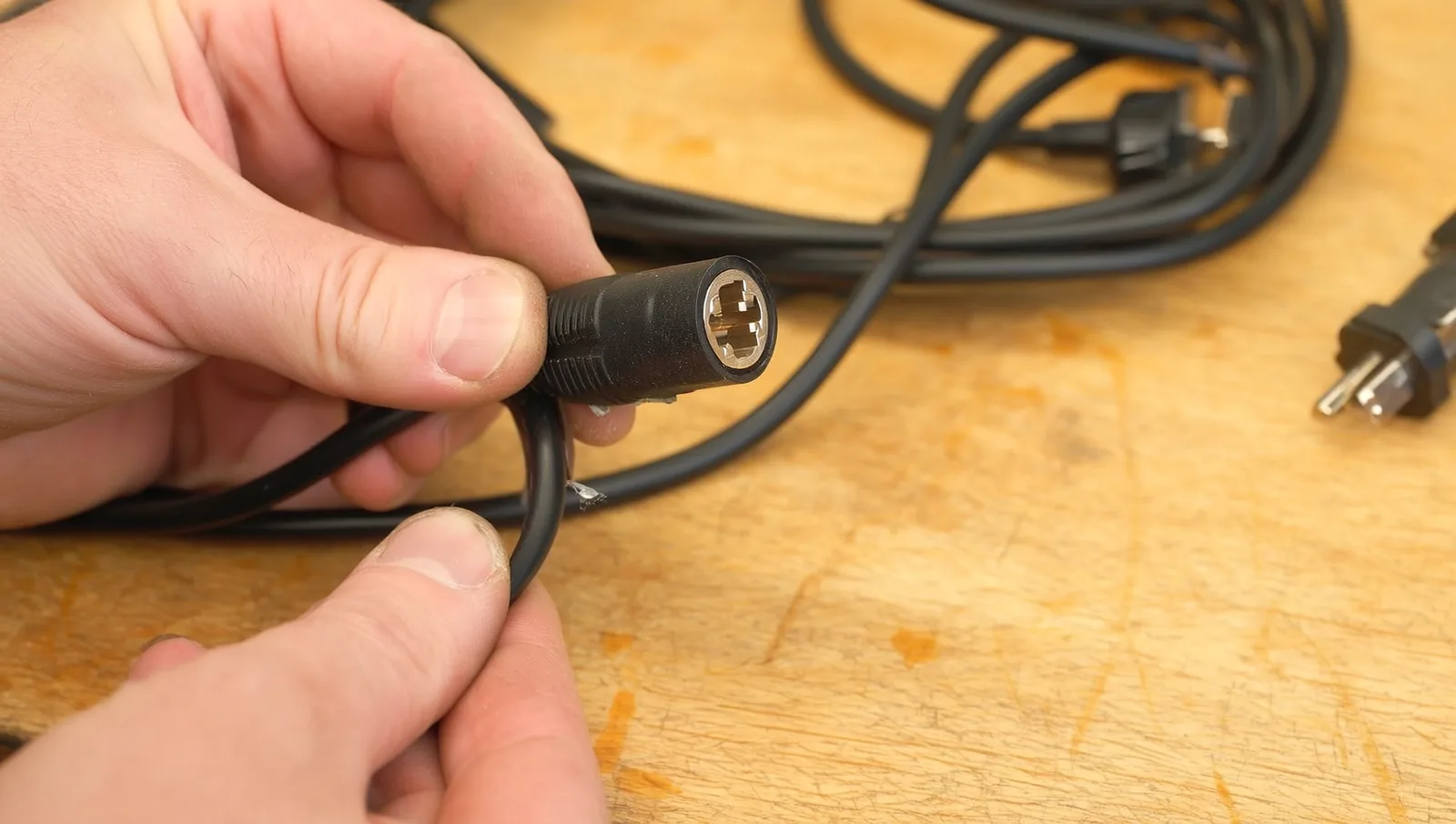
A damaged cord cannot be repaired into a safe one. Cut it, throw it out so no one fishes it back out of the trash, and replace it.
When an Extension Cord Means You Need an Outlet
Here is the line professionals draw: an extension cord is a temporary tool, not a permanent fixture. The code treats it that way, and so should you. If a cord has lived in the same spot for months, runs permanently to the same appliance, threads behind a bookshelf you never move, or exists because the room simply does not have enough outlets, the cord is no longer solving a problem. It has become one, and the real fix is a new receptacle.
That is electrician work, and usually modest electrician work. Adding a receptacle, or running a dedicated circuit for a high-draw appliance like a window unit or a space heater, removes the cord from the equation entirely and brings the room up to code. Our overview of average emergency electrician costs will set your expectations, and the questions every homeowner should ask before hiring an electrician will help you confirm the license and insurance before anyone opens a wall. Codes and permit rules vary by municipality, so a local pro is the one who knows what your jurisdiction requires. The same logic applies during an outage: if you find yourself snaking cords from a generator or power station through the house, our home backup power buyer’s guide covers the safer transfer-switch setups that avoid the cord sprawl.
The Bottom Line
An extension cord is safe right up until it is asked to do a job it was never built for. Buy the gauge your load needs and the length your space needs, choose a W-rated, UL-listed cord for anything outdoors, and refuse the three shortcuts that start fires: daisy-chaining, hiding cords under rugs or in walls, and overloading. Inspect before you plug in, and when a cord stops being temporary, call a licensed electrician and trade it for a proper outlet. If you are ever unsure whether a warm plug or a faint burning smell counts as an emergency, our breakdown of when an electrical problem is a true emergency will help you make the call. The cord that respects its limits will outlast you. The one that does not is only waiting for the wrong appliance on the wrong night.
Further reading (sources)
- NYT Wirecutter on how to read cord gauge, length, and the SJEOW jacket codes
- Electrical Safety Foundation International for the home-fire numbers and everyday cord safety rules
- OSHA with why power strips cannot be daisy-chained or used as permanent wiring
- NFPA covering the electrical safety basics behind home cord and outlet fires