What to Do in the Hour After an Electric Shock: Symptoms, ER Triage, and Hidden Internal Injuries
Published on June 4, 2026

Someone in the house grabs a frayed lamp cord, brushes a scorched outlet, or pulls a humming appliance off the counter, and gets a sharp jolt. They yank their hand back, shake it off, maybe say a few words you would not repeat at dinner, and then the line everyone wants to hear: “I’m fine.” The mark on their hand is barely visible. Everybody relaxes. That moment, the relief after the scare, is exactly when the most serious electrical injuries get missed.
An electric shock is not like a cut or a sprain, where what you see is roughly what you get. Current travels a hidden path through the body, and the damage that matters most, to the heart and to deep tissue, can be invisible from the outside and can show up hours after the shock. This guide is for the family member standing in the kitchen making a real-time decision: how to read the first hour, when to call 911 versus get evaluated versus watch and wait, what an emergency room actually checks, and why you should never just reset the breaker and move on.
Why “I Feel Fine” Is the Most Dangerous Part
The skin tells you almost nothing. A small burn, a red dot, or no mark at all can sit over a current path that crossed muscle, nerve, blood vessels, and in the worst case the heart. A major cardiology review in the European Heart Journal puts it plainly: electrical injuries range from minor skin burns to life threatening internal organ damage, and the single biggest concern in a person who looks stable after a shock is the potential for a delayed cardiac arrhythmia.
Here is why that happens. Your heart keeps its rhythm with its own internal electrical signal. An outside jolt of current can scramble that signal, and the disturbance does not always arrive on cue. Sometimes the heart skips or races immediately. Sometimes it behaves for an hour or two and then slips into an abnormal rhythm after everyone has stopped paying attention. That delay is the trap. The person who walked away saying they felt fine is the person nobody is watching when the trouble actually starts.

The First Sixty Seconds: Make the Scene Safe
Before you touch anyone, check whether they are still in contact with the source. If a person is frozen onto a live wire or appliance, the current may have locked their muscles so they cannot let go, and grabbing them makes you the second casualty. Cut the power first: trip the breaker or pull the plug. If you cannot reach the power quickly, use a dry nonconducting object like a wooden broom handle or a plastic chair to push the source away, never anything wet or metal.
Once the person is clear of the source, check whether they are awake and breathing. If they are unresponsive and not breathing normally, call 911 and start CPR immediately, pushing hard and fast in the center of the chest until help arrives. If the shock came from a high voltage line, a downed wire outside, or anything involving the utility service, stay at least 20 feet back, keep everyone away, and call 911 and the power company before going near the person. High voltage and outdoor wires are never a do-it-yourself rescue.
Call 911, Get Evaluated, or Monitor at Home?
This is the decision that keeps you up at night, so here is a clear way to sort it.
Call 911 right now if the person lost consciousness even briefly, has chest pain, palpitations, or a racing or fluttering heartbeat, struggles to breathe, had a seizure, feels numb or weak, has a deep or charred burn, or the shock crossed the chest (hand to hand or hand to foot). Call, too, if the source was high voltage, or the person is pregnant or has a heart condition or pacemaker. Any one of these turns “probably fine” into “needs an ambulance.”
Get evaluated even if they feel okay after any shock beyond a trivial static-like nip. The only way to clear the heart concern is an electrocardiogram, and you cannot run one at the kitchen table. The European Heart Journal review notes it can be reasonable to send selected patients home when they have a low voltage injury, no fainting, and a normal ECG, while others need cardiac monitoring for at least 24 hours. The reassuring picture includes that normal ECG, a clinician’s call after a test, not a read on how someone feels.
Watching at home fits only the most minor contact: a brief tingle from a low voltage source, no mark, no symptoms, in a healthy adult. Even then, watch for chest discomfort, an irregular pulse, dizziness, or fainting over the next day or two. When you are genuinely unsure, treat it as the serious case, because underreacting to a shock costs far more than an unnecessary trip to be told you are fine.
What the Emergency Room Will Check
Knowing what happens at the hospital takes some of the fear out of going. The workup is built to find the injuries you cannot see.
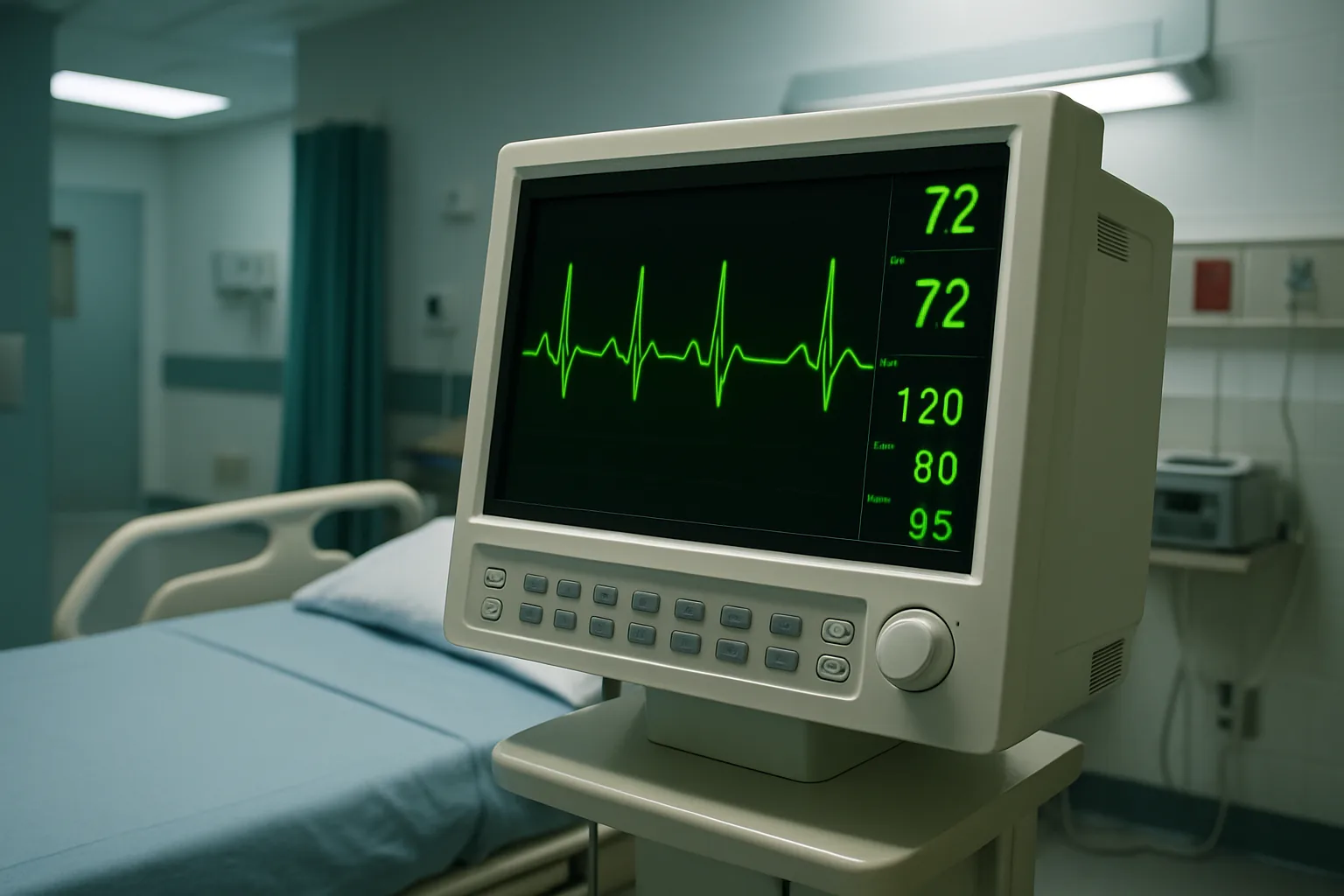
- An ECG and heart monitoring. A 12-lead ECG looks for rhythm and conduction problems, and higher-risk patients go on continuous monitoring, often around 24 hours, to catch a delayed arrhythmia.
- Blood tests. Clinicians check cardiac markers like troponin and a muscle-breakdown marker, creatine kinase (CK). The pediatric burn data backs this up: high voltage injuries showed elevated CK and CK-MB, a sign current damaged muscle along its path.
- Entry and exit wounds. The burns where current entered and left the body map its path and hint at what tissue it crossed.
- A neurological exam. Current can cause numbness, tingling, weakness, confusion, or memory gaps, so the team checks nerve and brain function.
- The history. Expect questions about the voltage, how long contact lasted, whether the person could let go, and whether they fell.
The Injuries You Cannot See
Electricity heats tissue as it passes through, so deep structures take the brunt while the skin looks nearly untouched. Picture an iceberg: a small surface burn over a much larger hidden injury. The pediatric burn analysis found full-thickness burns were more common in high voltage injuries, the upper limb was hit most often, and the amputation rate in those severe cases reached 12 percent. The heart is not the only organ at risk, which is why physicians look past the skin.
Two delayed problems deserve mention. Swelling inside an injured limb can build over hours and choke off its own blood supply, a condition called compartment syndrome that sometimes needs surgery. And widespread muscle breakdown releases a protein that can overwhelm the kidneys. Both develop after the shock, not during it, which is why the hospital tracks blood values and the limb over time instead of glancing at the burn and sending everyone home.
Children and Everyday Low-Voltage Shocks
Small children get hurt by ordinary household current more than most parents realize. In the burn center study, low voltage injuries clustered in children under five, at home, and the causes were depressingly preventable: damaged or poor-quality cords and devices, and objects pushed into outlets. A classic and serious version is the mouth burn a toddler gets from biting through an energized cord. Those oral burns can look minor at first and then bleed heavily days later as the wound separates, so any child who has bitten a cord or burned their lip needs to be seen, not watched at home.
The fixes are cheap and well proven. Tamper-resistant receptacles, outlet covers, and retiring frayed cords remove the everyday hazards, and ground fault protection guards the rest. The same shock physics turns deadly around water, which is the focus of our guide to electric shock drowning at docks, marinas, and pools.
Before You Re-Energize the Circuit
Here is the step almost everyone skips. A shock from an outlet, a switch, or a plugged-in appliance is not bad luck. It is a symptom of an electrical fault: a missing or broken ground, reversed wiring, a failed or absent GFCI, deteriorated insulation, or a defective appliance. Flipping the breaker back on and carrying about your day leaves that fault live and waiting for the next person.
So do not re-energize blindly. Stop using the outlet or circuit, unplug the suspect appliance, and if you can identify the breaker, leave it off. Then bring in a licensed electrician to find the fault before the circuit goes back into service. Ground fault circuit interrupters are the device built for exactly this danger: the Electrical Safety Foundation International notes that a GFCI cuts power when it senses as little as a few milliamps leaking to ground, and that these devices have helped cut home electrocutions dramatically since the 1970s. An electrician will confirm grounding, correct any wiring faults, and add GFCI protection where it belongs.
Whether this is a middle-of-the-night emergency call or a next-day appointment depends on the situation, and our breakdown of when an electrical problem is a true emergency helps you judge it. For what the visit is likely to cost, see our guide to average emergency electrician charges, and before you hire anyone, run through the questions every homeowner should ask an emergency electrician and confirm their license and insurance with your state board.
The Bottom Line
The danger of an electric shock is rarely written on the skin. The heart can stumble hours after the jolt, and deep tissue can be cooked under a surface that looks fine, which is why “I feel okay” is reassurance you cannot bank on. Make the scene safe first, never touching a person who is still in contact with live current. Call 911 for any red-flag sign, and let an ECG, not a feeling, clear the heart. Then treat the shock as the warning it is and get the underlying fault fixed before the circuit is ever live again. Electrical codes and permit rules vary by municipality, so a licensed local electrician is the right person to both diagnose the fault and bring the repair up to code.
Further reading (sources)
- European Heart Journal on why a stable shock patient still risks a delayed cardiac arrhythmia
- Journal of Burn Care & Research for how high and low voltage injuries differ in children
- Mayo Clinic with the first aid steps and when to call 911 after a shock
- Cleveland Clinic on what an electric shock injury does to the body
- Electrical Safety Foundation International explaining how GFCIs stop a shock before it turns deadly
- Medical News Today via a plain-language look at electric shock severity and effects