Why Does My Breaker Keep Tripping? A Homeowner's Diagnostic Guide to Nuisance Trips
Published on July 14, 2026
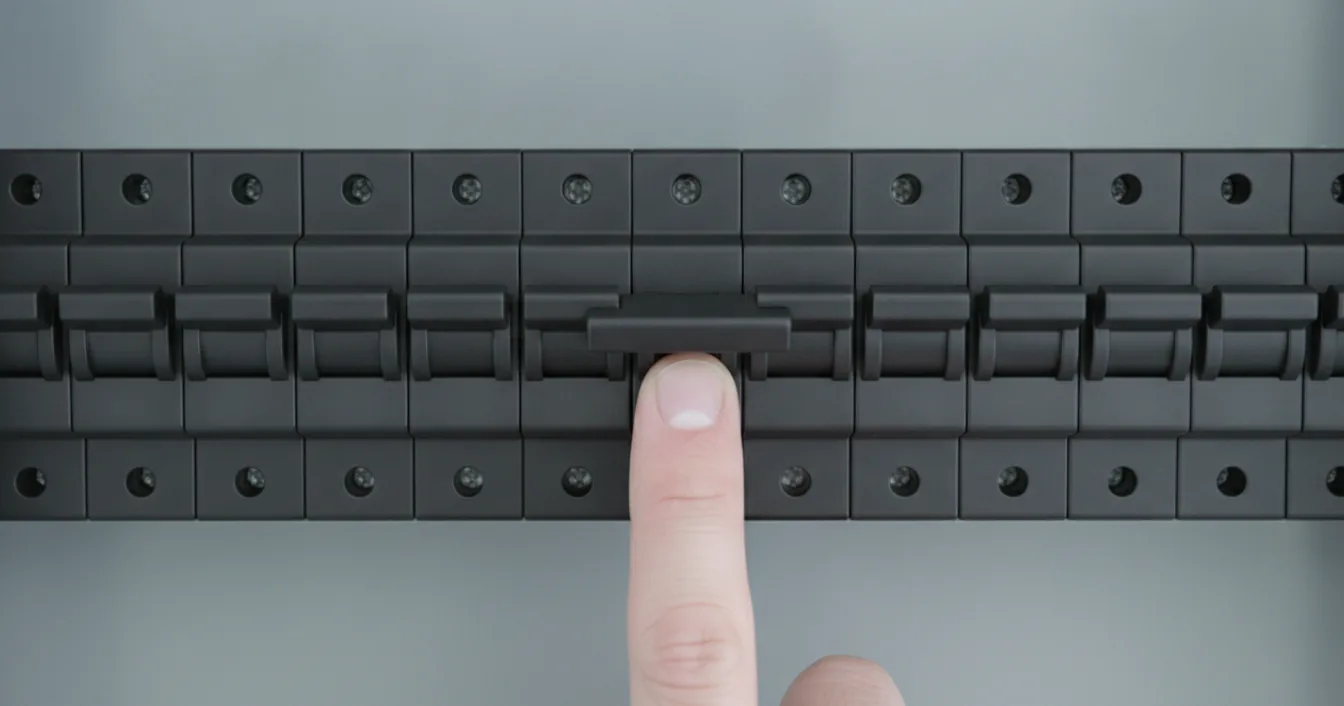
It always happens at the worst moment. The microwave and the space heater are both running, the room goes dark, and a trip to the basement panel finds one breaker sitting halfway between on and off. You flip it back, the lights return, and twenty minutes later you are standing in the dark again. The temptation is to decide the breaker is broken and to keep resetting it until it behaves. That instinct is almost always wrong, and acting on it can be dangerous.
Before anything else, one rule overrides the entire guide below. If the breaker itself feels warm or hot, if the panel buzzes or smells like hot plastic, or if you see any scorching around a breaker or outlet, stop resetting anything and treat it as urgent. If you see smoke or flame, get everyone out and call 911 rather than reaching for water. A breaker that trips is trying to protect you. A breaker, panel, or outlet that is hot or smells like it is burning has already moved past the warning stage.
What a Tripping Breaker Is Actually Telling You
A circuit breaker is not a fragile part that wears out and starts misbehaving. It is a deliberate safety device with one job: to cut power the instant the current on that circuit climbs past a safe level, before the wire inside your wall gets hot enough to start a fire. When it opens, it is doing exactly what it was built to do.
That reframing matters, because the professional world learned it the hard way. Electrical troubleshooters have a saying that the odds of a properly installed, tested breaker tripping for no reason are remote in the extreme, and for two in a row it is effectively impossible. Almost every time a homeowner is sure the breaker itself is defective, the breaker turns out to be the one part of the circuit working correctly, reporting a problem downstream in the load, the wiring, or a connection.
So the goal is not to force the breaker to stay on. It is to read what the breaker is telling you. Resetting once to confirm a one-time fluke is reasonable; resetting the same breaker over and over without finding the cause is like pulling the battery out of a screaming smoke detector, you have not solved anything, only silenced the warning. Repeated trips fall into four buckets, and learning to tell them apart is most of the battle.
Overload: The Everyday Culprit
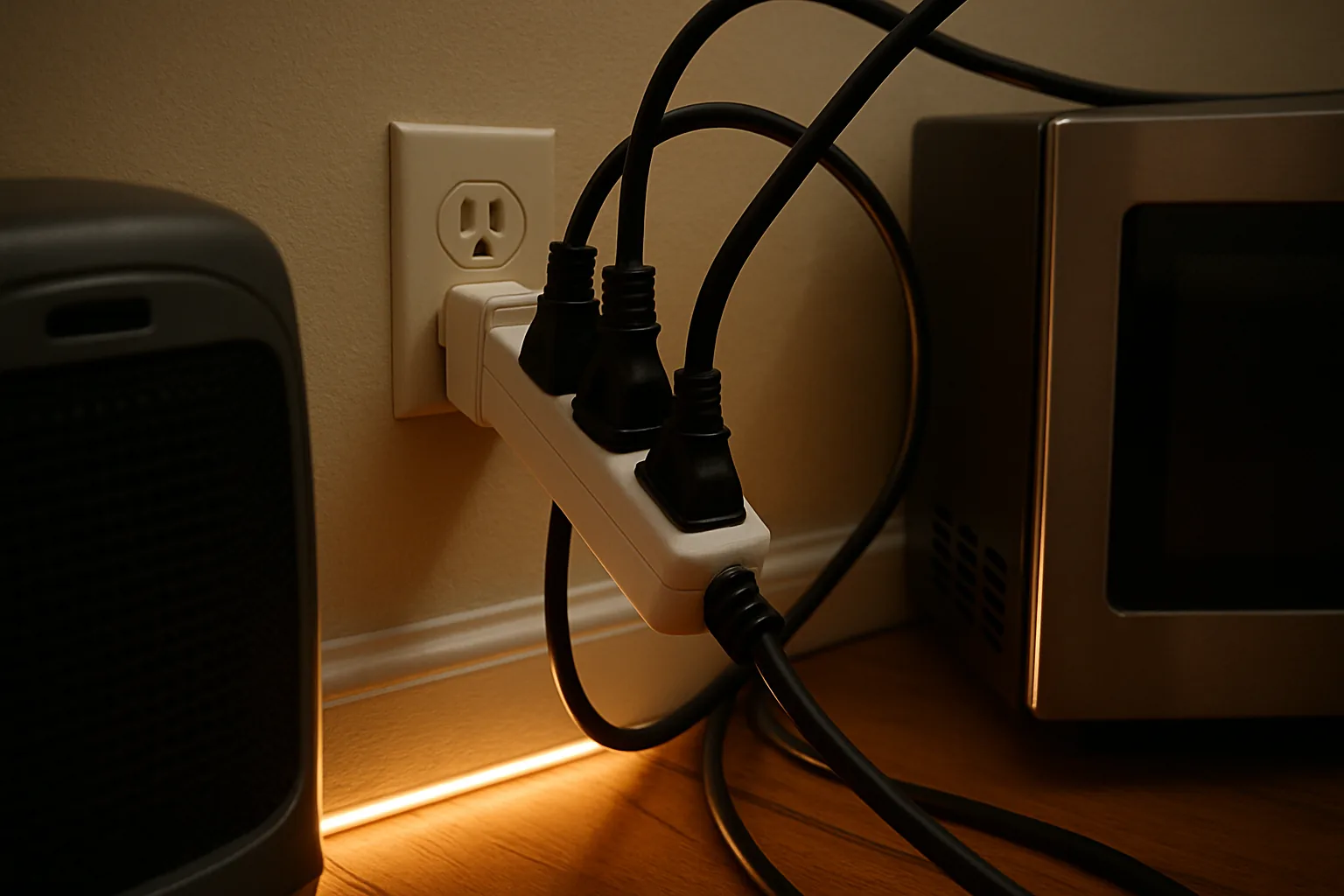
The most common reason a home breaker trips is the simplest: the circuit is being asked to carry more current than it is rated for. A standard household circuit is protected at 15 or 20 amps, and everything drawing power on it shares that budget. A 1,500-watt space heater alone pulls about 12.5 amps, most of a 15-amp circuit’s capacity, so adding a microwave, a hair dryer, or a second heater on the same circuit pushes the total past the limit and the breaker opens.
An overload has a recognizable fingerprint. It trips when you switch on that one extra appliance, not at random, and it often takes a minute or two rather than happening instantly, because the breaker’s thermal element has to heat up before it releases. The same logic scales up to industrial plants, where technicians tally the connected load against a breaker’s rating and routinely find more equipment on a circuit than it was ever designed to carry. In a house, the fix is usually to spread the load: run the heater and the microwave on different circuits, or stop daisy-chaining high-draw appliances through a single power strip, a habit we dig into in our guide to extension cord safety. If a circuit overloads no matter how you rearrange things, the room may genuinely need another circuit, and that is electrician work.
Short Circuit: The One That Means Stop
A short circuit is a different animal, and a more dangerous one. It happens when the hot wire touches the neutral wire directly, with almost nothing between them to limit the current. The result is a sudden, enormous surge that the breaker slams open in a fraction of a second.
The tell is the timing. A short circuit trips the breaker the instant you reset it, and it does so even after you have unplugged everything you can think of. You may hear a pop, see a spark, notice a scorch mark at an outlet, or catch a whiff of burning plastic near one specific device or receptacle. A damaged appliance cord, a failed switch, or a wire pierced by a nail or gnawed by a rodent are common causes. This is not a diagnose-it-yourself situation. A breaker that trips immediately on reset with the loads removed is pointing at a wiring or device fault that belongs to a licensed electrician, and forcing it back on again and again risks exactly the fire the breaker is preventing.
Ground Fault: When Current Escapes to Earth
A ground fault is a cousin of the short circuit. Instead of the hot wire meeting the neutral, current finds an unintended path to ground, through a metal box, a grounding wire, water, or a person. Because that leaked current is exactly how electricity travels through a human body, ground faults are a shock hazard as much as an equipment problem, which is why the code puts ground-fault protection everywhere water and electricity can meet.
Ground faults carry their own signature symptom, and it is one of the most useful clues in this entire guide. A circuit that trips when it rains, or when a bathroom or outdoor outlet gets damp, is almost always a ground fault caused by water reaching a connection it should never touch. A patio GFCI that drops out after a storm, or an underground line to a shed that fails in wet weather, is classic ground-fault behavior. Moisture-driven trips are worth taking seriously rather than resetting through, because the same leaked current that opens the breaker can shock someone standing on wet ground.
When the Trip Is an AFCI or GFCI Doing Its Job
Modern panels add a layer that older ones did not have. AFCI (arc-fault) and GFCI (ground-fault) breakers watch for electrical signatures, not just raw current, and they trip on dangers a standard breaker would sail right past. You can recognize them by the small TEST button on the breaker itself. Because they are more sensitive, they are the breakers most often accused of nuisance tripping.
Here the reputation is out of date. Early arc-fault breakers from the 2000s did trip on harmless noise, but today’s combination AFCIs are far better at telling a dangerous arc from the ordinary sparking of a vacuum motor or a light switch. A modern AFCI or GFCI that trips repeatedly is usually catching something real: a loose connection, a damaged cable, a failing appliance, or moisture. True nuisance trips still happen, often from a shared neutral between two circuits or an aging motor-driven appliance, but they are the exception, and chasing one down means ruling out the real faults first. We explain how the two devices differ, and why a modern home needs both, in our breakdown of AFCI versus GFCI protection. The short version: a breaker with a test button that will not stay set is reporting a condition worth finding, not a defect to swap out.

The Safe Resets You Can Try Yourself
There is a small, genuinely safe routine a homeowner can run before calling anyone, as long as nothing is hot, buzzing, or burning.
Start by turning off or unplugging everything on the dead circuit. Then reset the breaker with a firm, deliberate motion: push it fully to the OFF position first, then back to ON. Breakers do not re-arm from the middle position, which is where a tripped one rests, so the full off-and-on motion is what actually resets it. For a GFCI outlet, press the RESET button; if it will not stay in, that is the outlet reporting a live fault. Once the circuit holds with nothing running on it, plug your devices back in one at a time and wait a moment between each. If the breaker trips the instant a particular appliance comes on, you have found your culprit, and the problem is that device or its cord, not the panel.
What stays firmly off-limits is the panel interior. Removing the cover, tightening a breaker, or swapping one out is licensed work with a real electrocution risk, and in most towns it requires a permit. Resetting a breaker from the front of a closed panel and cycling a GFCI button are the safe end of the range; opening the box is where a homeowner should stop and pick up the phone.
Symptoms That Mean Stop and Call an Emergency Electrician
Some trips are a puzzle you can solve at your leisure. Others are the electrical system asking for help right now. Stop resetting, and call a licensed electrician, if you notice any of the following:
- The breaker, the panel, or a nearby outlet is warm or hot to the touch, buzzes, or smells like hot plastic.
- A burning smell or scorch marks appear at the panel, an outlet, or a switch.
- The breaker trips again the instant you reset it, especially with everything on the circuit unplugged.
- A circuit trips whenever it rains or an area gets wet.
- The trips are tied to one specific appliance, which points to a failing device or its wiring.
- The main breaker (the large one at the top of the panel) trips, or several breakers let go together.
A couple of these deserve extra weight. Immediate re-trips and any sign of heat or burning are the classic fingerprints of a short circuit or a failing connection, the conditions most likely to turn into a fire. And if your panel is an older Federal Pacific Stab-Lok or Zinsco unit, breakers that trip erratically (or fail to trip at all) are a documented safety defect in those brands, and the fix is panel replacement rather than a new breaker.
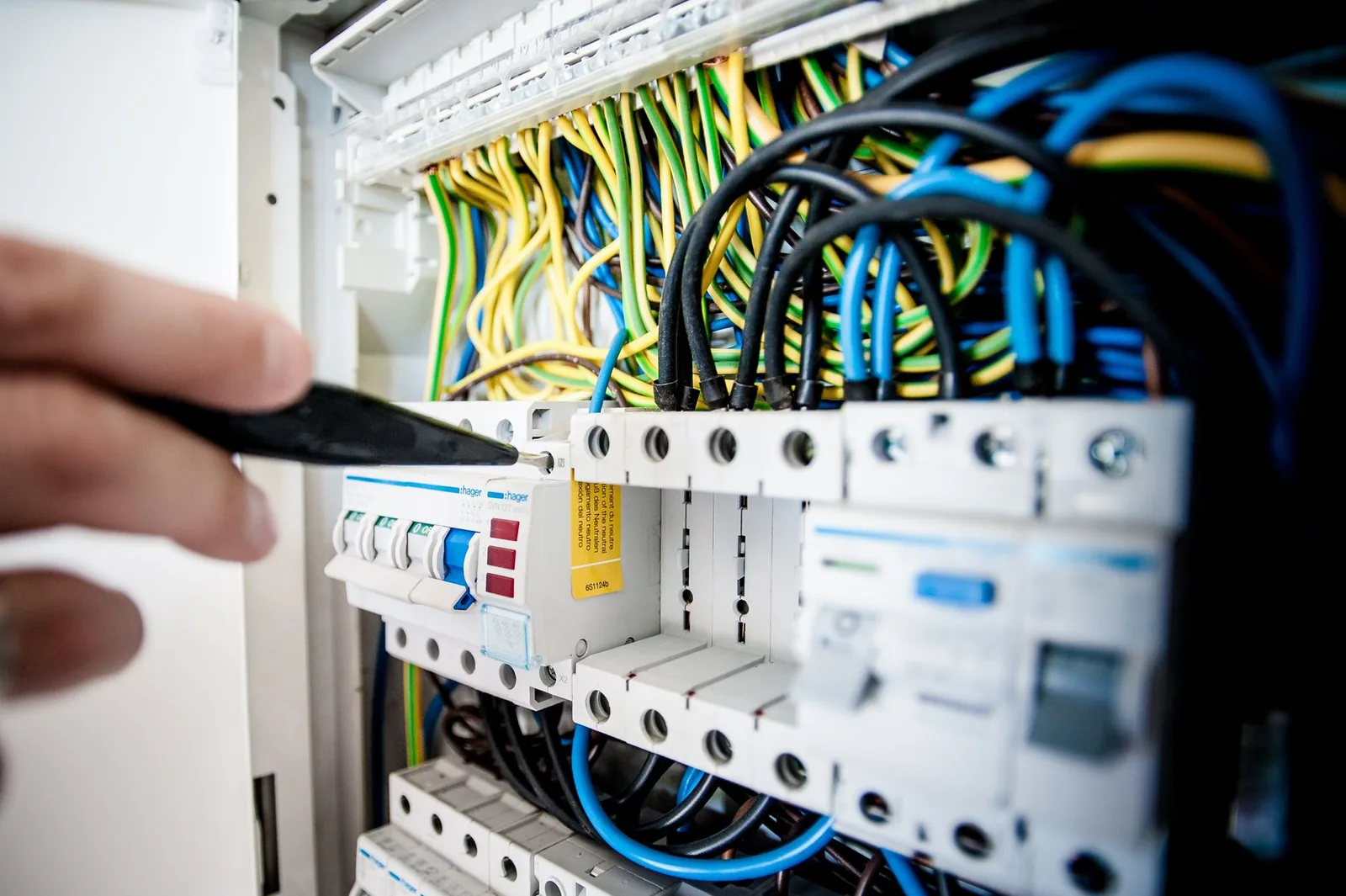
Whoever you call, confirm the license and insurance before they open your panel, and know roughly what the visit should cost so you are not overcharged in a stressful moment. Our overview of average emergency electrician costs sets those expectations, the questions worth asking before you hire help you vet the contractor, and if you are unsure whether a repeat trip even rises to an emergency, our guide to emergency versus regular electrical problems will help you judge how fast to move. Codes and permit rules vary by municipality, so a local pro is the one who knows what your jurisdiction requires.
The Bottom Line
A breaker that keeps tripping is not a broken breaker. It is a working one refusing to let a problem get worse. Your job is to read the pattern. An overload trips when you pile on a heavy load and eases when you spread it out. A short circuit trips instantly and violently and means stop. A ground fault trips in the wet and warns of a shock risk. An arc-fault or ground-fault breaker with a test button is usually catching a genuine fault, not crying wolf. Try the safe reset routine once, unplug and reconnect one device at a time, and if the trips keep coming, if anything runs hot, or if the breaker will not stay set at all, hand it to a licensed electrician. The reset switch is not a fix. It is a question the panel keeps asking, and the answer is always found downstream of the breaker, never in forcing the breaker itself to stay quiet.
Further reading (sources)
- EC&M on why a repeatedly tripping breaker is usually protecting the circuit rather than failing
- Electrical Safety Foundation International for how ground-fault protection stops a shock before it starts
- ESFI with why modern arc-fault breakers trip on hidden wiring faults
- NFPA covering the electrical safety basics behind home fires