After a House Fire: When the Power Can Come Back On and Who Has to Sign Off
Published on October 24, 2026
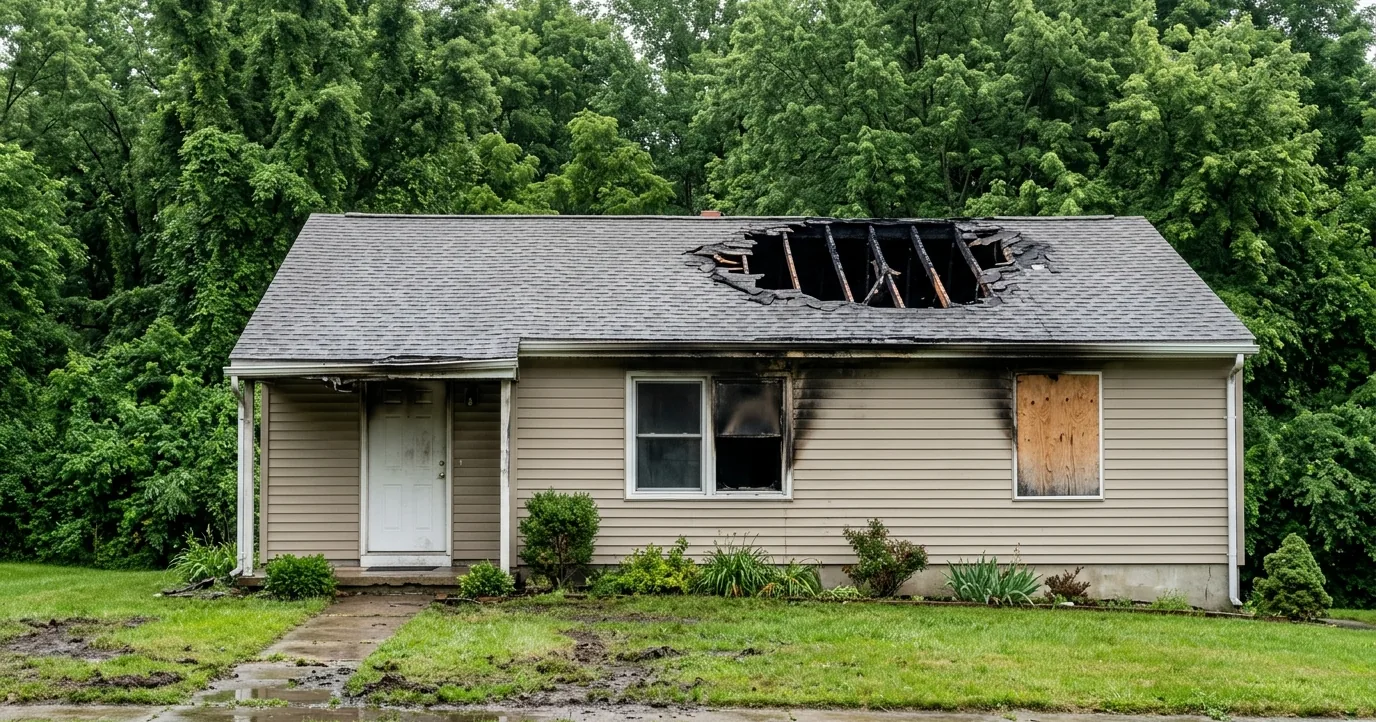
On a Friday night in September, two people in central Peoria, Illinois, were watching TV after dinner when they smelled something burning. They called 911 right away. Firefighters found heavy smoke coming from the roof, put out the fire in the attic with several hoses, and cut a hole in the roof to let the heat and smoke out. The fire never got past the attic, but the rest of the house took water and smoke damage, 25 News Now reported. An investigator traced it to faulty electrical wiring. The residents and their dog got out safely, and they had to find somewhere else to stay.
The November before, in Pembroke Pines, Florida, a fire that started in a master bedroom closet spread into the attic and vented through the roof. The state fire marshal blamed faulty wiring there too, and crews stayed after the flames were out to clear debris and put out hot spots in the attic.
Both houses were left in the same state: the fire was out, most of the structure was standing, and the power was off. It does not come back on when someone pushes a breaker. This guide covers the days after a fire, large or small: why the power gets cut and who cut it, what heat, smoke residue and hose water do to wiring and breakers that look untouched, who has to sign off before the house is energized again, how repair crews get power in the meantime, and how to document the electrical damage for your claim.
A few rules outrank everything below. Do not go back inside until the fire department says it is safe; the U.S. Fire Administration (USFA) warns that “floors and walls may not be as safe as they look.” Stay away from any wire that is down or hanging, and report it to the utility. Leave the meter and the main breaker alone. And if you are allowed back in and see fresh smoke or glowing embers, or see sparks or hear buzzing or crackling from the wiring, get out and call 911: a fire can rekindle, and sparks mean something in the house is still energized.
Why the Power Is Off, and Why It Stays Off
Before the last engine leaves, the fire department decides whether your utilities are safe. USFA’s recovery booklet for fire victims, After the Fire, says what happens when they are not: “firefighters will have your utilities turned off or disconnected before they leave. Do not try to turn them back on by yourself.”
For electricity, disconnected usually means the utility has pulled the meter or cut the service at the pole or the drop. Either way, the power is now off at a point you do not control. The meter and the seal on it belong to the utility, and our guide to shutting off power to a modern house explains why it is never a homeowner’s switch.
Getting the power back is not a phone call to the utility. In many places, once a house has been disconnected because of a fire, the utility will not reconnect it without clearance from the local building authority. The Town of Sahuarita, Arizona, puts it plainly in its reconnect checklist: if your power was disconnected “as a result of a fire, you will need a building permit and site inspection” before the utility reconnects it. Detroit’s electrical inspection division calls its reconnect permit and inspection “MANDATORY in order to re-energize the building electrical service.” When the inspection passes, the city’s inspector sends a service release to the utility. When it fails, a licensed electrical contractor has to pull a permit, make the corrections and call for new inspections.
So the honest answer to “when can the power come back on?” is “when an inspector releases it,” and that depends on what the fire did to parts of the electrical system nobody can see from the doorway.
One caution for newer houses. If yours has rooftop solar or a home battery, a pulled meter takes away the utility, not every source of power, and a battery can read the missing meter as an outage and keep circuits live. Tell the fire crew and your electrician about every source, and leave the inverter and battery alone. The National Electrical Manufacturers Association (NEMA), whose guidance on fire damage comes up throughout this article, warns that heat buildup in a battery exposed to fire “may cause the battery to vent, leak or explode.”
What Heat, Smoke, and Hose Water Do to Wiring That Looks Fine
Most people size up fire damage by what burned. Electrical equipment does not follow that rule. NEMA, whose members make breakers, panels and wiring devices, publishes a guide to evaluating electrical equipment after a fire, and its opening warning is the one to remember: equipment “exposed to heat and fire residue can be extremely hazardous if re-energized without first performing a proper evaluation.” The guide counts exposure through the fire itself, through firefighting, or through “close proximity to a fire.” Three things do the damage.
Heat. Wiring can be cooked without ever touching a flame. NEMA notes that when wire or cable is exposed to fire or extreme heat, “the conductor metal and/or insulation may be damaged, causing failure or premature failure,” and that connections can fail from the heating too. Breakers suffer the same way. Heat and contamination can cost the trip mechanism its lubrication, damage the contacts and weaken the insulating materials inside, and NEMA says a breaker’s ability to protect its circuit “is adversely affected by exposure to fire or heat.” None of that shows from the front of the panel.
Smoke and soot. This is the damage that travels. USFA warns that things the fire never touched “may still be ruined by smoke.” For electrical equipment, NEMA calls smoke and soot “particularly damaging because of the corrosive and conductive nature of the residue.” A film of soot on a receptacle two rooms away is not a cleaning job: it can eat at the metal contacts and give current a path where none should exist. For GFCIs, AFCIs and surge protectors, NEMA adds, the harm “may not be readily apparent.”
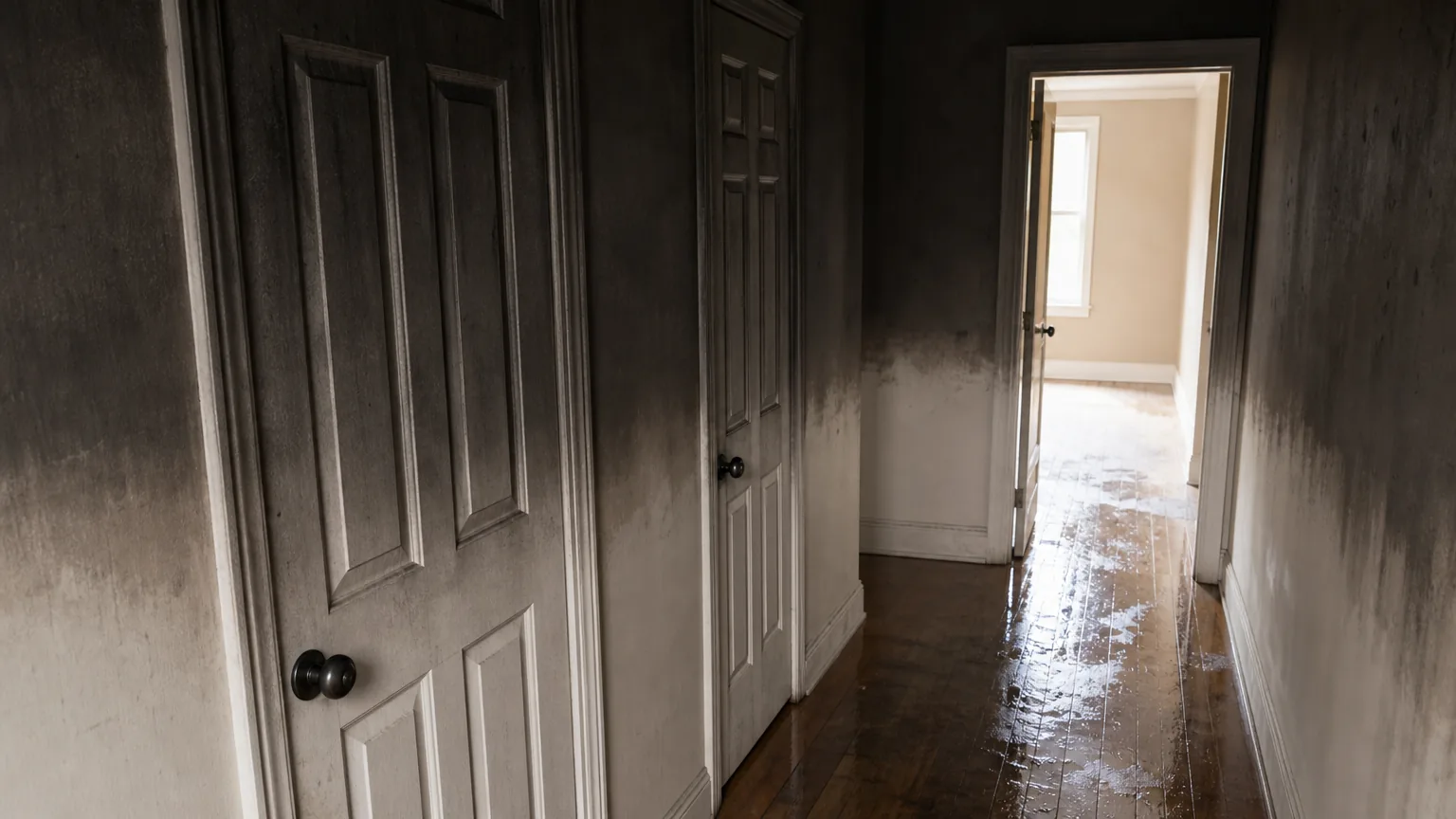
Hose water. Firefighting water goes where gravity takes it: down through ceilings, into wall cavities and onto whatever sits below the fire. In Peoria, the flames stayed in the attic while the house beneath it took the water. NEMA’s guide says equipment exposed to heat or smoke “is also likely to have been exposed to the water used to extinguish the fire” and should be evaluated for water damage or replaced. Our guide to electrical safety after a flood explains why wet breakers and devices are replaced rather than dried out.
The attic deserves extra suspicion. The National Fire Protection Association (NFPA) counts an average of 46,652 home electrical structure fires a year from 2020 through 2024, and its May 2026 report found that 29 percent of them began in structural areas such as an attic or ceiling and roof assembly (9 percent) or a wall assembly (6 percent), the places where wiring runs out of sight. Both fires above burned in an attic. That matters for the rest of the house, because the branch circuits feeding rooms that never saw a flame often run through the attic that did.
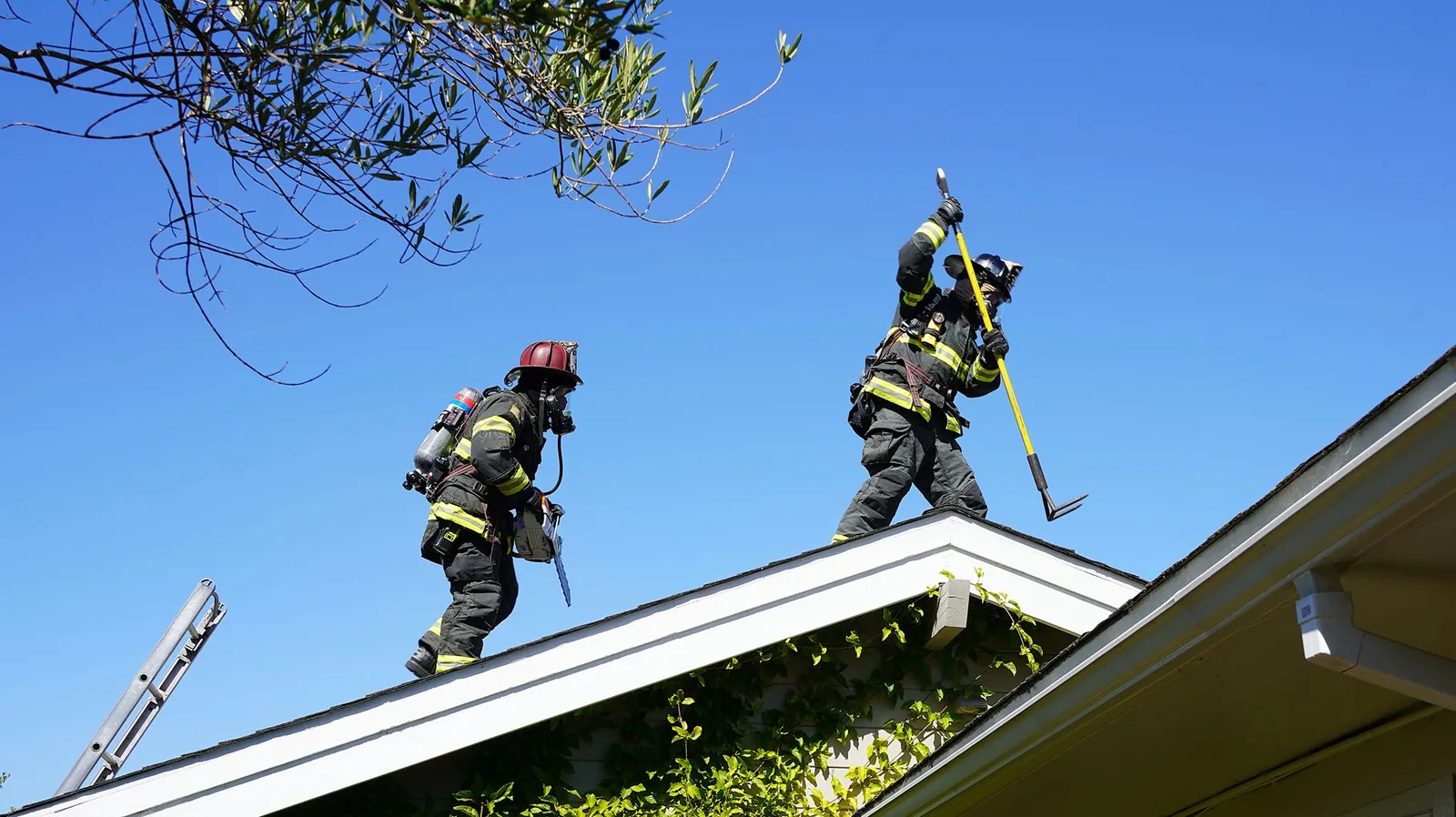
Then there is the damage done on purpose. To fight a fire, USFA explains, firefighters may break windows and cut holes in the roof to slow the fire and clear the smoke, and they may cut into walls “to make sure that the fire is completely out and not hidden in the walls.” Fire crews call that search for hidden fire overhaul, and it is why the Pembroke Pines crews were still working in the attic after the flames were out. It is the right call. It also means cable stapled to the framing behind a ceiling or wall may have been cut, pulled loose or crushed along the way.
What Gets Replaced, and What Gets Tested
NEMA’s guide sorts equipment into two columns: replace, or “potential for reconditioning,” and the second applies only after talking with the manufacturer. For equipment in a typical house that was exposed to the heat, the smoke or the water, nearly everything sits in the replace column:
- Circuit breakers and fuses
- The panelboard itself, and any transfer switch for a standby generator
- Wire, cable and flexible cords
- Outlet boxes and junction boxes
- GFCI and AFCI devices, and surge protective devices
- Receptacles, switches and dimmers
- Light fixtures
- Smoke alarms and other fire detection and signaling equipment
- Batteries and battery backup units
Note that the panel itself is on that list, not just the breakers inside it. For the wiring devices and the electronic protection, NEMA is blunt: “Washing, rinsing, or repairing fire-damaged products of this type should not be attempted.”
A shorter list can sometimes be saved. Conduit can stay in service if a careful inspection finds it sound and clear inside, and NEMA wants motors, such as the ones in a furnace blower or a well pump, evaluated by qualified personnel rather than simply switched back on. How much can be saved depends, by NEMA’s account, on how much heat and residue the equipment saw, its age, and how long it was exposed.
Where the line falls is the electrician’s judgment, and it should be drawn generously and put in writing: which rooms and circuits saw heat, smoke or water, what is being replaced, and what is being tested instead. For circuits outside the damage, a thorough evaluation tests rather than assumes. That means insulation resistance tests on cable that ran through the attic or above the fire, a look at every connection in the panel, and a check that the protective devices that remain still trip.
Smoke alarms go on the list if they were in the heat or smoke, and in a house that has just burned, nobody should be sleeping under a damaged one. If yours are hardwired and interconnected, the replacements have to work together; our guide to hardwired smoke alarms covers replacing a whole set.
Appliances get the same treatment. A refrigerator, range or microwave that sat in heat, smoke or hose water needs a qualified technician’s evaluation before it goes back into service, and the Illinois Department of Insurance’s advice after a loss is to “have electrical equipment checked by a professional before use.” Nobody should open one up to clean out the soot, either. A microwave can hold a dangerous charge long after it is unplugged, as our guide to the appliances you should never open explains.
When the Fire Was Small
Not every fire ends with a hole in the roof. A pan fire smothered with a lid, an outlet that scorched its cover plate, a light fixture that smoked until the breaker tripped: the fire department may never pull the meter, and nobody may tell you what happens next. The rules are simpler, not looser.
- Leave that circuit’s breaker off. The American Red Cross guidance on checking a home after a fire says a tripped breaker “may indicate damaged wiring inside your home,” and its instruction is short: “Do not turn them on. Call an electrician.”
- Have the whole circuit checked, not just the burned device. The device is where the fire showed itself, which is not necessarily where the problem began. A loose connection upstream, a damaged cable or an overloaded circuit can all end at the same scorched outlet.
- Count the smoke. NEMA’s guidance covers equipment exposed through “close proximity to a fire,” and soot from a small fire still settles on the devices and fixtures in the room.
- If the utility did pull the meter, expect the release process above to apply, however small the fire was.
Who Has to Sign Off Before the Power Comes Back
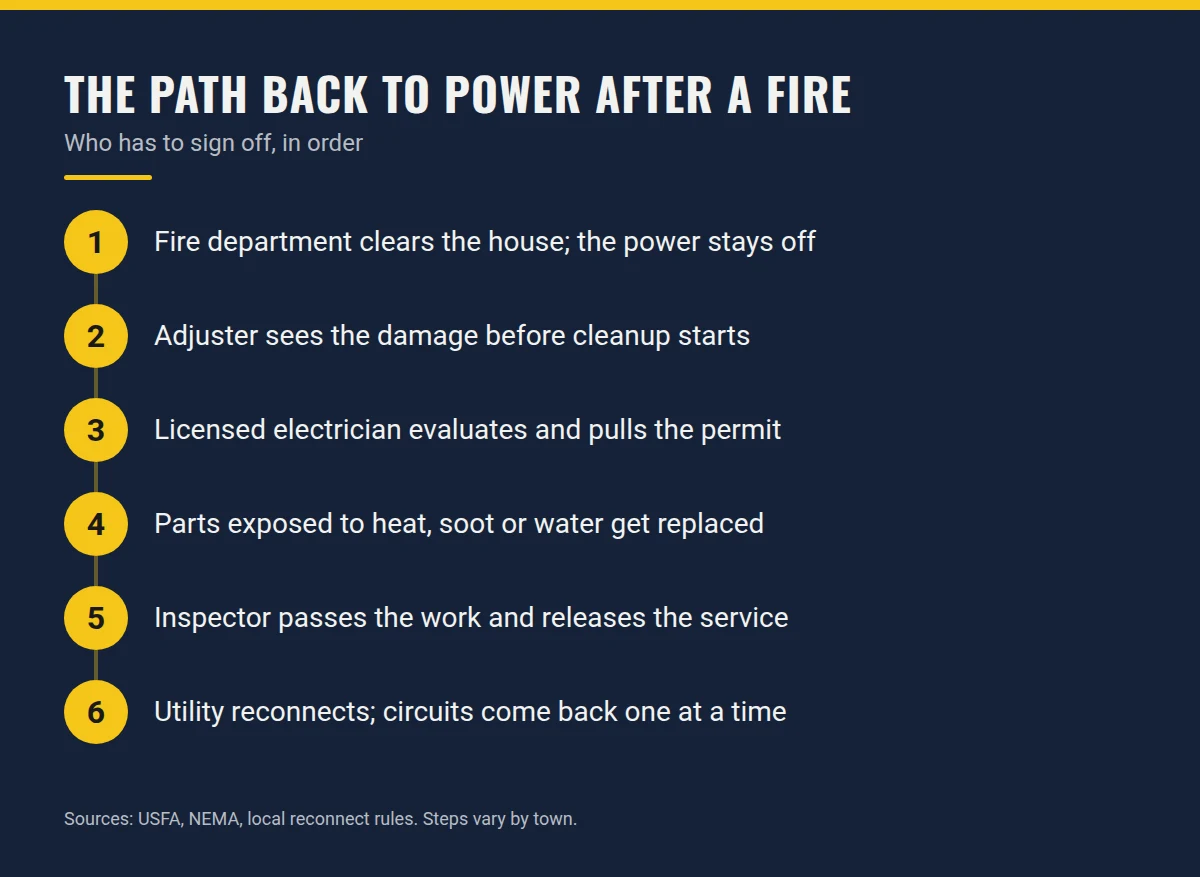
Every jurisdiction words it differently, but the path back to power after a fire runs through the same hands, in roughly this order.
- The fire department or fire marshal. They decide when you can go back in. If the fire was electrical, the investigator may want the burned devices, the panel or the circuit left as found, so ask before anything is removed. USFA’s booklet has blanks for the fire incident report number and the name of the fire marshal or investigator, and both are worth filling in.
- Your insurer’s adjuster. Call your insurer right away, as USFA advises, and let the adjuster see the electrical damage before demolition hides it. The Illinois Department of Insurance tells policyholders to “get prior agreement from your insurance adjuster before you contract for repairs.”
- A licensed electrician. The evaluation, the written scope and the permit come from here. Check the license number with your state licensing board and ask for proof of insurance before you sign anything. A fire puts you in front of contractors you have never heard of at the worst possible moment.
- The building or electrical inspector. The repairs are inspected under the permit, and a pass is what produces the release. In Detroit, the inspector who passes the work sends the release to the utility. In Sahuarita, a failed inspection “will cause a denial of the release of power.”
- The utility. It reconnects the service and sets the meter once it has the release. It is not inspecting your wiring; it is relying on the inspector.
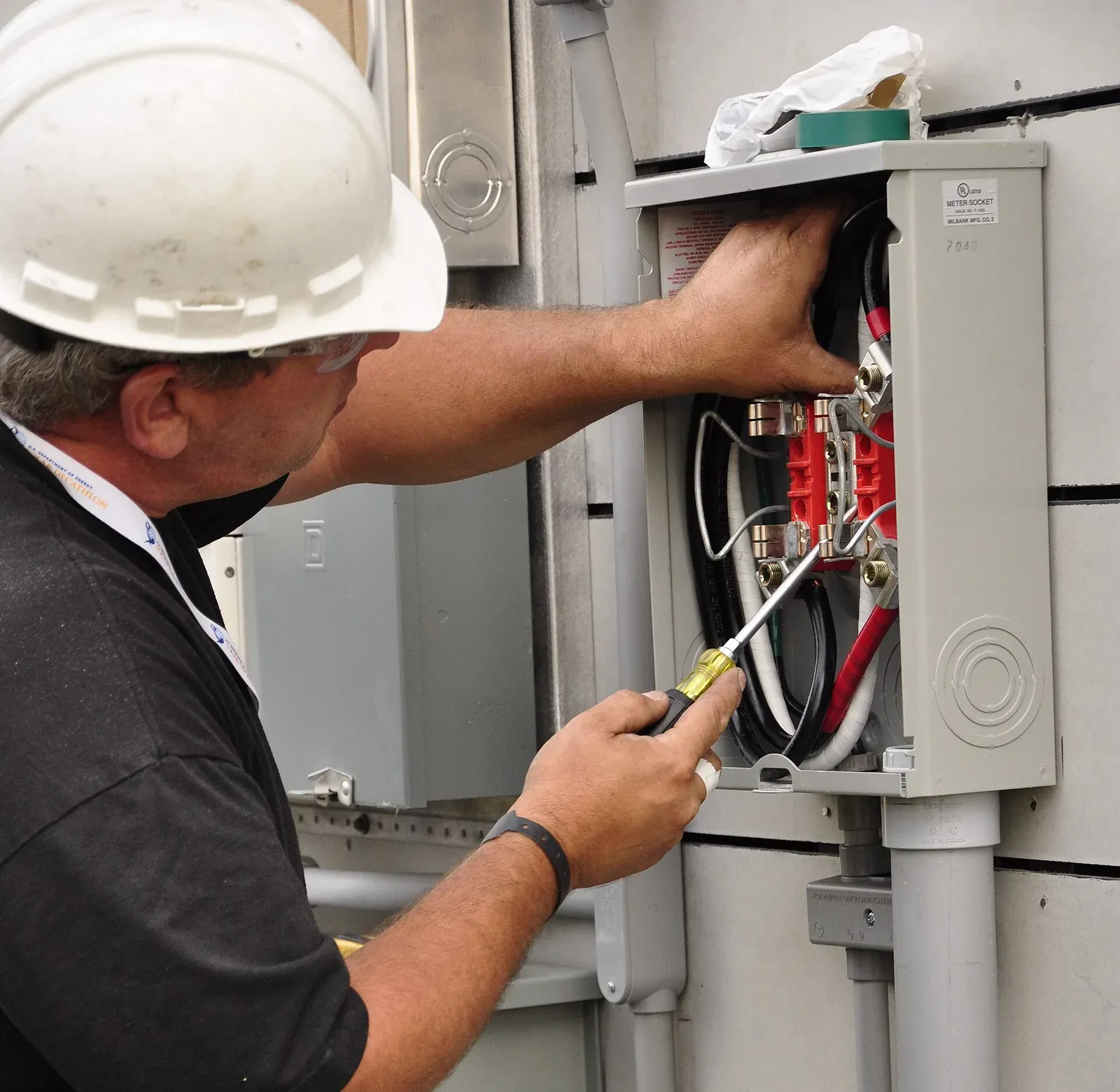
When the power does come back, a careful electrician brings circuits up one at a time and watches for heat, odor and trips, rather than closing the main and hoping.
If only part of the house burned, ask whether your inspector will release the service with the damaged circuits disconnected at the panel, so the rest of the house can be used while repairs go on. The answer varies by jurisdiction. Sahuarita’s reconnect checklist, for one, wants every wire end capped and no exposed wiring anywhere in the house before a reconnect inspection will pass.
Expect the inspector to apply today’s code to the repair. In the electrical code’s logic, repairing fire damage is new work: rewired circuits and replaced receptacles have to meet the edition your town enforces now, even though untouched parts of the house can stay as they are. Our guide to whether old wiring is really grandfathered explains what that usually adds, from arc-fault protection on rewired circuits to the rules for replacement receptacles.
Power While the House Is Being Repaired
Repairs need electricity long before the house is ready for it. Cleanup and rebuilding crews run fans, dehumidifiers and power tools, and the house’s own service is either disconnected or not yet released. There are three usual answers, and one that is never acceptable.
- A temporary service. An electrician sets a temporary power pole or pedestal with its own meter, and it gets inspected before the utility connects it. In Jasper, Georgia, for example, a temporary pole “must be inspected before the Power Company will hook up your electricity.”
- A partial release of the house’s own service, where your inspector allows it, as described above.
- A portable generator for the crew’s tools, run outdoors.
Whatever feeds the job, the outlets have to protect the people using them. Federal OSHA rules require ground-fault circuit interrupters on the 120 volt, 15 and 20 amp receptacles on a construction site that are not part of the building’s permanent wiring, unless the employer runs a formal equipment grounding program instead.
The answer that is never acceptable is plugging a generator into the house wiring through a receptacle. The Consumer Product Safety Commission (CPSC) calls that practice, known as backfeeding, “extremely dangerous”: it puts utility workers and neighbors on the same transformer at risk of electrocution, and it “bypasses some of the built-in household circuit protection devices.” In a fire-damaged house it also sends power into circuits nobody has evaluated. Run any generator outside and far from windows, doors and vents, because CPSC’s first warning about generators is carbon monoxide.
If the house cannot be lived in, ask your insurer whether your policy includes Additional Living Expenses. The Illinois Department of Insurance explains that this coverage pays the costs above your normal living expenses while the house is repaired, and it says to save every receipt.
Documenting the Electrical Damage for Your Claim
Electrical damage is easy to undercount because so much of it is invisible, and the easiest time to prove it is before anyone cleans up or tears out. The Red Cross says to take photographs of the damage because “you may need these to substantiate insurance claims later,” and the Illinois Department of Insurance advises photographing the way things looked before you begin cleaning and making repairs.
Once the fire department lets you in, photograph:
- The outside service: the meter, the mast or service entrance cable, and the wall around them, including any scorching, melted plastic or soot.
- The panel from the front, door open and cover on. Get the circuit directory in the shot, because it tells the adjuster which circuits feed the damaged rooms.
- Every scorched, melted or soot-stained cover plate, switch and light fixture, including those in rooms the fire did not reach.
- Ceilings and walls that firefighters opened, before the debris is hauled away.
- The model and serial plates of appliances and heating and cooling equipment that took heat, smoke or water.
Then keep the paper:
- The fire incident report number and the investigator’s name, which USFA’s booklet has you write down.
- The electrician’s written evaluation, itemized. The Illinois Department of Insurance recommends written bids from licensed contractors with materials and prices “on a line-by-line basis.” Ask that each replaced item be tied to the reason, with NEMA’s guidance as the reference.
- The permit, the inspection results, the release and the utility’s reconnect order.
- Every receipt, which USFA and the Illinois department both stress.
And avoid two expensive mistakes. Do not throw out burned devices or damaged equipment until the adjuster has seen them; Illinois tells policyholders not to dispose of items “until the company representative has examined them.” And do not sign a repair contract before the adjuster agrees to it.
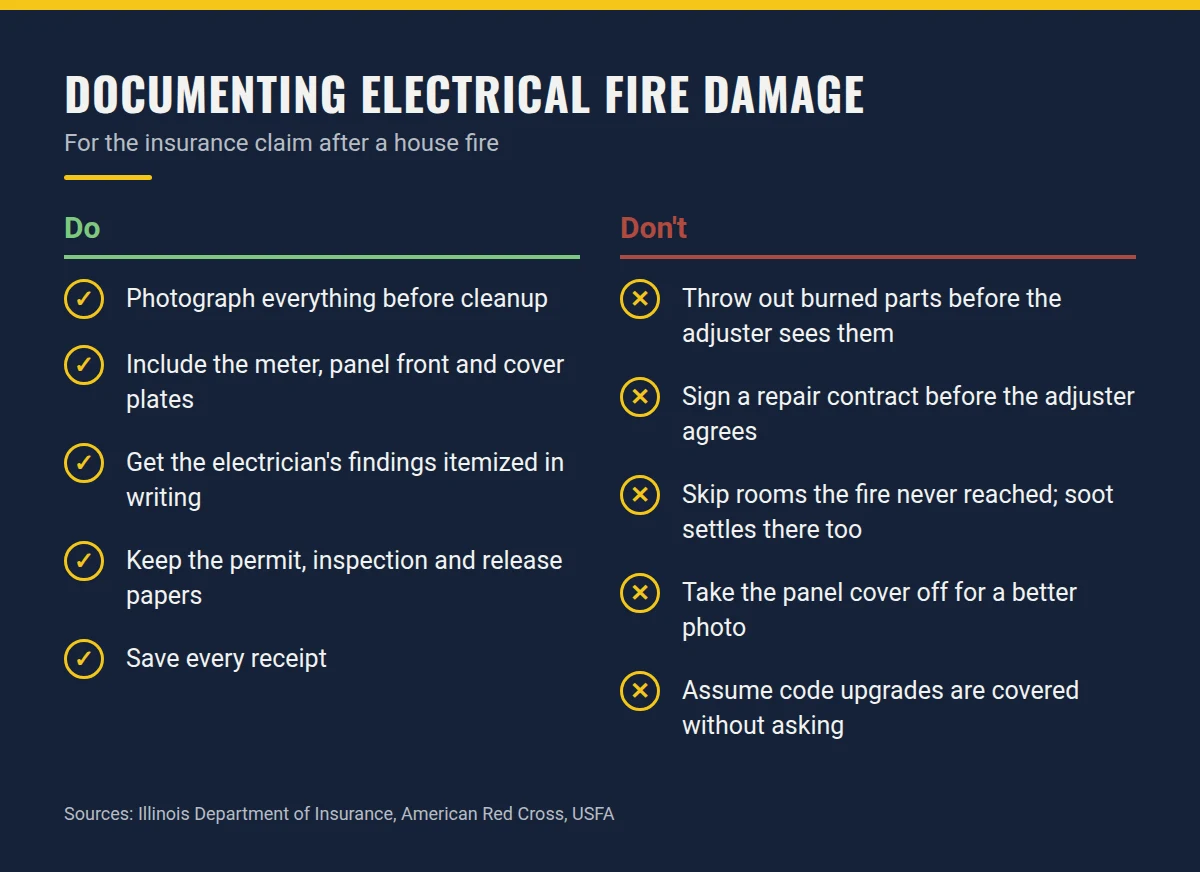
Code upgrades are the part of an electrical repair a claim can leave uncovered. The Illinois Department of Insurance warns that “in most cases, homeowner’s policies do not cover the expense of bringing a house up to code” when the house did not meet those requirements before the loss, unless the policy includes a building code endorsement, so ask your agent. Florida settles part of the question by statute: an insurer has to offer law and ordinance coverage, and unless the policyholder turned it down in writing, the policy is deemed to include it up to 25 percent of the dwelling limit. That coverage applies to repairs of the damaged portion of the house unless the total damage exceeds half of the structure’s replacement cost.
The Bottom Line
After a fire, the power is off for a reason, and it stays off until someone with authority says otherwise. The fire department has it cut, the utility holds the meter, and in many places only an inspector’s release brings it back, after a licensed electrician has found and replaced what the heat, the soot and the hose water ruined. That list is longer than most people expect, because NEMA’s guidance treats exposed breakers, panels, wiring, devices and alarms as replacement items whether or not they look damaged.
Use the waiting time well. Photograph everything before cleanup, get the electrician’s findings in writing, keep the permit and inspection paperwork with the claim, and run temporary power the safe way, never through a receptacle. Electrical codes, permit rules and utility reconnection procedures vary by municipality, so confirm the exact steps with your local building department and your utility, and verify any electrician’s license and insurance before work begins.
Further reading (sources)
- U.S. Fire Administration on what to expect and whom to call in the days after a home fire
- National Electrical Manufacturers Association with its guide to evaluating electrical equipment exposed to fire and heat
- NFPA for its May 2026 report on home electrical fires
- City of Detroit covering its electrical service reconnect permit and inspection
- Town of Sahuarita, Arizona from its reconnect checklist for power cut after a fire
- American Red Cross on checking your home after a fire, including tripped breakers
- Illinois Department of Insurance with its guide to what to do after an insured homeowners loss
- Florida Statutes section 627.7011 for the law and ordinance coverage insurers must offer
- OSHA covering ground-fault protection for temporary power on construction sites
- City of Jasper, Georgia on inspecting a temporary power pole before the utility connects it
- CPSC with its safety alert on portable generators and backfeeding
- 25 News Now from its report on the September attic fire in central Peoria
- Pembroke Pines News on the November 2025 wiring fire that spread from a closet to the attic