The Fire Was Traced to the Installation: Cause Investigations, Subrogation, and Who Pays
Published on October 26, 2026
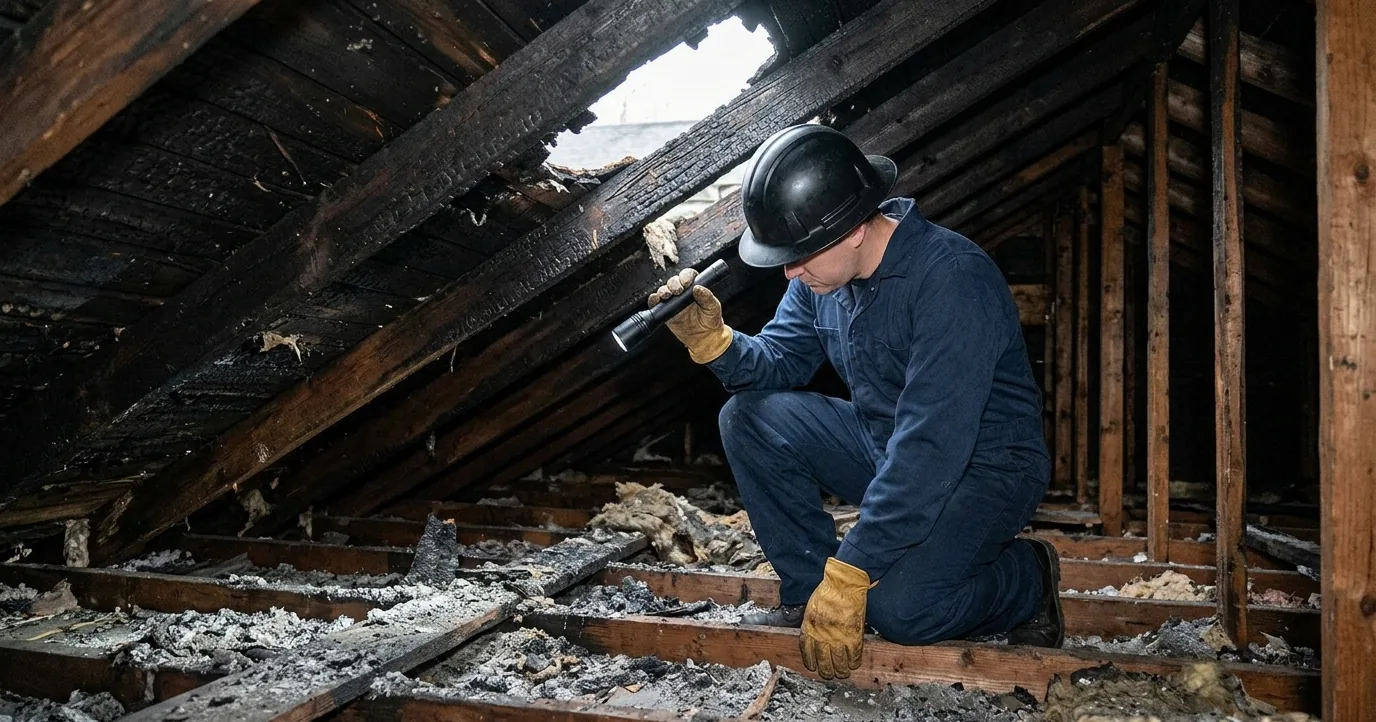
Late one night in Maricopa, Arizona, a couple had to get out of their burning house, and they knew from the smell that the fire was electrical. They got themselves and their pets out safely. “And then the next day was kind of when the nightmare started,” one of them told ABC15.
The Ak-Chin Fire Department’s incident report found that an electrical wire and cable installation had caused an equipment failure that started the fire. An electrical engineer who examined the house was more specific: the wire feeding the water heater was too small a gauge for the unit at the end of it. In December 2020, the company that replaced the couple’s water heater had offered to upgrade them from a 30 gallon tank to a 50 gallon one and, by the couple’s account, hooked the bigger heater up to the wiring that had supplied the smaller one. Five years later that wire got hot enough to burn through its conduit and ignite the rafters in the attic.
Two reports pointed at one installation. The installer and its insurance company denied responsibility anyway. The couple spent six months out of their home while more than $50,000 in repairs were made, and they hired a lawyer.
That is the part of a fire nobody prepares for. Once the flames are out, a second process starts, one that decides what caused the fire and who pays for it, and most homeowners meet its rules for the first time while living out of a suitcase. This guide walks through it: how a fire’s origin and cause get determined, who each investigator works for, why the physical evidence can matter more than any report, how your own insurer pays you and then goes after the installer, what a permit record proves, and why an unlicensed installer makes all of it harder. It ends with the paper worth collecting from any installer before anything goes wrong.
Two things first. If something in your house smells hot or electrical right now, get everyone out and call 911; this article will keep. And this is a homeowner’s map of the process, not legal advice. Deadlines and liability rules differ from state to state, so have a lawyer licensed in your state look at your own case.
Two Investigations Answer Two Different Questions
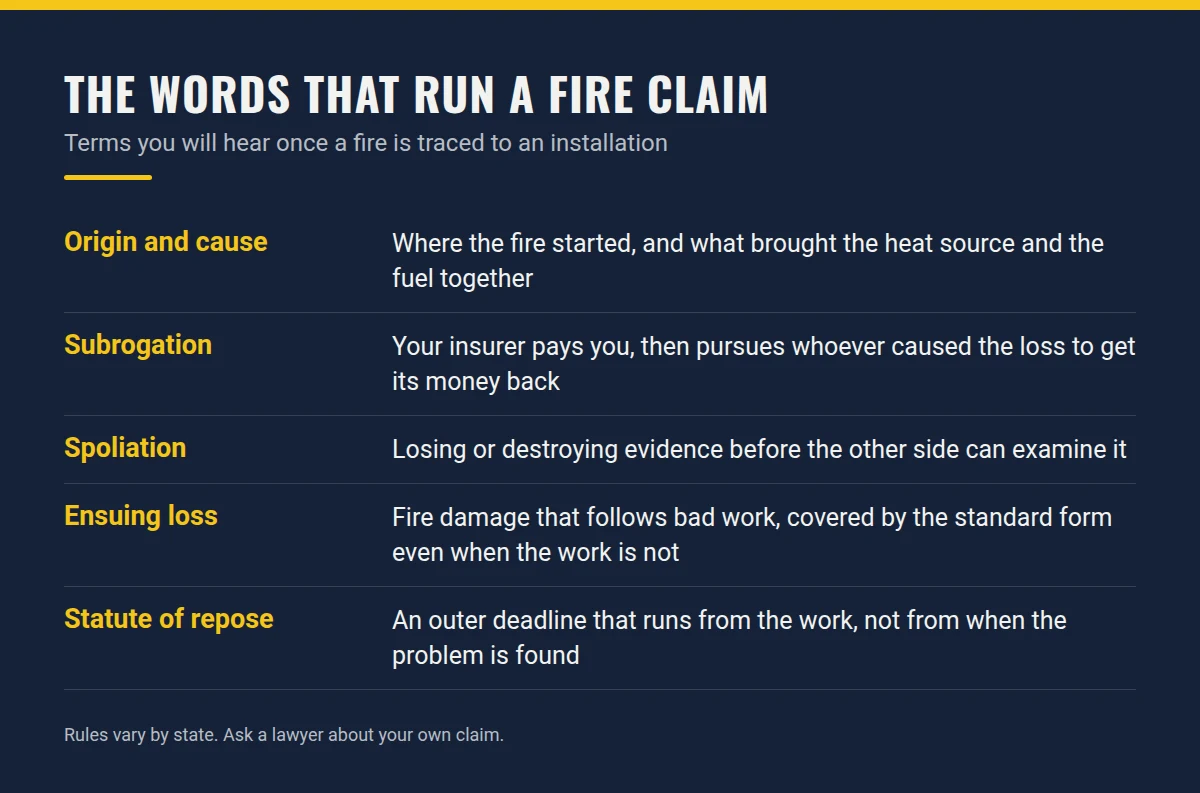
The first investigation is a public one. The fire department or the fire marshal’s office works out the fire’s origin and its cause, and the National Institute of Justice’s guide to fire scene evidence defines the two terms simply: origin is “where the fire started,” and cause is “the factors that brought the ignition source and first material ignited together.” The same guide explains what happens next. If the cause is determined to be accidental, “the scene is released to the owner or the owner’s insurance company for further examination.” If the fire was set on purpose, it becomes a crime, and law enforcement takes over.
What the department concludes goes into the incident report, and the report has a structure worth knowing before you read yours. For decades, departments coded their fires for the National Fire Incident Reporting System (NFIRS). Its reference guide sorts the cause of ignition into six bins: intentional, unintentional, failure of equipment or heat source, act of nature, cause under investigation, and cause undetermined after investigation. A separate field records what contributed to the ignition, with codes for electrical failures such as an arc from a faulty contact or loose connection, for “equipment overloaded,” and for “installation deficiency.” An installation that caused an equipment failure, the finding in Maricopa, is exactly the kind of thing those fields exist to capture.
Since January 2026, incident data has gone only to the system that replaced NFIRS, the National Emergency Response Information System (NERIS), so a newer report will look different. Whatever the format, find what it says about the area of origin, the cause and any contributing factor, and write down the report number and the investigator’s name.
Then read one line of the NFIRS guide twice. The cause entry, it says, “is the best determination of the firefighter at the scene and may be changed later as a result of further investigation or other information.” A fire report is an official record and strong evidence. It is not a verdict, and the installer’s side is free to argue with it.
The second investigation, and often a third and a fourth, are private. The NIJ guide lists who may turn up after a fire besides the fire service and the police: “engineering specialists (fire, chemical, mechanical, or electrical), and private investigators representing insurance companies, owners, tenants, and manufacturers.” In Maricopa it was the electrical engineer who explained the mechanism, a wire too small for the load it carried. A liability claim usually turns on that level of detail, and it usually comes from the private side, after the department has ruled the fire accidental and released the scene.
Every Investigator Works for Someone
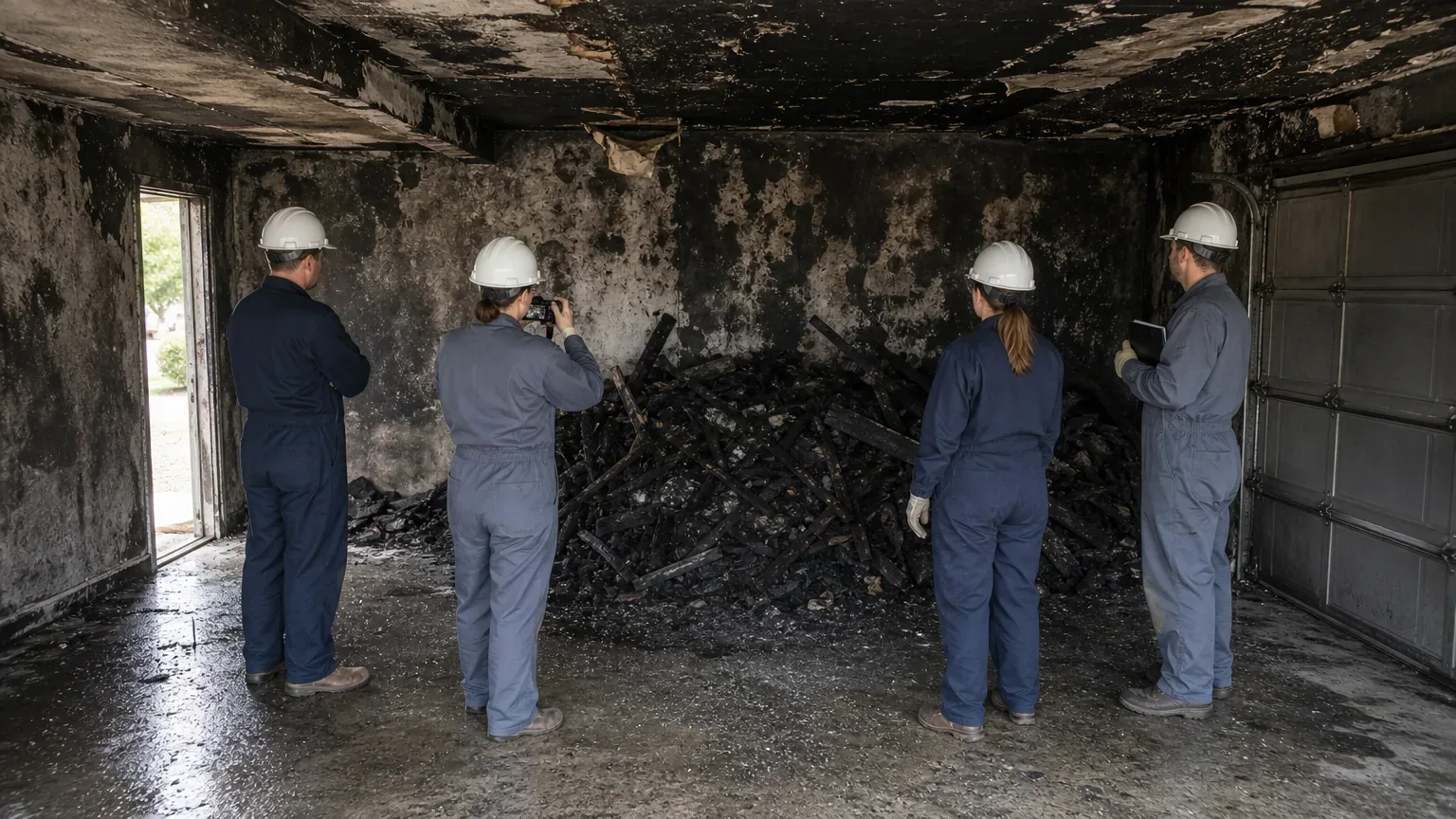
After a fire, a parade of people with cameras and flashlights will walk through your house, and it is natural to assume they are all there to help you. Each one was sent by somebody, and the question each one answers is that somebody’s question.
Your insurer’s investigator, often a fire cause specialist working with an electrical engineer, works for your insurer. Part of the job is confirming that the fire was accidental and covered. The other part is finding out whether someone else caused it, because if someone did, your insurer may be able to recover what it pays you. In an installation fire those interests usually line up with yours, but the findings belong to the insurer. Ask for a copy of the cause report; you may or may not get one.
The installer’s insurer will send its own expert, and that expert’s job is to test the theory that its customer started the fire. Experts disagree more often than homeowners expect. In a federal case over a boat fire on Seattle’s Lake Union, a fire department arson investigator concluded the fire was caused by a short in the boat’s wiring near its radar, while the insurer’s own experts blamed a portable electric space heater. Same fire, two causes.
A few rules follow from that:
- Get the public record. Ask the fire department how to obtain the incident report, and keep the report number with your claim file.
- Remember whose adjuster is whose. The installer’s insurer may contact you directly. Its adjuster works for the installer, and you do not have to accept its account of what happened or sign anything it sends.
- Know when to bring in your own help. If the losses are large, or your insurer decides not to pursue the installer, an attorney who handles fire cases can hire an independent engineer. The Arizona attorney ABC15 interviewed, who spent 20 years working for insurance companies, said homeowners often give up too easily.
Leave the Evidence Where It Is
In an electrical fire, the evidence is the installation itself: the wire, the breaker that fed it, the connections at the appliance, the conduit it ran through. Investigators need to see where and how the circuit failed, which means seeing the circuit.
That makes the days after a fire the easiest time to lose a claim without knowing it. The installer may offer to come out and make things right. A cleanup crew may haul the burned water heater to a dumpster. A well-meaning electrician may cut out the damaged run and replace it so the rest of the house can get power back. Any of those can destroy the one thing every investigator needs to see.
Courts take this seriously. Destroying or losing evidence before the other side can examine it is called spoliation, and the boat fire case shows what it can cost. The insurer’s experts examined the boat and the heater, ran tests and took photographs, and the insurer paid its customer’s claim. Then, after two fire subrogation specialists concluded that a claim against the heater’s manufacturer was unavailable, its adjuster authorized disposing of the heater and selling the boat for salvage. Nearly two years later the insurer sued the manufacturer anyway. The trial court excluded the insurer’s experts as a sanction for destroying the evidence, the insurer admitted it could not prove its case without them, and the suit was dismissed. The Ninth Circuit affirmed in 1992.
The fire service works from the same instinct. The NIJ guide says investigators should not release a scene “until reasonable efforts have been made to identify, collect, and remove all evidence,” and it says that maintaining a chain of custody “verifies the integrity of the evidence.” Your side of that:
- Ask your insurer to put the installer on written notice so that every party, the installer’s insurer included, can examine the scene before anything is removed.
- Let nothing leave without a record of who took it, when, and where it is stored.
- Photograph everything before it moves. Our guide to getting the power back on after a house fire lists what to photograph, from the meter to the panel’s circuit directory, and who has to sign off before the power comes back.
- Expect your policy to require it anyway. The standard homeowners form asks you to protect the property from further damage and to “show the damaged property” as often as the insurer reasonably requires.
Your Own Policy Pays First, Then Your Insurer Goes After the Installer
There are two different claims after an installation fire, and mixing them up is how people lose months.
The first-party claim is the one against your own homeowners policy. It does not depend on proving that the installer was at fault. Fire is a covered cause of loss under a standard homeowners policy, so your insurer pays for the repairs under your policy’s terms, minus your deductible.
The third-party claim is the one against the installer, which in practice means the installer’s liability insurer. That one does depend on fault, and the insurer on the other end owes its loyalty to its own customer.
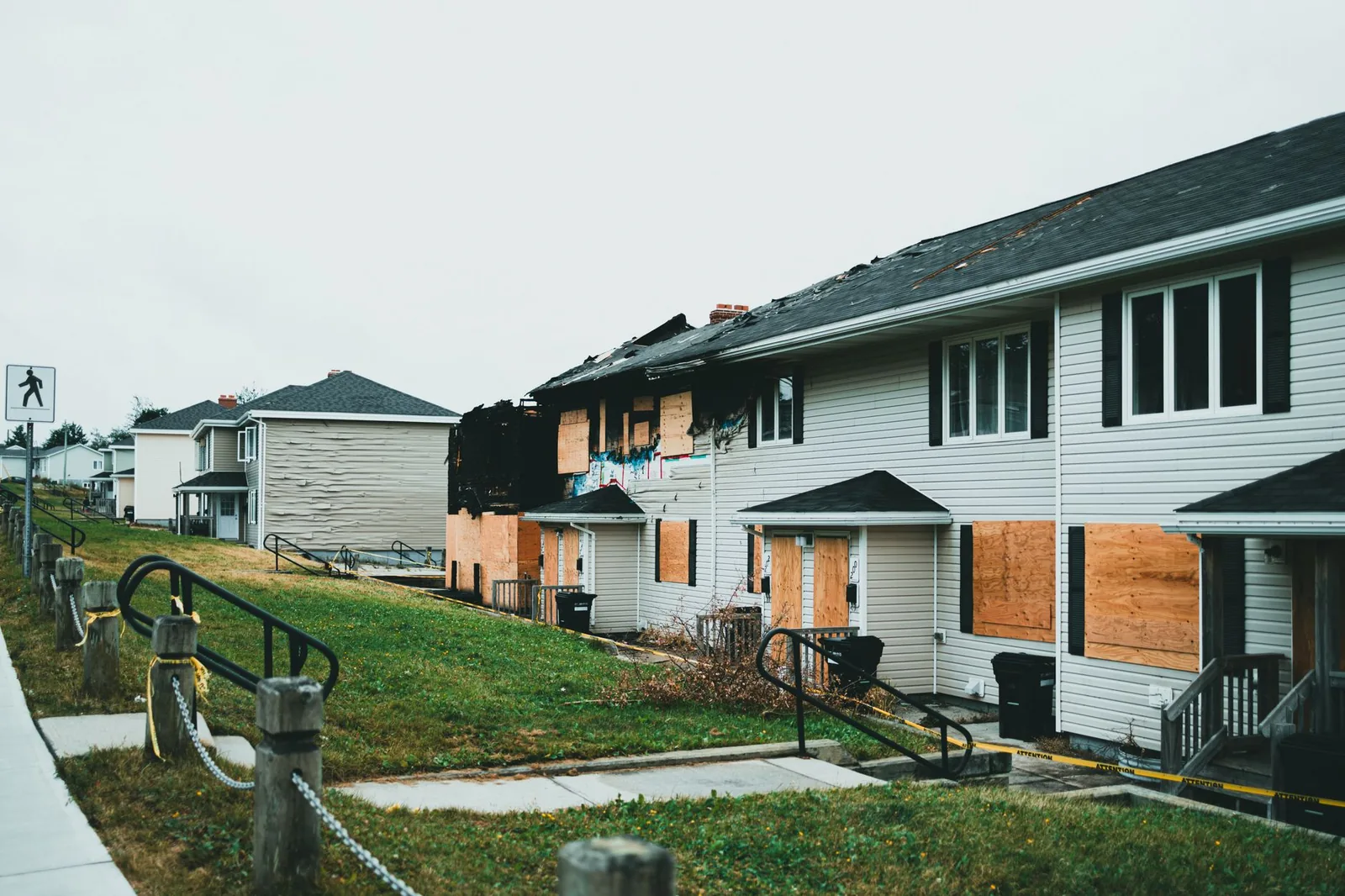
What connects the two is subrogation. Once your insurer pays you, it steps into your shoes and pursues whoever caused the loss to get its money back. The standard homeowners form published by Insurance Services Office (ISO), which many insurers use or adapt, spells out your part: the insurer “may require an assignment of rights of recovery for a loss to the extent that payment is made by us,” and if it asks, you “must sign and deliver all related papers and cooperate with us.” In plain terms, your insurer takes over the fight with the installer for the money it paid out, and you are expected to help.
That arrangement usually works in your favor, because your insurer has the lawyers and the engineers. It also leaves gaps you need to watch.
- Your deductible, and anything the policy did not pay. The subrogation claim is mainly about your insurer’s money. Ask whether its demand will include your deductible and how any recovery will be split, and get the answer in writing. Losses the policy did not cover, such as code upgrades it excludes, may need a claim of your own.
- The faulty work itself. The ISO form excludes loss caused by faulty, inadequate or defective “workmanship” and “materials used in repair, construction, renovation or remodeling.” But that exclusion opens with a carve-back: “any ensuing loss to property described in Coverages A and B not precluded by any other provision in this policy is covered.” So fire damage that followed the bad work is covered, while the cost of redoing the bad work itself may not be. If your insurer points to the workmanship exclusion to deny fire damage, ask it to explain how the ensuing loss language applies. Policy forms vary, so read your own.
- Releases. Do not sign a release or cash a settlement check from the installer or its insurer without telling your own insurer first. Your insurer’s recovery runs through your rights, and the policy requires you to cooperate with it.
Why the Installer’s Insurer Can Say No
In Maricopa, the installer’s insurer denied responsibility despite a fire department report and an engineer’s findings that agreed with each other. The installer told ABC15 it had cooperated fully with the homeowners’ attorney and insurance representatives and would not discuss the merits of the claim. Its insurer said it does not comment on individual claims.
A denial from the other side’s insurer feels final. It is not. Gail Barsky, the Arizona attorney ABC15 interviewed, describes a denial letter as a coverage decision rather than a legal ruling. “Denial does not mean that there’s no fault there,” Barsky said. “It doesn’t erase responsibility.” A liability insurer answers to its customer, and its denial can rest on a disputed cause or on its own reading of its policy, neither of which settles whether the work was done right.

Who fights back depends on whose money is at stake. If your insurer has paid, its subrogation team pursues the installer for that amount. For your own uninsured losses, the claim is yours, usually through an attorney.
Watch the clocks, because there are several and they do not all start at the same moment:
- The deadline to sue the installer. These run from when the claim arises, which in a fire is usually the fire itself, and they can be short. Florida gives an action founded on negligence two years.
- The outer limit for construction claims. Many states also set a statute of repose that runs from the work rather than the damage. Florida’s says a claim founded on the construction of an improvement to real property must be brought within seven years after the certificate of occupancy or completion, however late a defect turns up. Which deadline governs a given claim is a question for your lawyer, and the reason not to wait.
- The deadline in your own policy. The ISO form says a lawsuit against your own insurer must be “started within two years after the date of loss.” State law can lengthen that, so check yours.
What the Permit Record Proves, and What It Does Not
A permit is the public record of an installation: who took responsibility for the work, what it covered, when it was inspected, and whether it passed. In a liability fight it settles questions that would otherwise become arguments. Who did this work? When was it finished? Did anyone besides the installer ever look at it?
What a passed inspection does not do is shift the blame to the city. An inspection is a spot check of the work at one moment, as our guide to managing the electrical side of a remodel explains, and the law generally does not make the city pay for what the inspector missed. In Arizona, for example, unless an inspector intended to cause injury or was grossly negligent, neither the public entity nor its employee is liable for “the failure to discover violations of any provision of law when inspections are done of property other than property owned by the public entity in question.”
A Florida lawsuit filed in July 2026 shows how much can get past an inspector. The owners of four homes allege, in a proposed class action against a large home services contractor, that during the pandemic materials shortage it used a steel core, copper-clad conductor that is not approved for use as a grounding electrode conductor (the conductor that connects a home’s electrical service to its ground rod or other grounding electrode) in thousands of new homes, and that it concealed the substitution from homeowners and building inspectors. “The wire looks like copper. It is not,” the complaint reads, according to the Orlando Sentinel. None of it has been proven. The forensic electrical engineer the plaintiffs’ lawyers worked with did not think the homes were likely at imminent risk of catching fire, the paper reported, and the plaintiffs’ lawyer said the filing date was tied to the statute of repose.
Two lessons carry over to any permit record. A pass means the inspector saw nothing wrong in what was inspected, not that nothing was wrong. And the permit paperwork can start a legal clock: Florida’s seven-year limit runs from the certificate of occupancy or completion that the building department issues.
The absence of a permit says something too. Nobody but the installer ever saw the work, so no inspector had the chance to catch an undersized wire before it went into service. A missing permit is also, often enough, the first sign of the problem in the next section.
When the Installer Was Never Licensed
In Hamilton, Ontario, a homeowner hired a contractor for a basement renovation that included the electrical work. Between November 2021 and February 2022 the contractor installed switches, pot lights and outlets, and according to Ontario’s Electrical Safety Authority (ESA), removed the backing from the pot lights, covered junction boxes with drywall and used materials that did not meet code. Shorted wires started a fire. It was contained, but it did nearly C$10,000 in damage. ESA’s investigation found the contractor held no electrical contractor’s licence and had never applied for a permit. In June 2023 the contractor pleaded guilty and was fined C$7,500, plus a C$1,875 victim surcharge.
Two parts of that story apply on this side of the border. The first is what a conviction does: it punishes the installer, but it is not a repair fund. The second is the order of events. With no permit, no inspector ever saw the buried junction boxes, and the first thing to find the problem was the fire.
An unlicensed installer also tends to strip away the money a claim would normally draw on. Your own homeowners policy should still respond to the fire, because that claim does not depend on who was at fault. But your insurer’s subrogation claim, and your claim for whatever it did not cover, need someone on the other end who can pay. A licensed contractor normally comes with liability insurance and a license bond; our guide to checking an electrician’s license explains why the bond alone will not come close to covering a fire. An unlicensed installer may have neither, which leaves only whatever that person personally owns.
State recovery funds usually close that door as well. Arizona’s Residential Contractors’ Recovery Fund exists for people damaged by a residential contractor “that is licensed pursuant to this chapter,” and the contractor must have been appropriately licensed on the date the contract was signed, the date of the first payment, or the date the work began.
Several of ESA’s warning signs translate directly to any American job:
- No license number on the work vehicle or the estimate, or a refusal to show it when you ask.
- A request that you get the permit yourself, or an assurance that you don’t need one.
- A discount for cash, cash only, or no receipt.
- “If anyone asks, tell them you did the work yourself.”
Before You Hire: The Paper That Pays Off Years Later
The Maricopa fire started five years after the water heater went in. Whatever you collect on installation day is what your insurer, your lawyer or you will be working from if that installation ever fails, so collect it on purpose.
Start with the question that would have mattered in Maricopa. When an installer offers to put in a bigger unit, ask whether the circuit that fed the old one is rated for the new one’s nameplate. The electrical code treats a typical tank water heater as a continuous load and sizes its circuit at 125 percent of the heater’s rating. In a worked example in EC&M, a 4,500 watt heater at 240 volts draws 18.75 amps, so the conductors must be rated for at least 23.4 amps, which means 10 AWG copper on a 30 amp breaker. A replacement with a higher rating than the unit it replaces can need heavier wire. The same question applies whenever the new equipment is bigger than the old, whether it is an air conditioner, a range or an EV charger, and our guide to 240 volt circuits explains how those circuits are built.
Then keep the paper:
- The license number, checked against your state’s own lookup, and a certificate of insurance requested from the installer’s insurer rather than forwarded by the installer.
- A permit pulled in the installer’s name, not yours, and the result of the final inspection.
- A written scope that names the circuit work, such as “new circuit sized for the new heater,” not just “install water heater.”
- The invoice, with the date, the model and serial numbers, and who did the work.
- Every page of the contract, read before you sign. Watch for a waiver of subrogation or a cap on the installer’s liability. The ISO homeowners form lets you “waive in writing before a loss all rights of recovery against any person,” and a waiver tucked into a contractor’s paperwork can leave your insurer with no one to recover from. Ask your insurance agent before you sign one.
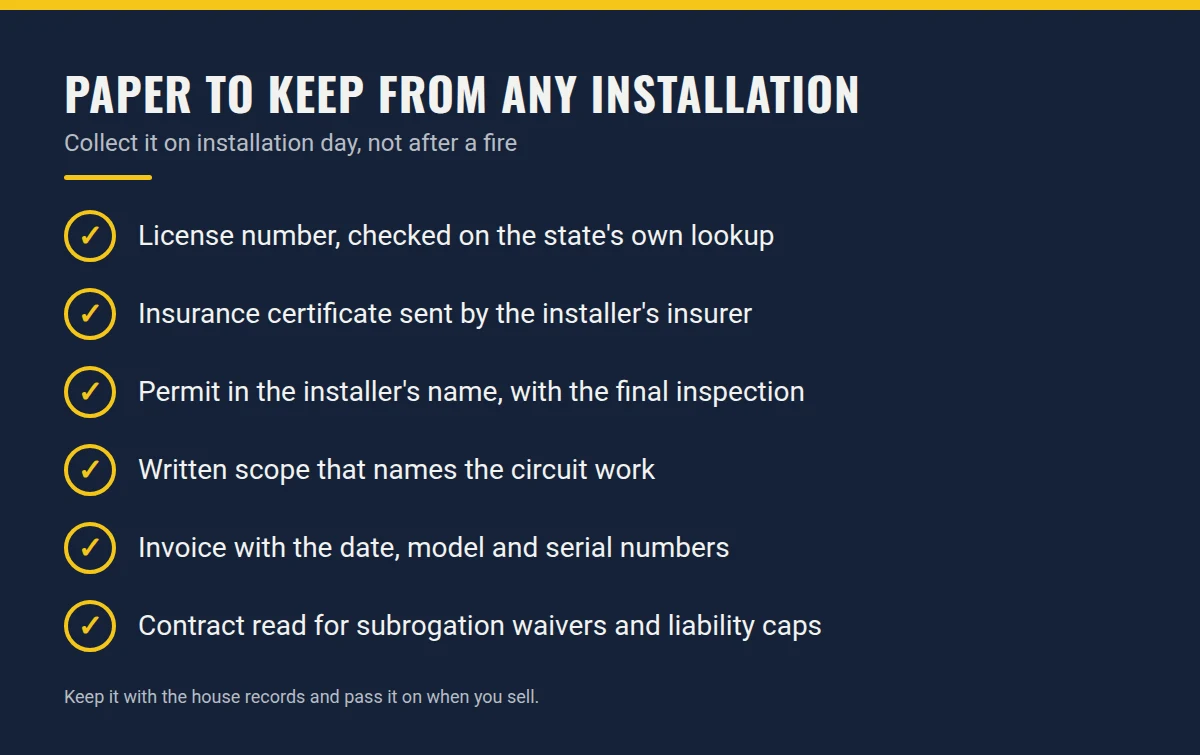
Keep all of it with the house records, and hand it on when you sell.
The Bottom Line
When a fire is traced to an installation, the fire report starts the argument rather than ending it. The department’s finding is the firefighter’s best determination and can change, the private investigators each work for someone, and the physical evidence can decide a case on its own, which is why nothing should leave the house until every side has seen it. Let your own policy pay first, cooperate with your insurer’s subrogation, and keep track of what it will not cover: your deductible, excluded upgrades and your own deadlines.
Before the next installation, the best protection is unglamorous: a licensed installer, a permit in their name, a scope that names the circuit, and a folder of paper you hope never to need. Electrical codes, permit rules and liability law vary by state and municipality, so check with your local building department, verify any electrician’s license and insurance before work begins, and talk to a lawyer in your state before you sign away or give up a claim.
Further reading (sources)
- ABC15 Arizona on the Maricopa water heater fire and the insurance fight that followed
- National Institute of Justice with its guide to fire and arson scene evidence for public safety personnel
- U.S. Fire Administration for the NFIRS reference guide’s cause of ignition and contributing factor codes, and its notice retiring NFIRS in favor of NERIS
- Caselaw Access Project from the Ninth Circuit’s 1992 decision on a destroyed space heater and a lost subrogation claim
- Nevada Division of Insurance hosting a filed copy of ISO’s HO 00 03 homeowners form
- Arizona Revised Statutes 12-820.02 covering public liability for violations an inspection misses
- Arizona Revised Statutes 32-1132 on who can claim from the residential contractors’ recovery fund
- Florida Statutes section 95.11 with the deadlines for negligence and construction claims
- Orlando Sentinel from its report on the Florida grounding conductor class action
- Electrical Safety Authority on the unlicensed contractor fined after a Hamilton basement fire
- Mike Holt in EC&M for sizing the conductors for an electric water heater