After the Flood: Electrical Safety Steps Before Restoring Power to Your Home
Published on August 8, 2026
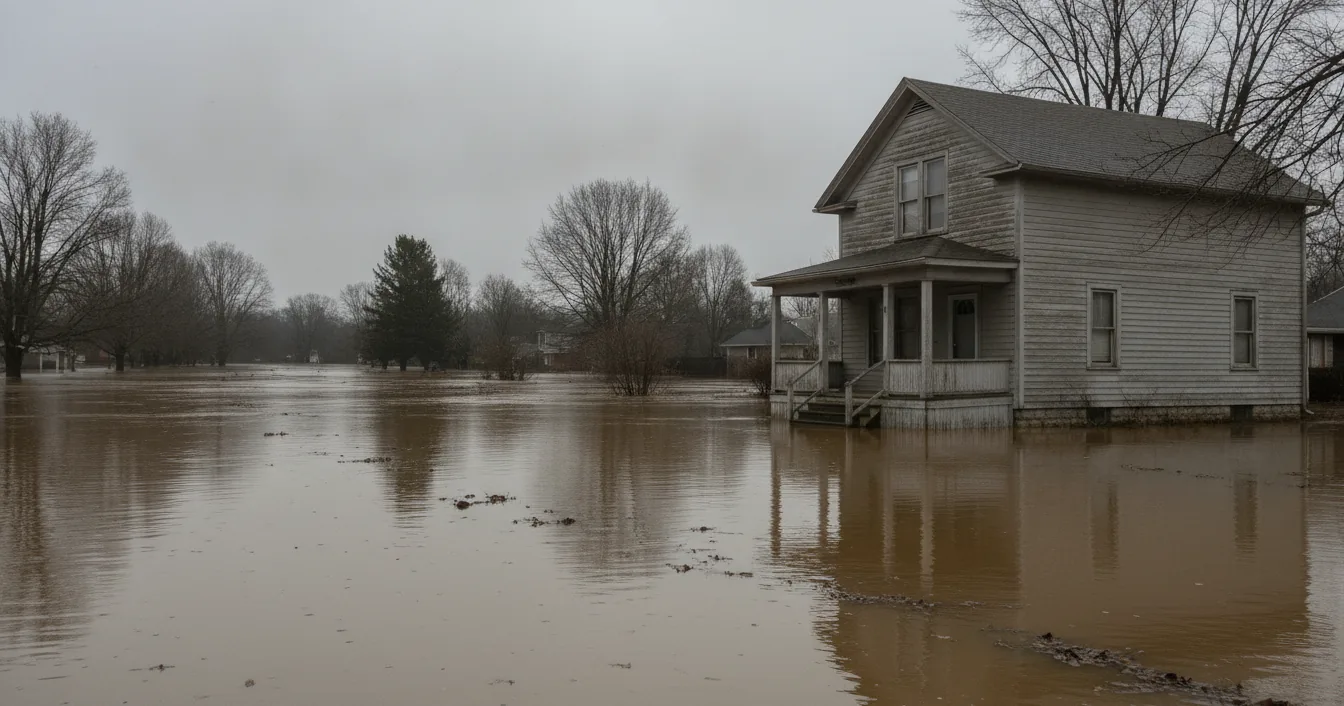
The water goes down faster than it came up. Within a day or two the yard is mud, the carpet is ruined, and the house is dark because the power failed somewhere in the middle of it all. Almost every homeowner standing in that doorway has the same thought: find the panel, push the main breaker back on, and start drying the place out.
That instinct is the most dangerous move available to you in a flooded house. Floodwater does not behave like a plumbing leak. It carries silt, sewage, fuel, and dissolved salts into every enclosure it reaches, and when it drains away it leaves that residue behind, sitting on contacts and insulation inside equipment that looks completely normal from the outside. Energize that system and you are closing the circuit on a set of faults that did not exist a week ago.
Before anything else, one rule overrides everything below. If water is still standing anywhere it might be touching an outlet, a cord, a baseboard heater, a furnace, or the panel itself, do not walk into that room. Submerged wiring can energize the water around it, and there is no way to tell by looking which water will hurt you. If someone is already in contact with energized water, do not wade in after them. Call 911.
Never Reach for the Main Breaker While Standing in Water
The Electrical Safety Foundation International puts this as plainly as anyone can: do not enter a flooded basement if the water is above the level of your outlets, baseboard heaters, or furnace, or if it is anywhere near the panel. A submerged receptacle or cord turns the water around it into a lethal trap, and the trap is invisible.
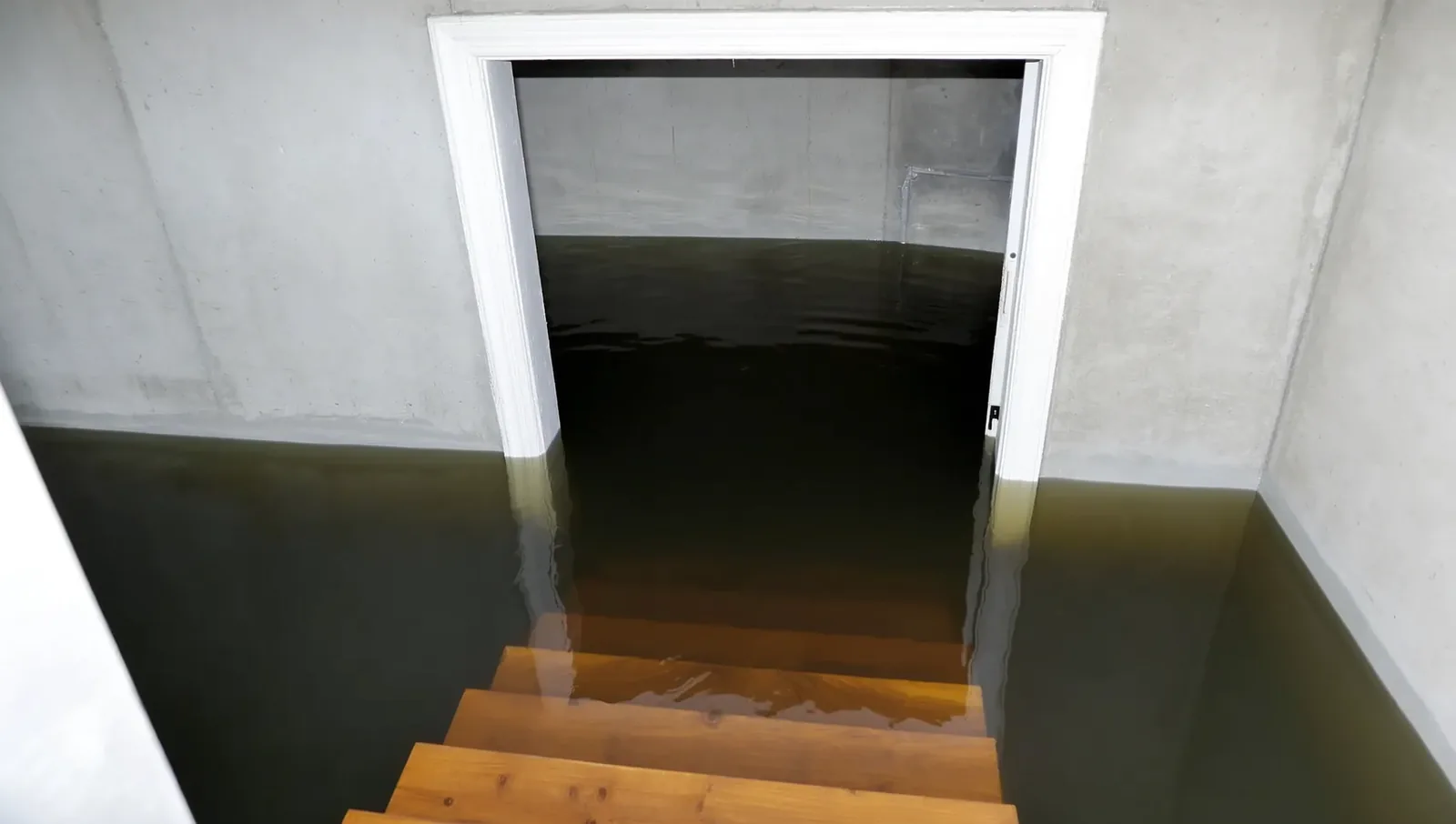
This creates an obvious problem, because in a huge number of American homes the panel lives exactly where the water goes first. Basements and low garages are where the load center gets mounted, so the one device you would use to make the house safe often sits on the wrong side of the hazard.
The answer is not to risk it. If you cannot reach the main disconnect from dry footing, call your electric utility and ask them to cut power at the meter. That is a routine request after a flood. If you can reach the main from a dry stair or landing, and nothing is buzzing, sparking, or smelling like hot plastic, then throwing it to OFF is a useful step. Anything that requires you to put a foot in the water is the utility’s job, not yours.
Who Actually Cuts the Power: The Utility or Your Electrician
Homeowners lose whole days to this question, usually by calling the wrong number twice.
The utility owns the service. That means the overhead drop or underground lateral, the meter, and the meter socket seal. They will disconnect at your request, when a governing authority such as a city or fire marshal orders it, or when there is an imminent threat to life. Pulling the meter is their work exclusively. Breaking that seal yourself is illegal in most jurisdictions, and it puts you face to face with service conductors that no breaker in your house protects.
Your electrician owns everything from the meter base inward. Service entrance conductors, the main disconnect, the load center, branch circuits, devices, and hardwired appliances. Repairs to a damaged meter base usually get performed by the electrician and coordinated with the utility, since the meter has to come out for the work to happen.
Your local building department controls the reconnection. In most municipalities, if your service equipment was submerged or the utility disconnected you because of flooding, power does not come back until a licensed electrician makes the repairs, a permit is pulled, and the inspector releases the service. The utility acts on that release, not on your phone call. After a regional flood there is a queue for all three, so getting an electrician scheduled and a permit filed early is the single best thing you can do for your timeline.
What Has to Be Replaced, and What Can Be Saved
The most expensive misconception after a flood is that electrical equipment can be dried out and put back in service. Almost none of it can.
ESFI and NEMA both publish evaluation guidance on this, and for a typical house the replace list is long and non-negotiable. It covers molded case circuit breakers (the kind in every residential panel), GFCI and AFCI devices, receptacles, switches and dimmers, outlet and junction boxes, surge protective devices, smoke and carbon monoxide alarms, light fixtures along with their ballasts and LED drivers, batteries, and any wire or cable rated only for dry locations, which includes the NM cable running through your walls.
A much shorter list can sometimes be reconditioned, and only with manufacturer consultation and testing by a qualified person: panelboard enclosures and bus, motors, and wet-location-rated cable whose ends were never submerged. In practice, if the load center went under it is getting replaced. Every breaker inside it is a replace item regardless, and the labor to test and recondition an enclosure rarely beats the price of a new one.
The reason drying fails is residue. Silt and dissolved salts stay behind on insulating surfaces and remain conductive long after everything feels bone dry, creating tracking paths that arc weeks or months later. Corrosion works its way into bus connections and breaker contacts. Most quietly of all, the lubricants inside a breaker’s trip mechanism wash out, which can leave you with a breaker that still closes and carries current but no longer opens on a fault. That circuit now has no overcurrent protection at all, and nothing about the panel looks wrong from the front. If a circuit in your house starts tripping every time the weather turns wet, that is a ground fault talking, and our guide to what a repeatedly tripping breaker is telling you explains why resetting it is the wrong response. The ground-fault and arc-fault devices that would normally catch this are themselves on the replace list, so a flooded home often loses that protection at the exact moment it needs it most.
Mark the Water Line, Then Assume the Damage Goes Higher
One of the first things a good electrician does is find the high-water mark and photograph it. One of the next things they do is stop trusting it.

Damage routinely extends well above the visible line, for three reasons. NM cable wicks water upward inside wall cavities through its paper filler and jacket, carrying contamination to boxes on the dry side of the mark. Conduit behaves like plumbing, moving water horizontally and vertically to junction boxes in rooms that never flooded, and holding it in the low points of the raceway for weeks. And wave action, wind-driven rain, and splashing during pump-out all put water in places the still-water line never reached.
There is a fourth case that matters more than the rest. If the panel itself went under, every circuit in the house is suspect no matter which floor it serves, because the fault path now starts at the panel.
This is why a genuine post-flood inspection takes hours rather than fifteen minutes. Beyond the visual survey, the electrician should be running insulation resistance tests on branch circuits with a megohmmeter, checking ground continuity and polarity at every device, and verifying that protective devices actually operate. An inspection that consists of someone glancing at the panel and declaring it fine is not an inspection.
Appliances, HVAC, and Anything With a Circuit Board
Furnaces, boilers, water heaters, AC condensers, heat pumps, well pumps, sump pumps, washers, dryers, hardwired EV chargers, and standby generator transfer switches all fall under the same rule: if it was submerged, do not test it by turning it on.
Submerged control boards, motors, gas valves, and safety interlocks get evaluated and in most cases replaced. A gas furnace with a water-damaged control board can fail in ways that are a combustion hazard rather than merely an electrical one, so any submerged gas appliance needs the gas utility or a licensed HVAC technician before anyone relights it. Hardwired EV supply equipment that went under gets replaced outright, because its internal ground monitoring is exactly the sort of electronics the guidance says never to reuse.
The Reconnection Sequence
Every flooded home follows roughly the same path back to power, and the order is what keeps it safe:
- Power confirmed off, at the meter by the utility or at the main by you, and only if you can reach it from dry footing.
- Document before demolition. Photograph and video the water line in every room, the panel interior, and the model and serial plate of every affected appliance. Once the drywall comes out that evidence is gone, and your adjuster will ask for it.
- Licensed electrician assesses the full scope, from the service equipment through branch circuits, devices, and hardwired appliances.
- Permit pulled and repairs made. For most flooded homes that means a new load center and breakers, new devices and boxes below the line, and new cable in any wall that took water.
- Circuits tested cold, before anything is energized: insulation resistance, ground continuity, polarity, and device operation.
- Inspector signs off and releases the service.
- Utility reconnects, and the electrician brings circuits up in stages, watching for heat, odor, and trips at each one.
No step here has a temporary shortcut, and that includes generators. Backfeeding a flooded panel from a portable unit distributes the same faults through the same damaged wiring, with the added risk of energizing a service the utility believes is dead. The full storm-season picture, from pre-season hardening through post-storm inspection, is laid out in our hurricane and severe storm electrical preparedness guide.
How Insurance Handles Flood-Damaged Electrical Work
Here is the part that catches people every season: a standard homeowners policy does not cover flood. Surface water, storm surge, and an overflowing river are all excluded, so the electrical repairs that follow them are not a homeowners claim.
What does cover them is a flood policy. NFIP building coverage includes permanently installed electrical systems, which means wiring, the panel, HVAC equipment, water heaters, and built-in appliances, up to the residential limits of $250,000 for the building and $100,000 for contents.
Basements come with a wrinkle worth understanding before you file. NFIP covers utility items down there, including the furnace, the water heater, the central air, and the electrical panel, but not finished basement improvements such as drywall, flooring, and ceilings, and basement contents coverage is limited to a very short list. In plain terms, the panel replacement is usually covered while the rec room built around it usually is not.
If your building was substantially damaged and sits in a mapped floodplain, ask your adjuster about Increased Cost of Compliance coverage, which provides up to $30,000 toward bringing the structure into compliance. Relocating the service equipment above the base flood elevation is often the smartest use of that money, since it turns the next flood into a cleanup rather than a rebuild.
If the water came from a burst pipe, a failed sump pump, or a sewer backup rather than a true flood, the analysis inverts. Those are homeowners claims, though sewer and drain backup normally requires a specific endorsement that many policies leave out by default.
For budgeting, panel replacement generally runs $1,200 to $4,500 depending on amperage and local labor, partial rewiring lands around $1,500 to $5,000, and a whole-home rewire typically runs $6 to $10 per square foot. Our breakdown of what emergency electrical work actually costs covers the after-hours and disaster-pricing side of that. One last piece of practical advice: major floods attract out-of-area contractors working without local licenses, so run through the questions worth asking before you hire and verify the license with your state board rather than taking a truck door at face value.
The Bottom Line
A flooded electrical system is not a wet electrical system waiting to dry. Water changes the equipment permanently, leaving conductive residue, corroded contacts, and breakers that may never trip again, and none of that is visible from the front of a closed panel. So the sequence is fixed. Stay out of standing water, get power cut at the meter if you cannot reach the main safely, let the utility handle the service and a licensed electrician handle everything past it, replace the long list of devices that guidance says cannot be reused, test the branch circuits cold before anything is energized, and let the inspector release the service. Document all of it for the adjuster on the way through. The lights will come back a few days later than you want them to, which is a small price for a house that is not quietly waiting to burn.
Further reading (sources)
- Electrical Safety Foundation International on which flooded components have to be replaced and which can be reconditioned
- ESFI for why a flooded basement is a shock hazard before it is anything else
- NEMA with its evaluation guidance for water-damaged electrical equipment
- FEMA covering what an NFIP policy pays for in a flooded basement
- Cumberland EMC from a utility’s own account of restoring service after flooding
- Manitoba Hydro on the spring flood safety basics that apply on either side of the border