What Is Holding Up Your Ceiling Fan? Box Ratings and Fixtures That Fall
Published on October 9, 2026
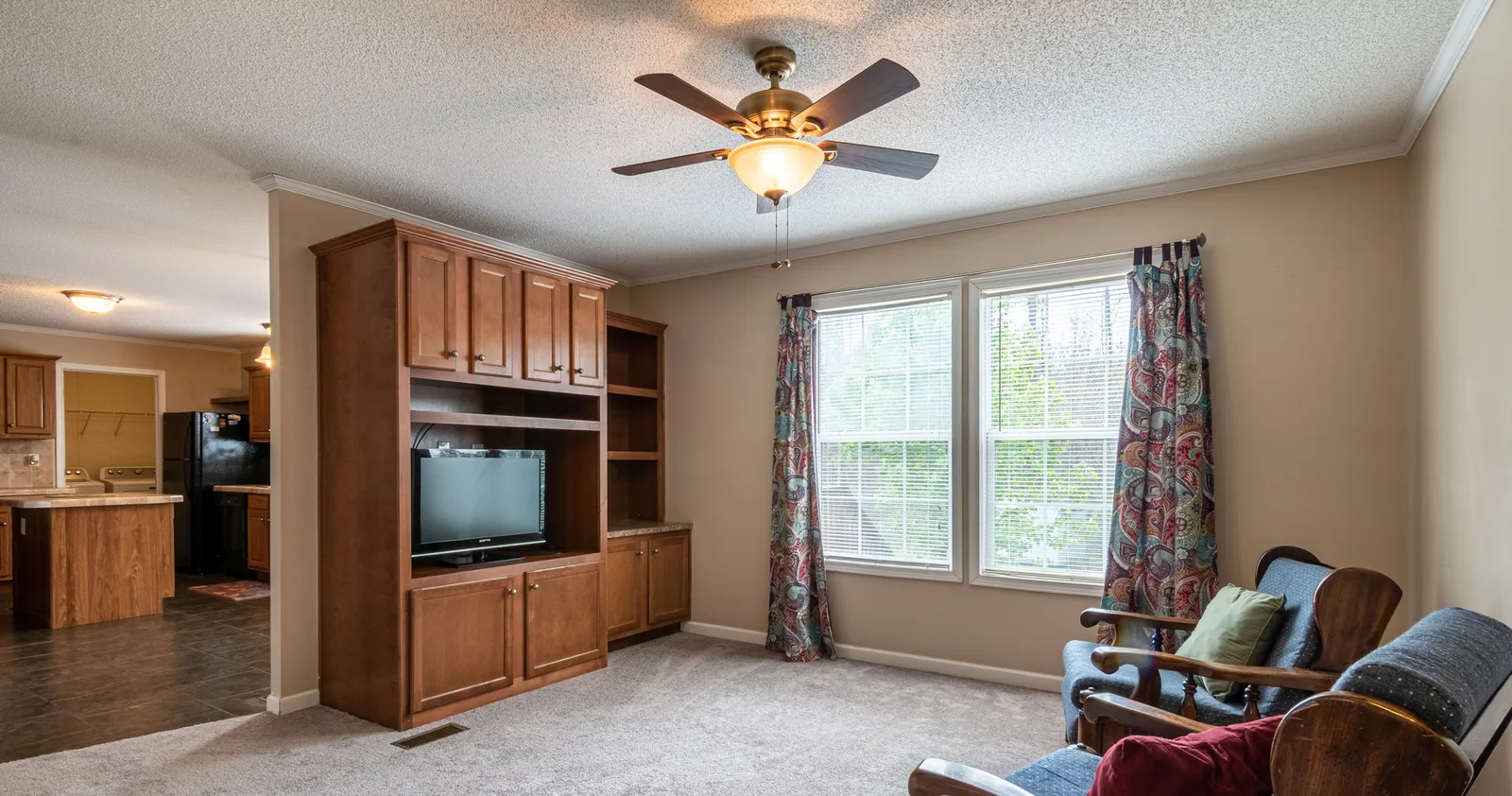
Look up at the ceiling fan over your bed or your couch and ask a question almost nobody asks: what is actually holding it up? Not the canopy, the decorative cover that sits against the ceiling. Behind it is a metal or plastic box, a few screws, and whatever that box is fastened to. If the honest answer is “a box meant for a light fixture” or “the drywall,” the fan is hanging on borrowed strength, and it spends every summer evening testing it.
Support is a violation the trade press returns to again and again. In August, two consecutive episodes of EC&M’s Moving Violations video series were about nothing else. In No. 364, code instructor Russ LeBlanc points to conduit run with no clips or supports and a box left dangling, a violation of the National Electrical Code (NEC) box support rule, Section 314.23. In No. 365, the conduits are held up by one another, which the code generally does not allow. Those were commercial jobs, but the principle is the one that matters over your head at home: everything electrical has to hang from something designed to carry it, and the wires are never that something.
If a fan or light fixture is pulling away from the ceiling, hanging by its wires, or has already come down, treat it as live. Turn off its breaker (or the main, if you cannot tell which breaker it is), keep everyone out from under it, and do not push it back up or touch the wires. The Consumer Product Safety Commission (CPSC) gives the same first instruction after a fan falls: turn off the circuit breaker immediately, because wires may be exposed. If you see sparks or smoke, or smell something burning, get everyone out and call 911. Otherwise, call a licensed electrician.
A Light Box Holds Still. A Fan Never Does.
Every ceiling fixture hangs from a chain of parts: the framing of the house, the box fastened to it, the strap or bracket screwed to the box, and finally the fixture. The code’s attention falls on the link in the middle, the box, and on the kind of load that box was built to carry.
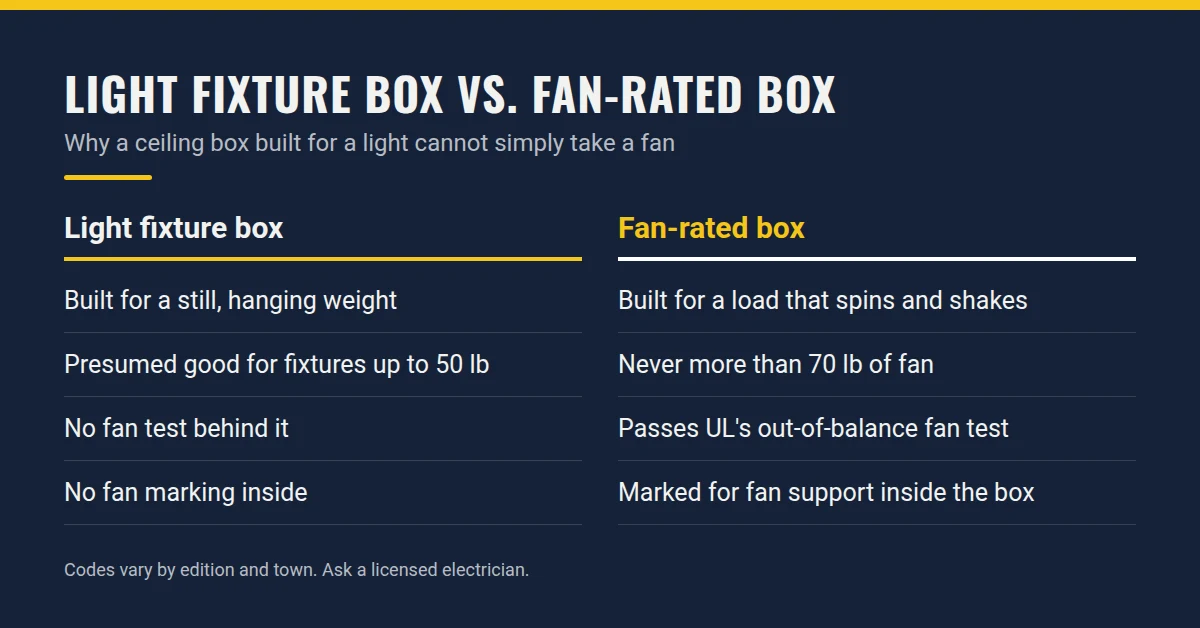
For ordinary light fixtures the rule is old and simple. A box at a lighting outlet has to be designed so that a fixture can be attached to it. As Frederic Hartwell explained in IAEI Magazine, the larger 4-inch round, octagonal and square boxes (and their nonmetallic equivalents) take 8-32 screws and are presumed able to carry a fixture of up to 50 pounds, with heavier weights allowed only where the box is listed for them. The small rectangular boxes that hold switches and receptacles use smaller screws and get a 6-pound allowance for a light, and only on a wall.
A ceiling fan usually weighs less than that 50-pound line, although ENERGY STAR’s installation guidance warns that some fans weigh as much as 50 pounds. So why can a box that could hold a 40-pound chandelier not hold a 20-pound fan?
Because a fan’s weight never holds still. The motor twists the box when it starts, the blades shake it for as long as they turn, and a blade that is even slightly out of balance works it back and forth thousands of times an hour. That is a fatigue load, and the 50-pound figure for light fixtures says nothing about it.
UL’s test for fan support boxes is built around exactly that. When UL described the procedure in a 1998 IAEI Magazine column, a 35-pound test fan went up on the box with a 40-gram weight fixed to one blade to throw it out of balance, and ran for 24 hours, with samples mounted both level and at a 30-degree incline. Then the testers loosened one of the fan’s mounting screws two full turns and ran it for another 24 hours. A box that comes through is marked “Acceptable for Fan Support.” The UL standards for metal boxes (UL 514A) and for nonmetallic boxes (UL 514C) both carry fan support requirements.
A light box never faces any of that. That is the whole difference between the two, and once the canopy is up it is invisible.
What the Code Requires Above a Fan
The fan box rule has two layers: what a box must be if it carries a fan, and which boxes must be ready for one.
The first layer is the older one. A box that serves as the sole support of a ceiling fan must be listed and marked by its manufacturer as suitable for that purpose, and it may not carry a fan heavier than 70 pounds. A box designed for fans heavier than 35 pounds must state its maximum weight as part of that marking. A fan over 70 pounds has to hang from the structure itself.
The 2020 edition added a second layer, and it caused enough confusion that states published their own readings of it. In the habitable rooms of a home, a ceiling box in any spot where a fan could reasonably go must either be listed for fan support or be installed so that framing strong enough to carry a fan’s bracket is within reach. Washington’s chief electrical inspector wrote in 2021 that the 2020 changes to Section 314.27(C) “have created confusion,” and two states’ answers show why:
- North Carolina. The Office of State Fire Marshal does not count a box as a fan location if it carries wiring for smoke alarms or similar detection equipment, if any part of it sits within 36 inches of a wall, fixed cabinet or soffit that drops at least 18 inches from the ceiling, or if the inspector grants special permission because a fan would be impractical.
- Washington. The Department of Labor and Industries applies the rule to every ceiling box in a habitable room except those within four feet of walls or soffits and those directly above a permanent island or peninsula countertop.
The rule carried into the 2026 edition, where it is numbered Section 314.27(B). Minnesota’s inspection checklist for one-family homes under the 2026 NEC puts it in a sentence: a listed fan box or a ceiling box with access to a framing member “must be installed in all locations where a ceiling paddle could be installed in a habitable room.”
The smoke alarm exclusion makes sense on its own terms. As our guide to hardwired smoke alarms notes, NFPA’s placement guidance keeps alarms at least 3 feet from fan blades anyway.
“Access to framing” is the cheaper of the two options, and North Carolina’s interpretation describes what it usually looks like: a metal box with mounting holes in its back, positioned so the long wood screws a fan maker typically supplies (3 inches is common) can pass through the box and into the wood. The office also confirms that a 2x4 fastened between ceiling joists can serve as that framing, as long as the installer makes sure it can carry a fan.
None of this reaches back in time. A house is wired to the code in force when the work was done, and states adopt new editions on their own schedules, so a plain light box over the bed in an older house is not a violation. It is simply a box that was never meant to carry a fan.
What a Fan-Rated Box Looks Like
From the room, you cannot tell. The canopy hides the box, and a fan hung on a light box looks exactly like one hung correctly until the day it does not. The answer is printed inside the box.
Look for the manufacturer’s marking. UL’s wording for a listed box is “Acceptable for Fan Support,” and ENERGY STAR’s guidance tells installers to use a UL-listed box marked “For Use With Ceiling Fans.” Wording varies by maker, but the meaning should be unmistakable, and a box rated for fans over 35 pounds has to state its maximum weight. A box with no fan marking is a light box, however solid it looks.
The material is not the test. ENERGY STAR’s advice calls for a metal box, but UL’s standard for nonmetallic boxes covers fan support too, so a plastic box can carry the listing. The reverse matters more: plenty of metal boxes were never rated for a fan.
How the box is held matters as much as what it is. Whoever takes the canopy down, with the breaker off, should be able to see whether the box is fastened to a joist, hangs from a brace or a block, or grips nothing but the drywall, and whether the fan’s mounting bracket is screwed to the box with hardware made for it or into the ceiling material around it.
If you are planning to swap a light for a fan, plan on a new box. ENERGY STAR says so plainly: if you are replacing a ceiling fixture, you will most likely need to replace the electrical box. Ask the electrician to show you the fan marking inside the box before the fan goes up. It takes a few seconds, and it is the only proof you will ever see.
New Construction vs. Retrofit: How the Box Gets Anchored
Every box, fan or not, starts from the same requirement. Minnesota’s checklist sums up Section 314.23 in one line: all electrical boxes must be rigidly secured to the building structure. How that happens depends on whether the ceiling is open.
Open framing. In a new house, or a remodel with the ceiling down, the box goes in before the drywall: fastened to a joist, or to a brace or block set between joists, at exactly the depth the finished ceiling will need. This is the cheapest moment in a house’s life to make every bedroom and living room box fan-ready, and under the 2020 and newer editions most habitable-room ceiling boxes have to be ready anyway. If you are remodeling, write it into the scope; our guide to managing a remodel’s electrical scope covers what to get on paper before the walls close.
A finished ceiling. Retrofit work is harder but routine for an electrician, and there are three usual ways in:
- A brace through the hole. An expanding brace bar slides through the existing opening and is turned until its spiked ends bite into the joists on either side, and the new fan box hangs from the bar. ENERGY STAR’s guidance points to this kind of bracket when no joist sits where the fan needs to go.
- Blocking from above. With attic access, a length of lumber fastened between the joists over the fixture location gives the box solid wood to attach to. North Carolina’s interpretation accepts a 2x4 between joists as the framing a fan needs, provided it can actually carry one.
- Straight to a joist. When the opening lands beside a joist, a fan-rated box can be fastened to it directly, or a box can be set so the fan bracket’s long screws reach the wood. ENERGY STAR’s first preference is to anchor the fan to a joist whenever possible.
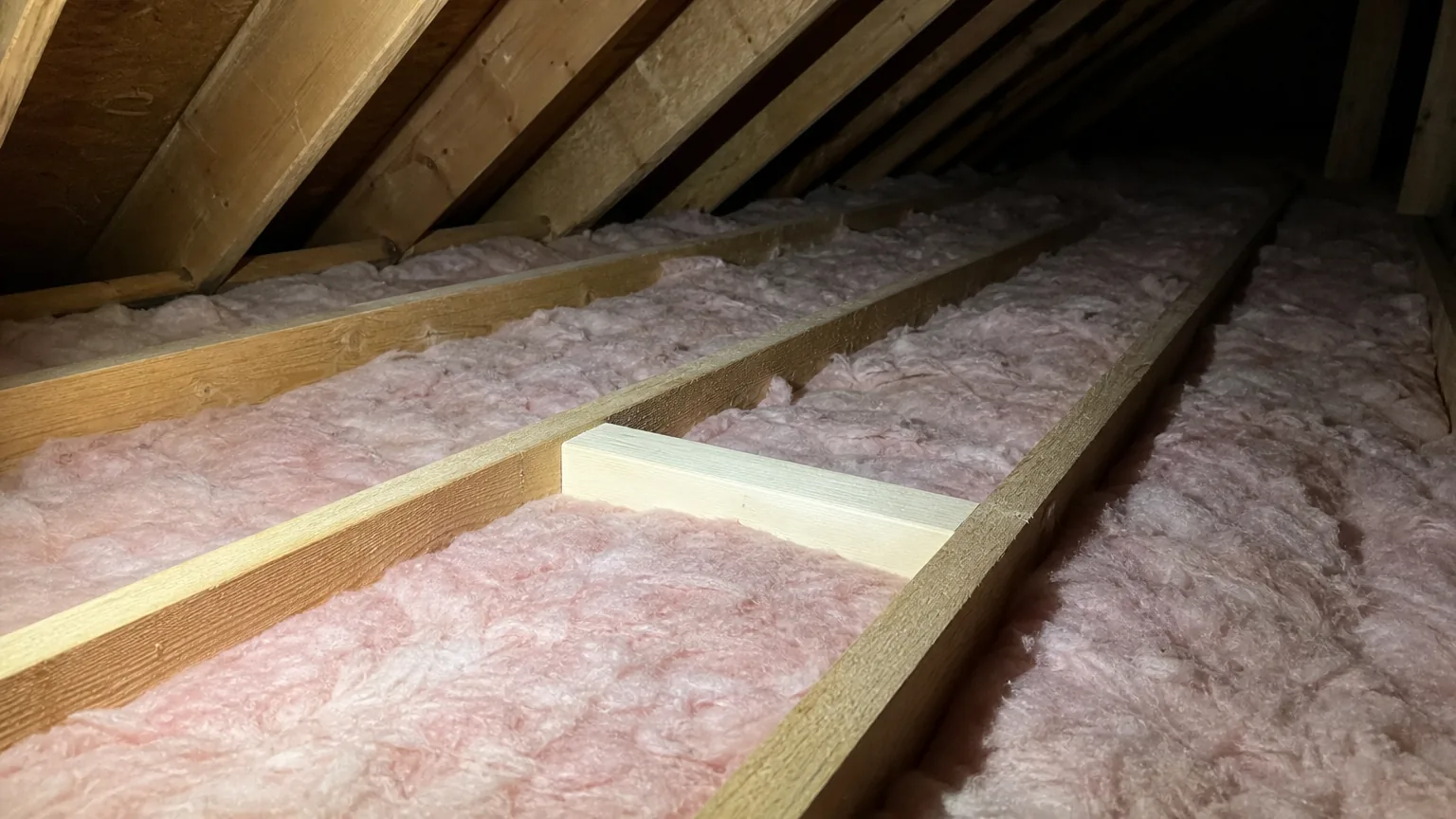
What does not count is anything that leans on the ceiling material. Drywall and plaster are finishes, not structure. A remodel box held by clamps or ears that grip the drywall can be fine for a light fixture when the box and its clamps are identified for that use, but it is not a fan support, and neither is a light box “reinforced” with longer screws or toggle bolts.
Two more items belong in the same job. A swap from a light to a fan is new work, so the old box is not grandfathered just because it held a light for thirty years; our explainer on whether old wiring is really grandfathered covers why new work has to meet the current code. Washington goes further and requires a permit and an inspection for every new ceiling fan. And a new metal box needs its own ground connection, the small pigtail described in our article on shocks from a cover plate. Permit rules vary, so ask your building department before the work starts.
Heavy Light Fixtures and the 50-Pound Line
Fans are not the only load that can outgrow a box. A large chandelier in a two-story entry, an iron lantern or a glass drum pendant can weigh more than you would guess. The code draws its line at 50 pounds: a heavier fixture has to be supported independently of the box, which in practice means hung from the framing, unless the box is listed for the extra weight.

Find the fixture’s weight on its spec sheet or carton before you buy it, and give that number to your electrician. A heavy fixture is a support job first and a wiring job second. Whatever it hangs from, whether a hook, a stem or a chain, the load runs through hardware to the box or the framing. The conductors only carry current.
Warning Signs: What a Sagging Fixture Predicts
Support failures are slow, and they give notice if you know what to look for.
- A gap between the canopy and the ceiling, or a canopy that has tilted. Something in the chain is letting go: the screws holding the strap, the box’s own fasteners, or the ceiling around a box that was only ever held by the drywall. As the fixture drops, its weight shifts onto the splices. Wire connectors and terminal screws are made to carry current, not weight, and a splice under tension loosens. A loose splice heats, flickers and arcs. A sagging fixture therefore predicts two failures, a fall and a fire, and the fire can come first.
- Cracks around the fixture. Hairline cracks radiating from the canopy, crumbs of plaster or drywall dust on the fixture or the floor beneath it, or nail pops nearby all suggest the box is moving.
- A fan wobble that is getting worse, or a mount that moves. Some wobble is just blade balance, which is what the balancing kit packed with many fans is for. A canopy that shifts, a knock or click with each turn, or a wobble that grows week by week means the mounting is working loose. Imbalance is not harmless to the hardware either: in 2012 CPSC announced a recall of fans whose hanger bracket could spread apart from motor heat, out-of-balance running, or both, letting the fan fall.
- Flicker, buzzing or warmth at the canopy. These point to the splices inside the box, which is exactly where a moving fixture does its damage.
- A box hanging by its wires. A box that drops when a fixture comes down, or moves when you press on the canopy, is not secured to anything. It is the household version of the dangling box in Moving Violations No. 364.
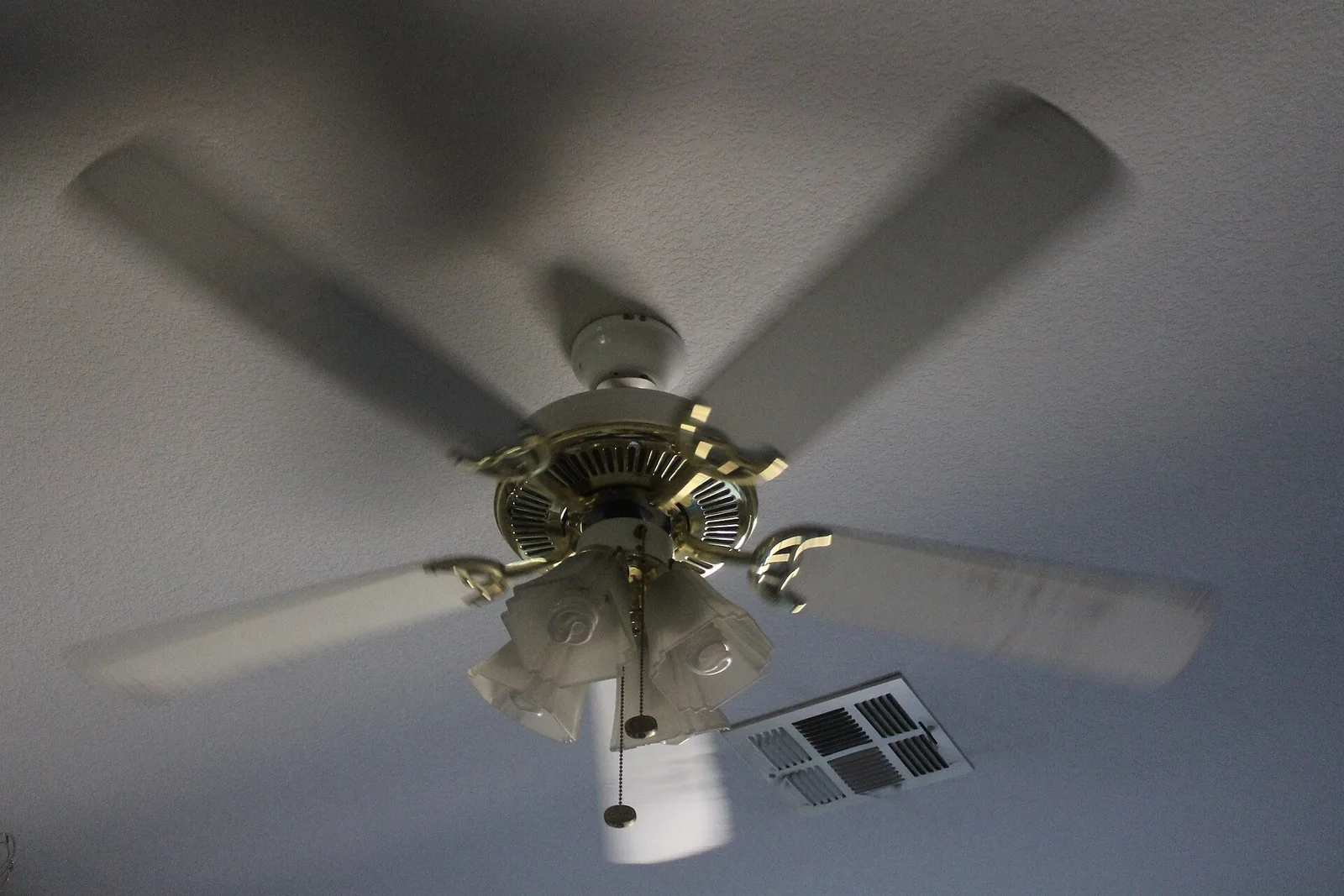
Not every falling fan is the box’s fault. CPSC has recalled fans whose own mounting hardware failed. In 1993 it announced a recall of about 3.26 million fans made from 1981 through 1993 that could separate from the canopy mounting them to the ceiling, after about 50 reports of falls and one injury. Check an older fan against CPSC’s recall database; our guide to checking products against CPSC recalls walks through the search.
If a Fixture Is Sagging or Has Fallen
- Cut the power at the panel. Turn off the breaker for that circuit, or the main if you cannot tell which breaker it is. A wall switch interrupts only one conductor, and a ceiling box often carries other wires that stay live. CPSC’s instruction after a fan falls is the same: turn off the breaker right away, because wires may be exposed.
- Clear the space below it. Keep people and pets out from under the fixture, and do not run the fan again.
- Leave it alone. Do not push it back up, tighten screws, or hold it while someone else works on it. Do not touch dangling wires, even with the breaker off, until an electrician has confirmed the circuit is dead.
- Call 911 for any sign of fire. Sparks, smoke, a burning smell or scorch marks around the canopy mean everyone gets out first.
- Call a licensed electrician. Ask them to check the marking inside the box, how the box is fastened, and the condition of the splices.
The fix is usually a listed fan box on a brace or new blocking, plus the time to remake the splices and rehang the fixture. The expensive outcome is the one where nobody looks until something falls.
The Bottom Line
The 50-pound rating on a light box is about a still weight. A ceiling fan is a moving one, and the code treats it that way: a box that carries a fan alone must be listed and marked for it, no box may carry a fan over 70 pounds, and under the 2020 and newer editions most ceiling boxes in habitable rooms have to be ready for one. In an older house, assume the box over the bed was built for a light until someone shows you a fan marking. If a canopy is pulling away from the ceiling or a fan’s wobble keeps growing, turn it off at the breaker and have it checked before gravity settles the question.
Electrical codes, permit requirements and the code edition in force vary by municipality, so confirm the specifics with your local building department and a licensed electrician in your area.
Further reading (sources)
- EC&M on conduit held up by other conduit in Moving Violations No. 365
- EC&M with a dangling box and unsupported conduit in Moving Violations No. 364
- IAEI Magazine’s UL Question Corner for how UL tests outlet boxes with an out-of-balance fan
- IAEI Magazine on which boxes can carry a 50-pound light fixture, and where device boxes fall short
- North Carolina Office of State Fire Marshal with its interpretation of the ceiling fan box rule
- Washington State Department of Labor and Industries covering where fan-rated boxes are required and the permit rule for new fans
- Minnesota Department of Labor and Industry for its one-family inspection checklist under the 2026 NEC
- Utah Legislature on the fan box listing and weight rule, as restated in the state’s code amendments
- ENERGY STAR with installation advice on fan boxes, joists and fan weight
- U.S. Consumer Product Safety Commission covering a 1993 recall of fans that could separate from their ceiling canopy
- CPSC on a 2012 recall of fans whose hanger bracket could spread apart
Feature photo by Curtis Adams on Pexels.